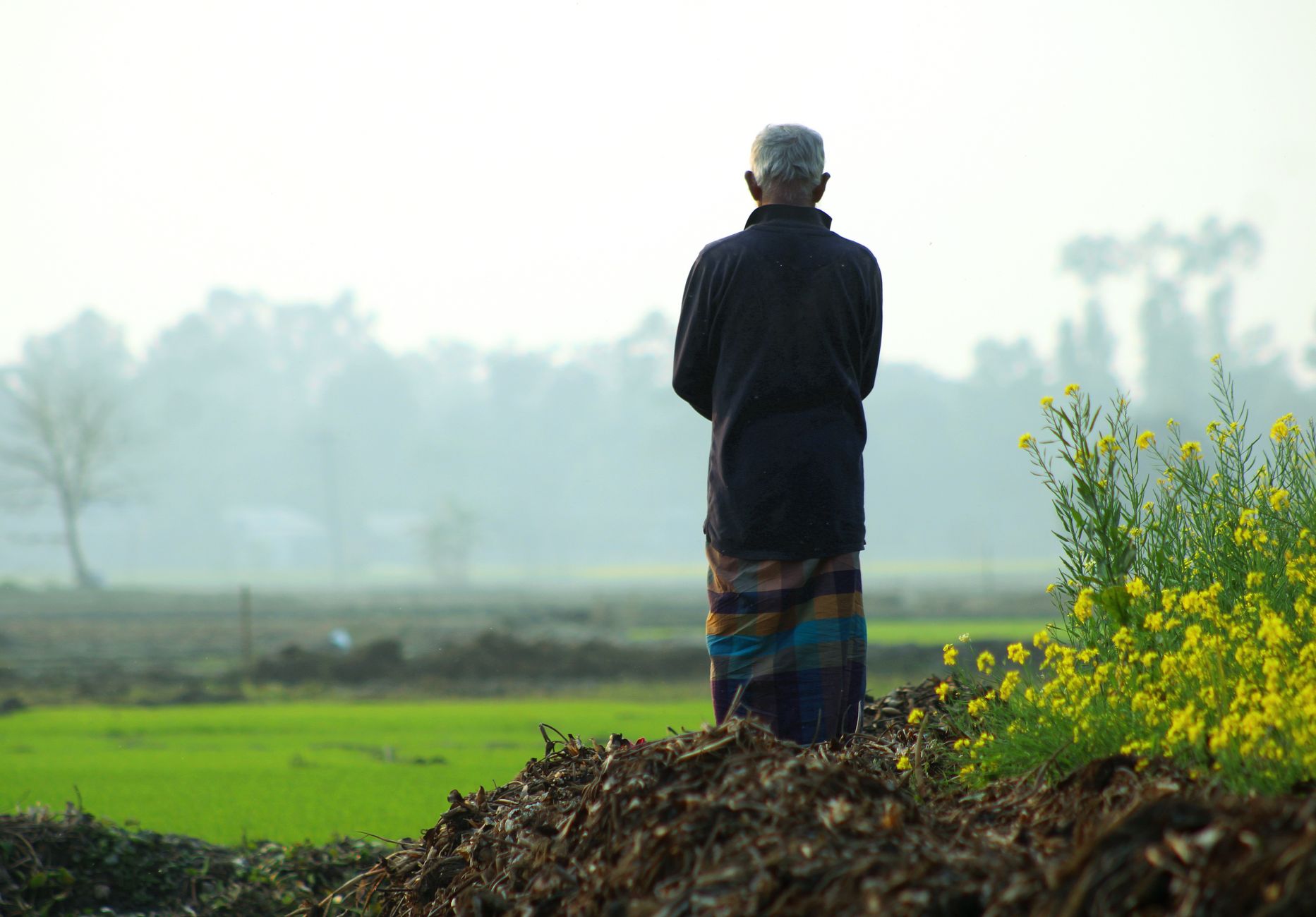
The Nights I Never Told Them About
The floor in the cold room at the plant is poured concrete with a drain down the middle, and at 4:41 on a Friday morning in October I learned exactly how hard it is.
I had just set the last box of the night on the last pallet. Forty pounds of chicken thighs, case sealed, label facing out the way Efrain likes it. I straightened up with one hand on the pallet jack.
Efrain was at the end of the line with his clipboard. He said my name. He said it the way you say a name when you have already seen something you don’t like.
I remember thinking, well, that’s funny, my knees are doing something.
Then the drain was right there beside my face, and it smelled like bleach, and somebody a long way off was saying Lyle, Lyle, Lyle.
I am 64 years old. I have farmed three hundred acres south of Neosho, Missouri, my whole grown life. In two years I had not missed one night at that plant. Five hundred and two shifts, start to finish.
And not one person who loved me knew I was there.
This is how that happened.
The call from Hal Brewster
It started with a phone call.
Hal Brewster has been a loan officer at our bank in Neosho for thirty years. We were in the same class at school. His mother taught me Sunday school. When Hal calls and says, “Lyle, can you stop by the bank this week,” you know it is not about Sunday school.
I went on a Tuesday, in my good jeans.
He closed the door behind me, which he had never done in all the years I’d sat in that chair.
“I’m going to say this plain,” he said, “because you’d want it plain. You are $47,200 behind on the land note. Next quarter you’ll be further behind. I’ve carried it as far as I can.”
I knew the number. I’d been looking at it in my head for two years, and I just hadn’t said it out loud to anybody.
Here is how a man gets $47,200 behind.
The Kincaid place is three hundred acres. The home place, a hundred and sixty, has been in my family since my great-grandfather Amos came up from Arkansas in 1911 with a mule team and a bad back. The other hundred and forty is the old Fowler ground across the creek. I bought that one back myself in 2018, when I was fifty-six, and I’ll tell you in a minute why it was the one piece of ground I could never stand to lose.
The bank held the note on the Fowler ground, and they took the home place as collateral too.
I wasn’t worried. I’d never missed a payment in my life.
Then came the two dry summers.
The first one burned up the hay crop by the Fourth of July. I bought hay at prices I won’t repeat. The second one dried the pond to a mud puddle, and I sold sixty-one cows at the sale barn in Joplin, one load at a time, for whatever the buyers would pay, because I could not feed them and could not watch them suffer.
You pay the feed store and the power co-op and the property tax, and you tell the bank you’ll catch up in the fall. Then fall comes, and you owe two falls.
“What are you telling me, Hal?” I asked.
He slid a sheet of paper across the desk. It was a workout agreement, he called it. Two years. During those two years I would pay interest only, $900 a month, and on the thirty-first of October at the end of that time, I would bring the whole past-due amount current and prepay the next year’s installment.
“Seventy-three thousand seven hundred dollars,” Hal said. “All of it, in one cashier’s check, by four o’clock that day. If it’s short by a dollar, I have to turn it over to the trustee. You know what that means.”
I knew. In Newton County, a trustee’s sale happens on the courthouse steps in Neosho, at ten in the morning, with a man reading from a paper and nobody looking at anybody.
“The examiners are coming in the spring,” Hal said, and he would not meet my eyes. “I fought for the two years, Lyle. I fought hard. It’s the most I could get.”
I signed. I shook his hand. I think I even thanked him.
Then I drove home and sat in the machine shed until it was dark.