The Letter in My Sock Drawer
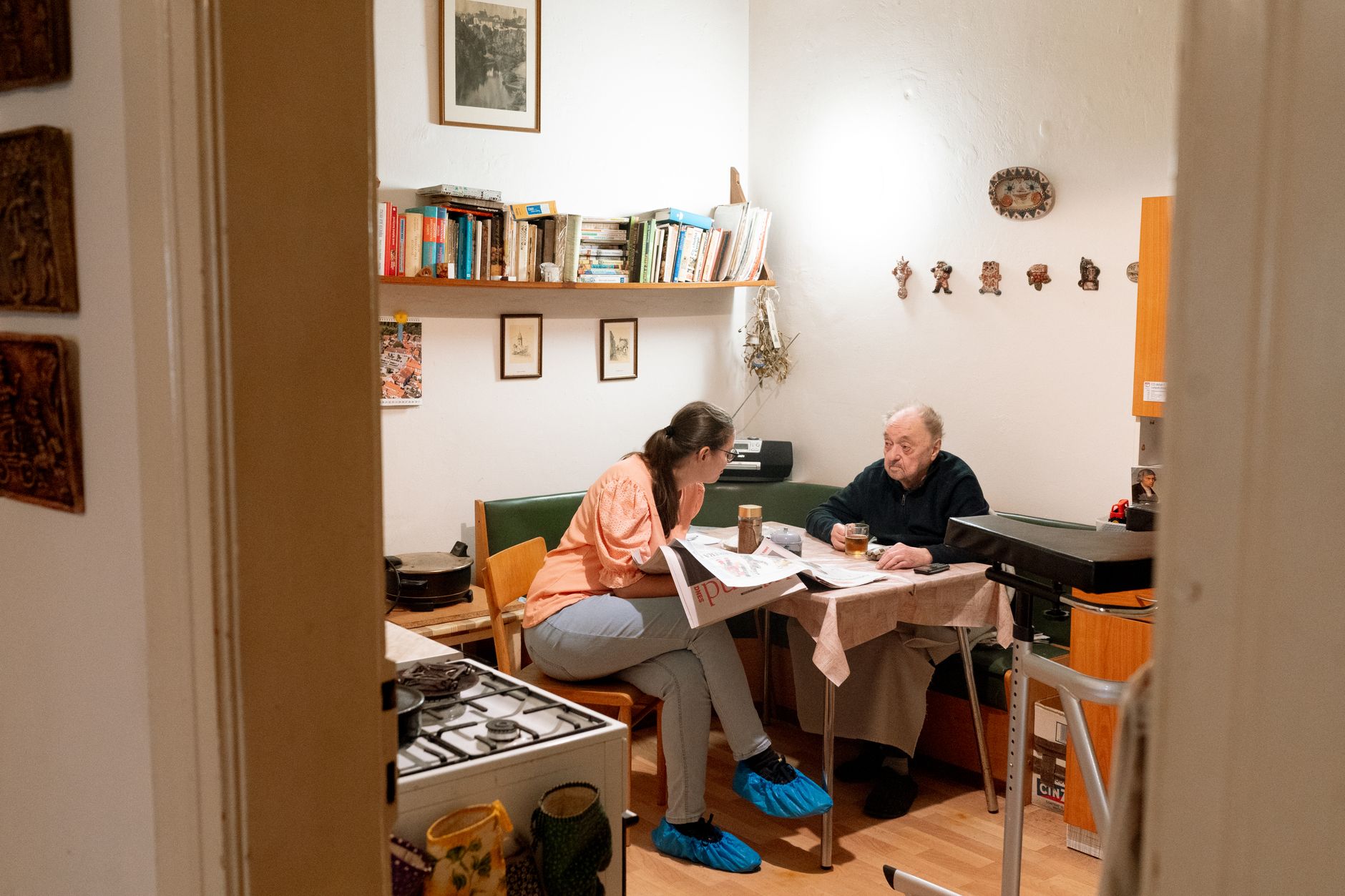
My sister’s kitchen
She didn’t wait for me to knock.
I’d gotten as far as the bottom of the ramp, because I couldn’t make myself take the steps, when the door swung wide and there she was, in the doorway, in a blue cardigan, leaning on the cane with her free hand pressed flat against the frame.
She looked smaller up close. Her hair was brushed. She had put on lipstick, I noticed, and not very well.
“That car sat at my mailbox for eleven minutes,” Margie said.
I opened my mouth. Every line I’d rehearsed was gone. “I was thinking,” I said.
“I know what you were thinking. I was watching you from the window over the sink. I saw your hand go to the crank.” She was breathing a little fast. “I thought, well. There it goes.”
“I couldn’t.”
“No,” my sister said. “I guess you couldn’t.”
She didn’t say come in. She didn’t say anything else. She turned, very slowly, and went down the hall toward the kitchen with the cane tapping on the boards, and left the door open behind her.
So I went in.
It was the same kitchen. That was what undid me, a little. The cherry-print oilcloth, a bit more faded. The wall phone with its long coiled cord gone gray. The smell of coffee and old wood and cinnamon. The chair at the head of the table where Don said grace, pushed in.
Margie lowered herself into her own chair with a breath she tried to hide. She pointed at the one across from her with her chin.
“Sit,” she said. “Before you say anything. I have to show you something first, or I’ll lose my nerve.”
I sat. I still had my coat on. I put my purse in my lap and the envelope on top of it, and she saw it, and her eyes went to it and away.
She reached behind her and opened the drawer under the telephone, the junk drawer, and took out a spiral notebook with a green cover. The cardboard was gone soft at the corners. It had a water ring on the front, and in the upper corner, the single word Mom in her square handwriting, in ink that had faded from black to brown.
She put it on the oilcloth between us, and she slid it across.
“The nurses wanted me to keep track,” she said. “What she ate. Her pills. How she slept. Who she asked for. They said it helps the doctors.” She cleared her throat. “I never threw it out.”
I didn’t touch it.
“Go on,” Margie said. “Open it.”
I opened it.
It was a log, plain as a ledger, ruled into columns of date and time and notes in the hand of a woman who worked a hospital desk for thirty years and believed in writing things down. Her handwriting was careful at the start and began to slant as the months went on, as if she were leaning into a wind.
Mon. Dec. 1. Ate half the oatmeal. Pills in applesauce. Asked for Arlene twice before nine.
Tues. Dec. 2. Toast and tea. Asked where Arlene was. Told her Piqua, working. She said, that is a long way.