The Garden I Grew for the Pantry
The step
It was the second week of February, and the ice on my back step was the color of dishwater. I was carrying the morning’s coffee grounds out to the compost heap in my slippers. That was the whole mistake. Seventy-four years old, and I wore slippers to the compost.
My right hip met the step, and I heard it before I felt it. It is a sound I can still bring up if I am not careful, a dry, small crack, like a green stick across a knee.
I lay on my side in the snow for eleven minutes. I know because I could see the clock on the stove through the open kitchen door, and I did arithmetic the way a person does who is trying not to think about something else.
I did not cry out. Nobody was going to hear me except the cardinals.
The only reason I did not lie there for an hour is Roy Tabor’s beagle.
Roy is seventy-eight and lives across the county road in the house his father built. His dog, Pearl, is the kind of beagle that has opinions. That morning she got through his gate and came across the road and stood at my fence barking at nothing, and she would not quit.
Roy came after her in his house shoes. He saw me from the road.
He did not holler and he did not run, because he can’t. He walked across my yard as fast as a man with two bad knees can walk on ice, and he got down in the snow in his good wool coat, the one he wears to church, and he took my hand.
“Deloris,” he said. “Don’t you move.”
“I am not planning to.”
“Good. Pearl, hush.”
He held on to my hand until the ambulance came. It took nineteen minutes. His coat was wet through at both knees when they lifted me, and I remember thinking that the cleaner’s bill was going to be my fault.
They put a rod down the bone of my thigh at the hospital in Mattoon, with a screw that goes up into the ball of the hip. The surgeon showed me the picture. It looked like a nail driven into a fence post.
Three weeks in the rehab wing after that, with a window onto the parking lot. But every day, about the time the therapist brought the walker, I would find myself doing a different set of figures in my head. Two hundred and twenty tomato plants. March, when you start tomatoes under lights. April, when the potatoes and peas go in.
What the garden was
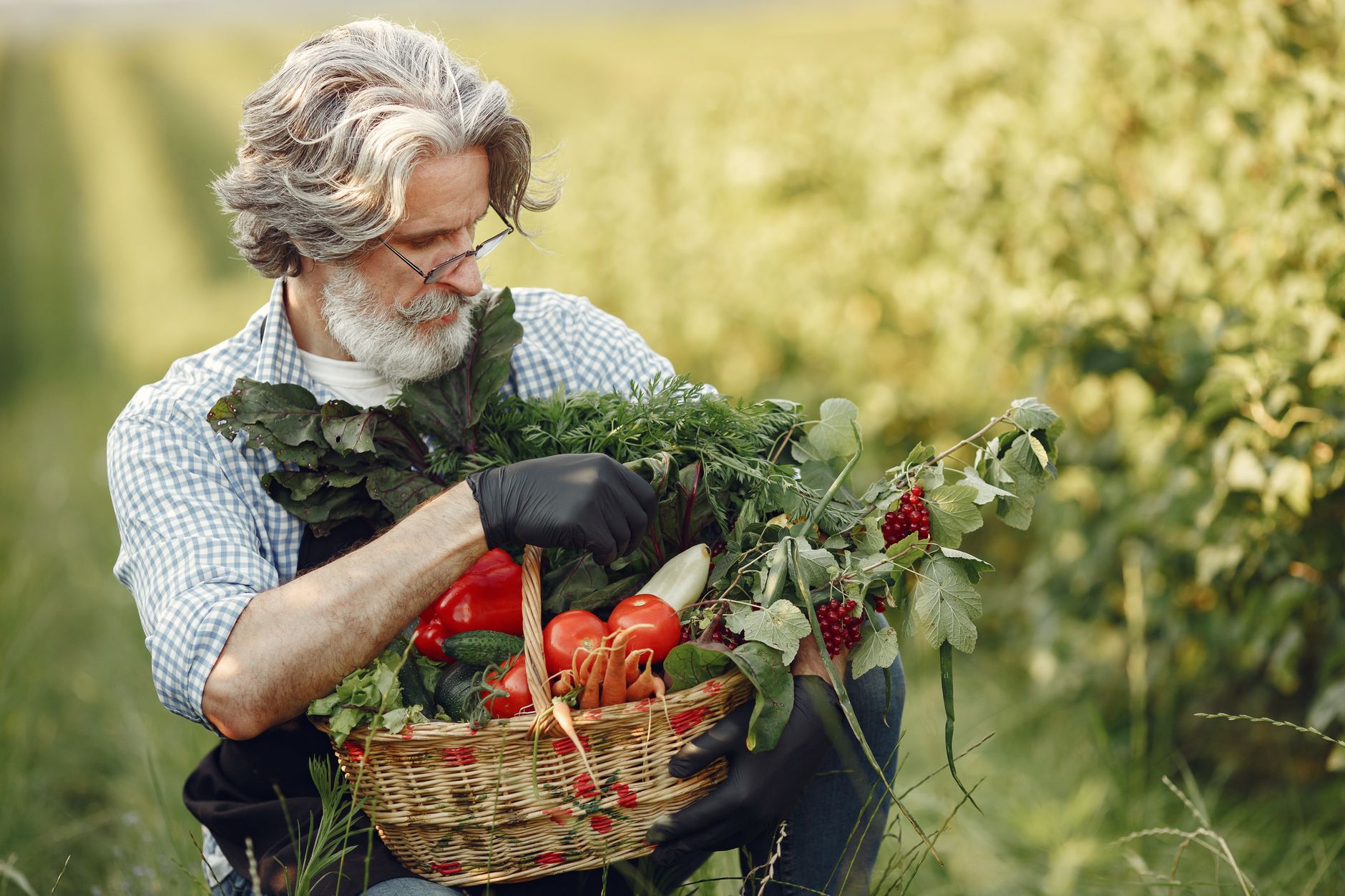
My garden was a hundred and ten feet by two hundred. A little over half an acre behind the house, running back to the fence line and the neighbor’s soybeans.
Every year I set out two hundred and twenty tomato plants, four feet between the rows and two between the plants, each one inside a cage Lyle made out of concrete wire in 1988. Roma and Amish Paste for the sauce people, Better Boy for slicing, and a few Early Girl, because there is a stretch in July when the early ones are the only thing ripe and everyone has been waiting.
Sweet corn went in four times, two weeks apart, so it came on all through July and into August instead of all at once. Bush beans, pole beans, cucumbers, peppers, onions from sets, potatoes in March or April. A long row of carrots I never once got to thin on time.
And zucchini. Twelve hills of it. You cannot be sensible about zucchini.
Every Friday from June until frost, I loaded the truck. Bushel baskets, mostly, and the old wooden crates from the elevator, and a few paper sacks for the soft things. I never washed anything. Water on a tomato shortens its life by days.
I would back up to the church annex before the sun was properly on the pavement, set it all inside the back door, and drive away. I never stayed. Every Saturday at nine, Nadine Brenner unlocked the pantry for the line, and by then I was home, on my knees in the beans.
I bought my own tomatoes at the grocery store in August, like everyone else in Arthur who didn’t have a garden. Lyle thought that was the funniest thing about me.
“You’re a woman of principle, Del,” he would say. “A fool, but a woman of principle.”
People ask me why I did it, usually at a funeral dinner, over the ham. I tell them it is just what we do around here. That is what people say when the truth is too long to tell standing up with a paper plate.
Here is the truth.