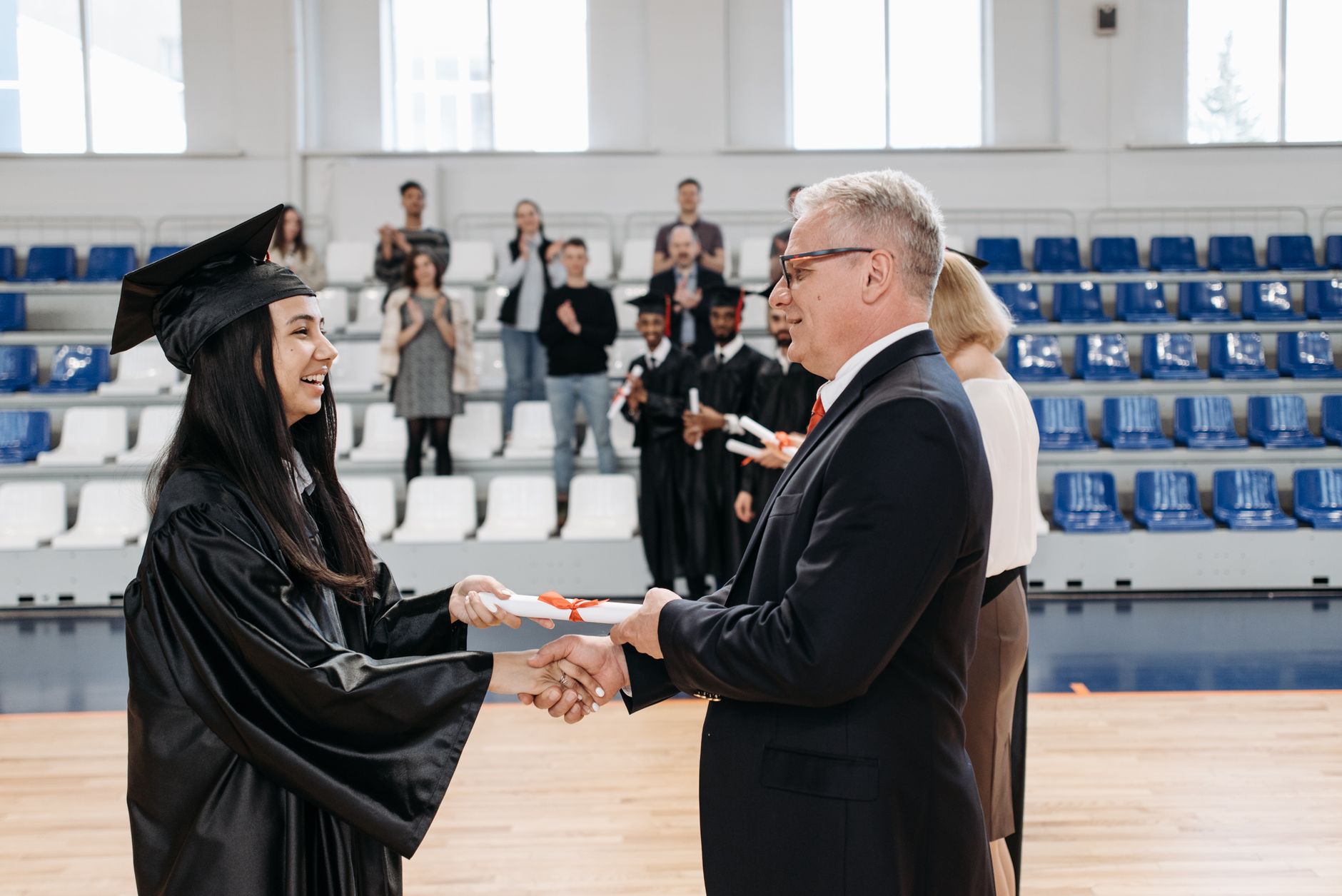
The Cap My Father Never Saw
The spring of 1993
I graduated from high school in May of 1993 with a 3.7 grade point average and a partial scholarship to Murray State.
It was not a big scholarship. Twelve hundred dollars a year from the Rotary, plus a little from the state. But it came with a letter, and I kept the letter in my sock drawer for a year, in case somebody wanted proof.
Nobody in my family had ever gone. Daddy quit school in the tenth grade to work. Mama finished the eleventh. My brother Dale, four years older than I am, went straight from high school to driving a gravel truck for a quarry in Calvert City. The idea that I might go to college sat in our house like a visitor. Everybody was polite about it. Nobody knew where to put it.
In March of that year, the barge yard cut the night crew from twenty men to nine.
Daddy was moved to day labor on the dock at lower pay, and then taken back at night at a lower rate than before, because he had missed the seniority line by a month. I came home from school one afternoon and found him at the kitchen table at three o’clock in his work boots with the mail in front of him. He was a man who was never awake at three o’clock in the afternoon.
He folded the letter and put it in his shirt pocket. He smiled at me like it was nothing.
“Go on and get your snack, Dee.”
That night I sat on my bed and did the arithmetic, which I was always good at. Murray was forty-five minutes away. Room and board cost more than my father’s cut paychecks. My mother would have to take on a twelfth house, and a thirteenth. I could see exactly how it would go. I could see my mother’s back.
So at supper the next day I announced that I’d thought it over and I didn’t want to go.
I said I would rather work for a year and save up, and that school was too expensive for the kind of grades I’d probably get. I said it all very fast, with my eyes on my plate, in a voice I thought sounded grown up.
Mama put her fork down. Daddy didn’t.
He chewed. He swallowed. He took a drink of his tea.
“You’re lying,” my father said. “But I’ll let you.”
That is the whole conversation. I think he knew I was giving him a gift, and what it cost me, and he decided to take it, because the other choice was to argue, and then I would have known he was ashamed. So he let me lie. I have never forgiven myself for how well it worked.
I took a job at a Rite Aid pharmacy counter in June.
The folding chairs
Our high school graduation was held outdoors on the football field. They set up rows of white folding chairs on the grass, hundreds of them, and the families came in their good clothes and fanned themselves with the program.
I walked in line with my class in my blue gown and looked for my parents in the stands, and it took me a minute, because they weren’t in the stands.
They were in the third row of the folding chairs on the field. Daddy had come straight from the barge yard, slept two hours, and gotten up again, which he had never done for anything. He was in his one suit, a gray one from Dale’s wedding that was tight across the shoulders. Mama was beside him in a navy dress she had ironed that morning on the kitchen table, her hands folded on top of her purse.
When they called my name, I heard my father clap. He had big hands, hard as shoe leather, and when they came together there was a crack like a board snapping, and half the field turned around to see who it was.
Afterward, in the parking lot, with the buses loading and everybody hugging, Daddy took off his jacket in the heat and hung it over his arm and looked at me for a long time.
“Next time,” he said, “I’m sitting in the front row.”
I laughed. I remember that I laughed. I said, “Daddy, there isn’t going to be a next time.”
He did not laugh with me.
“Then I’ll sit in the front row of that,” he said.
I thought it was the kind of thing a proud father says in a parking lot. I did not know I had been handed something I would carry for thirty-three years like a stone in my pocket.