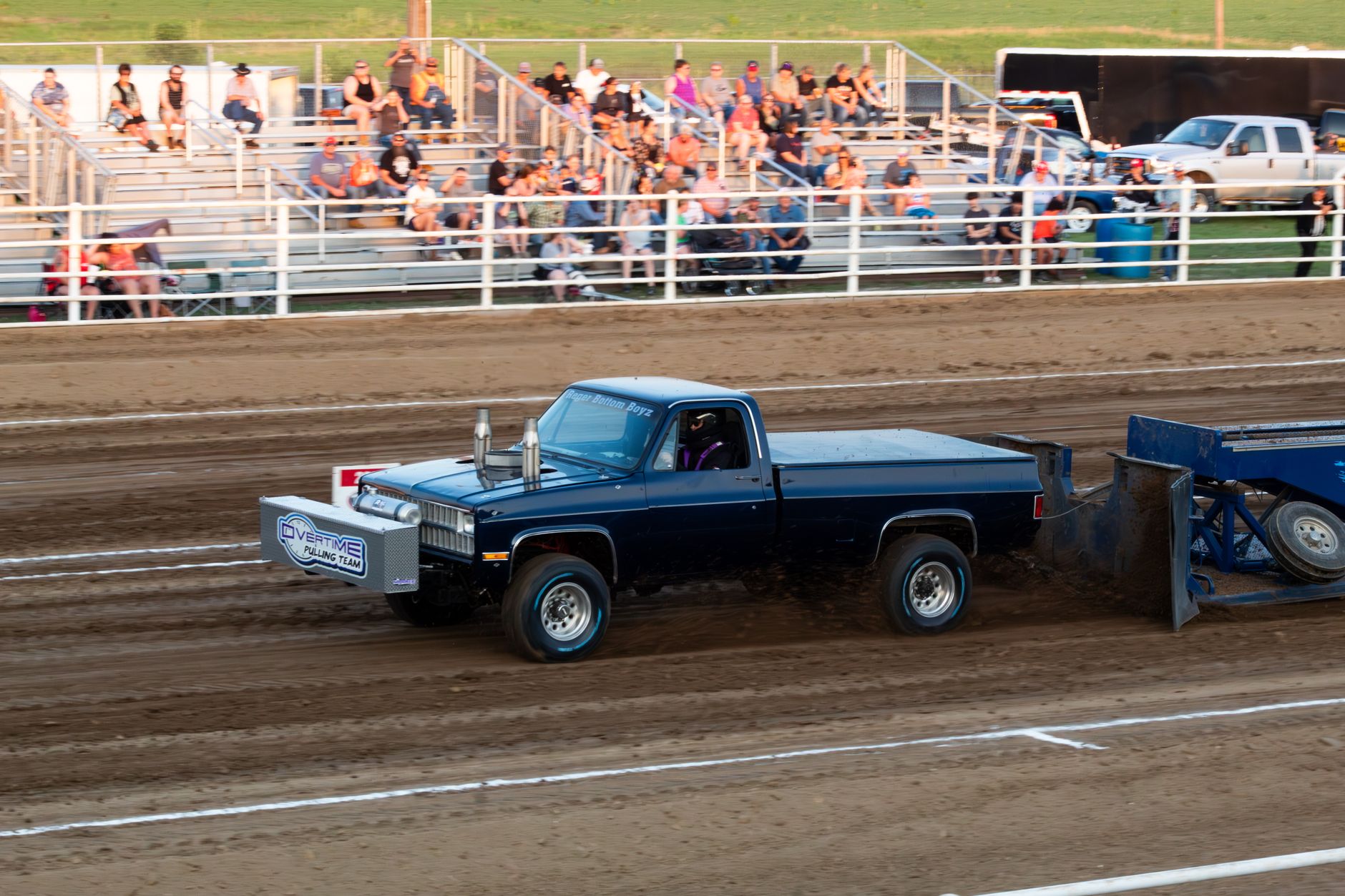
The Truck Grandpa Left Came Home
Not the Ford. Rodney’s own blue Chevy, the one with the bad fuel pump that had apparently never been bad at all. It stopped in the yard, and Rodney got out, slow, in the same brown work jacket, and stood there.
Bev was in the passenger seat. She didn’t get out. She sat with her purse on her lap and her eyes straight ahead, and I knew she’d come to make sure he did what he’d come to do.
I went out on the porch. Clint got out of the truck and came across the yard, wiping his hands on his jeans though they weren’t dirty. Colton came out behind me and stood on the top step.
Rodney had an envelope in one hand and a folded paper in the other. He came up the porch steps like each one cost him something.
“Can I come in,” he said. “I won’t stay long.”
We sat at our kitchen table. Clint across from Rodney. Me at the end. Colton in the doorway, because I didn’t have the heart to send him upstairs, and because he’d earned the right to hear it.
Rodney set the folded paper down first and slid it across to Clint. It was the title. The seller’s section was signed, Rodney Kroll, in his blocky hand, and the buyer’s line said Clint A. Lindahl.
“I went by the auction office this morning and got it back,” he said. “Told Merle’s wife it was going to the family. She didn’t argue.”
Then he set the envelope down beside it. It was a bank envelope, thick. “That’s sixty-eight hundred,” he said. “It’s what Amber paid. The sale money comes to me when her check clears, and that goes to the county treasurer, where it should have gone from me honestly in the first place. This is yours back.”
“Rodney,” Clint said.
“Let me get this out,” Rodney said. “Bev sat me down at our own table Saturday night and told me if I didn’t say it to you myself, I could find somewhere else to sleep. I believe she meant it. I would have, in her place.”
He took off his seed cap and turned it around in his hands.
“I got let go at the implement dealer in February,” he said. “Twenty-two years on the parts counter. They merged with the outfit in Clear Lake and cut the counter down to two kids with computers. I was sixty-four. Nobody hires a sixty-four-year-old parts man.”
Clint didn’t say anything. I watched his face go still, the way it does.
“I didn’t tell your mother,” Rodney said. “I don’t know why. Yes, I do. I was ashamed. Her dad farmed till he was eighty. I couldn’t keep a job at a parts counter. So I got up every morning at six like always and I drove around.”
“Drove around where?” I asked.
“The sale barn. The co-op cafe. The library in Clear Lake, filling out applications on their computer. I sat in the parking lot at the elevator some days and listened to the radio.” He looked down. “I paid the bills out of the severance and our savings. Bev never looks at the account. I always did that.”
“The second half of the property tax was due the end of September,” he said. “Thirty-four hundred. And the house payment, and the propane for the winter. The severance ran out in August.”
His voice went rough. “I told myself the truck was in my name. I told myself it was sitting in your shed and nobody drove it. I told myself Clint’d understand if he knew, and then I couldn’t stand for him to know. So I lied to him instead. That’s the order I did it in.”