The Envelope I Left for My Mother
“Kaitlyn Ann,” Jan said. Nobody else calls me that. “What’s wrong?”
“Can I stay with you for a few days?”
There was a pause. Then, “The spare room has clean sheets. Come whenever you want. I’ll keep supper warm.”
She didn’t ask me anything else. That is Jan.
I had picked up a short shift that afternoon, two to six, covering for a girl whose babysitter cancelled. I almost called off. Then I thought of Mrs. Olson and went.
I came home at six-twenty still in my navy scrubs, with my gray hoodie open because the car heater had finally kicked in. I left my keys on the hook. I stood in the kitchen for a long minute.
Dusk was going blue in the window over the sink, the way it does in October, and I had switched on the ceiling light, which laid a flat yellow glow across the oak cabinets and the old white refrigerator with my dad’s last fishing picture still stuck to it with a magnet from the feed store.
I heard her car turn into the drive. Her door. Her steps on the porch, then in the back hallway.
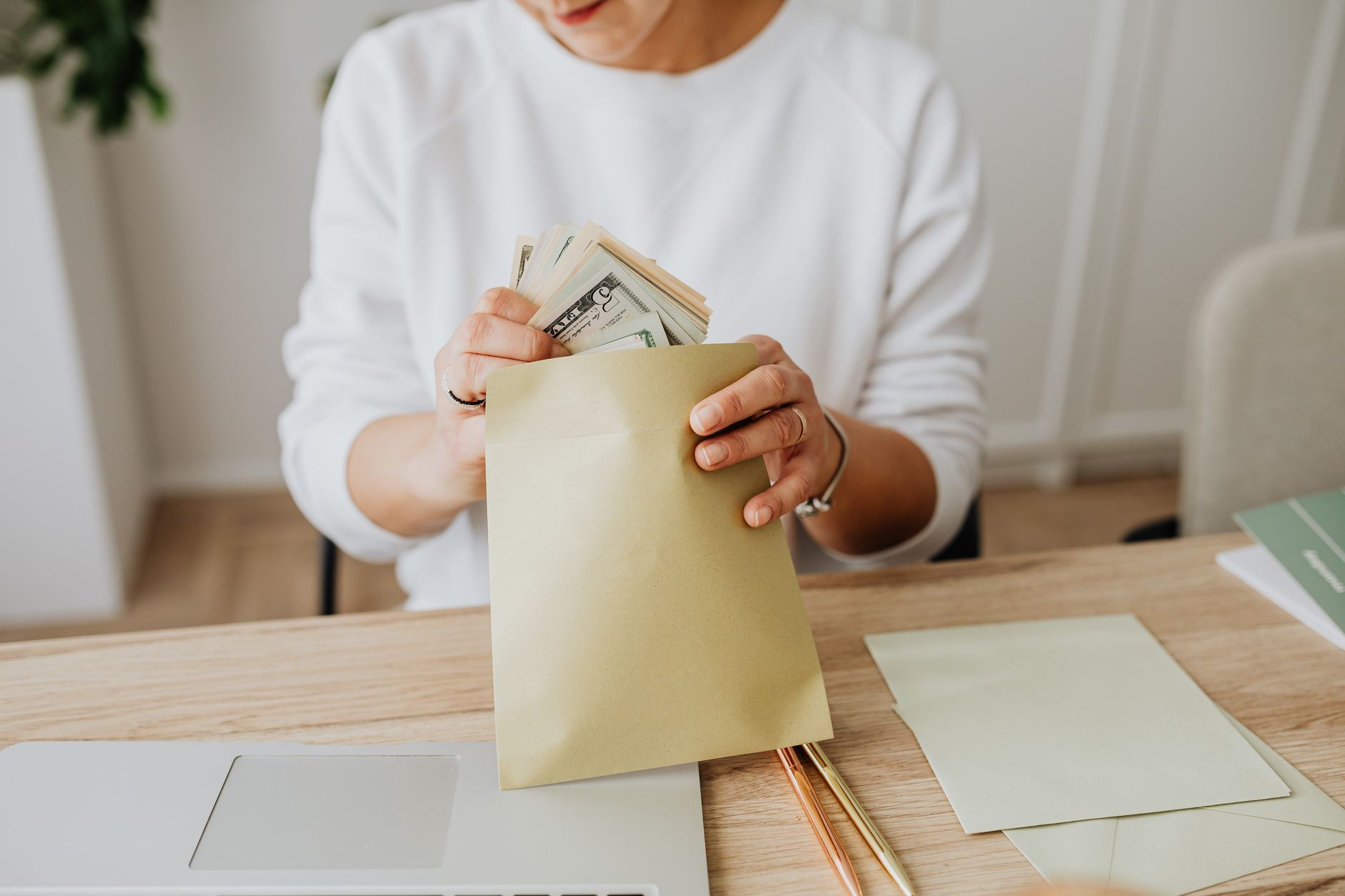
I took the envelope out of my hoodie pocket. I was setting it down in the middle of the oval wooden kitchen table, with the cash showing at the open end so there would be no question what it was, when my mother came in and stopped by the sink.
She had on the black cardigan she wears to the elevator every day from September to May, because the scale house is drafty. Her curly auburn hair, the color she has been keeping up since she was forty, was a little flattened on one side where her headset sits.
She looked at the envelope. She looked at the blue duffel bag by the back door. Then she looked at me.
“Kaitlyn,” she said. “What is this.”
“That’s my half of October, Mom,” I said. “The mortgage, the electric, the propane and the phone. It’s all there. Five hundred and forty-two.”
“Your half,” she said.
“I moved home to help you with the bills,” I said. “I didn’t move home to pay for the car.”
She stood with her hands clasped tight in front of her. The color had gone out of her face. She looked, for a second, exactly like she had looked at the hospital in Sioux Falls when the doctor came out to the waiting room.
“I was going to put it back,” she said. “I was going to pay it back, honey. I always pay it back.”
And I said the thing I wish I had not said.
“You always paid it back for Dad, Mom. Dad’s not here.”
I watched it hit her. I watched it go all the way in. I have thought about that sentence more than any other sentence I have ever spoken, and I still don’t know if it was cruel or only true.
She didn’t cry. That was worse. She just stood there with her hands clasped.
“Where are you going?” she said finally.
“Aunt Jan’s. For a few days.”
I picked up the duffel bag. I walked over and kissed her on the cheek, because she is my mother and because I didn’t know when I would see her again. She smelled like the elevator, grain dust and coffee.
“I changed my passwords,” I said quietly. “All of them. I’m not going to the bank about it. I’m not going to anybody about it. But you can’t have them anymore.”