The Tractor at the Church Door
Ben’s silence
I’ll say something about Ben here, because Ben comes out of this better than I do, and I want that understood before I tell the rest.
When Katie first brought him home, he showed up in brand new boots that hurt his feet. He’d bought them for the visit.
He walked out to the barn with me at five in the morning in those boots and asked me a hundred questions about the milking system.
He didn’t know a thing about cows. But he wanted to know, and he wanted me to see that he wanted to know.
By the end of that weekend he could put the units on as well as some hired men I’ve had.
So when he sat at that table and looked at his plate, I didn’t think less of him. I figured he was in the same spot I was.
His mother had stood up in front of forty people and given a gift. What was he supposed to do, stand up and call it ugly?
A man doesn’t shame his mother in public the night before his wedding. Not a good one. I knew that. I just hadn’t figured out yet what a good one does instead.
The morning
I didn’t sleep much. At a quarter to five I gave up and went out to the barn. We milk sixty-two cows, and cows don’t care who’s getting married.
They want to be milked at five and they want to be milked at five in the evening, and that’s the end of it.
Our neighbor’s boy, Jeff, had agreed to do the evening milking for me. He’s nineteen and the best help in the township.
I’d already written him a list he didn’t need, and taped it to the wall by the vacuum pump.
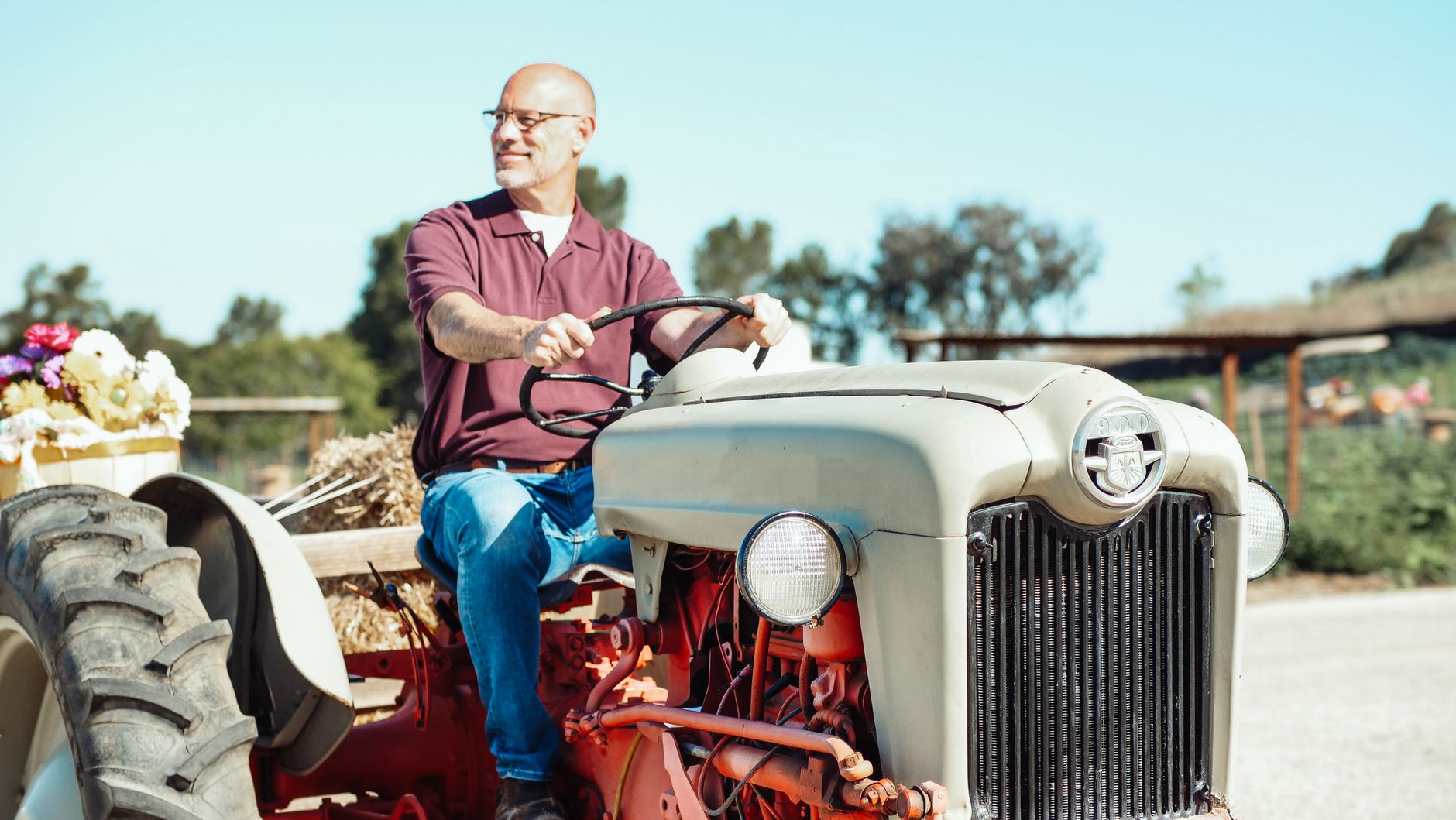
When the morning milking was done and the cows were back out, I went to the machine shed and pulled the tarp off the 60.
Then I started it. She fired on the second try and settled into that slow pop, pop, pop, and the sound bounced off the shed walls.
I drove it out under the yard light. The sky was just going gray in the east.
There was frost on the grass and on the windshield of Joan’s car, and my breath hung in front of me.
I washed it once with the hose and a bucket of dish soap. I scrubbed the grease off the hitch with a wire brush.
I got down on the cold cement and cleaned the inside of the back rims, where nobody ever looks.
Then I washed it a second time, because the first time I’d only gotten it clean, and I wanted it better than clean.
I wiped it down with old flannel shirts until there wasn’t a drop of water on it.
Then I waxed it. The hood, the grille, the fenders, the fuel tank. I waxed that hood until I could see the red barn in it, upside down and curved, with the silo behind.
My father would have laughed at me. Then he would have handed me another rag.
Around seven Joan came out in her bathrobe and her barn coat, with a cup of coffee in each hand.
She gave me one. Then she reached into her coat pocket and took out a roll of white satin ribbon from her craft drawer.
She didn’t say anything. She just walked around to the left fender and tied a big white bow on it, the kind she ties on the church pews at Easter. Then she walked around and tied one on the right fender.
Then she stood back with her coffee and looked at it for a long time. “There,” she said.
“Joanie,” I said.
“Don’t,” she said. “Just let it look nice. Whatever happens, it should look nice.”