The Red Paint on My Barn
So on Monday morning Brad wheeled his father out the front doors of the rehab hospital in Sioux Falls, and helped him into the front seat of my car, and buckled his seat belt for him, the way Arlo had once buckled Brad’s.
I rode in the back seat. Arlo’s good left hand stayed on the dashboard most of the way, like a man bracing for a bump.
He had more words by then. Not many, but more. He could say yes and no and coffee and Merle, and my name, the short way. He said “beans” when we passed a field, and Brad said, “Merle’s got ours all in, Dad,” and Arlo nodded hard.
We turned onto our county road a little before noon. The cottonwoods along the creek had gone yellow while he was gone.
I watched the back of Arlo’s head. I saw it the moment the barn came into sight over the rise, because his whole body leaned toward the window.
Brad slowed down.
We came up to the end of our lane, and Brad started to make the turn, and Arlo’s left hand came off the dashboard and grabbed his son’s arm.
“Stop,” Arlo said.
Brad stopped the car right there at the mailbox, half in the lane and half on the gravel road.
Arlo sat and looked at his barn.
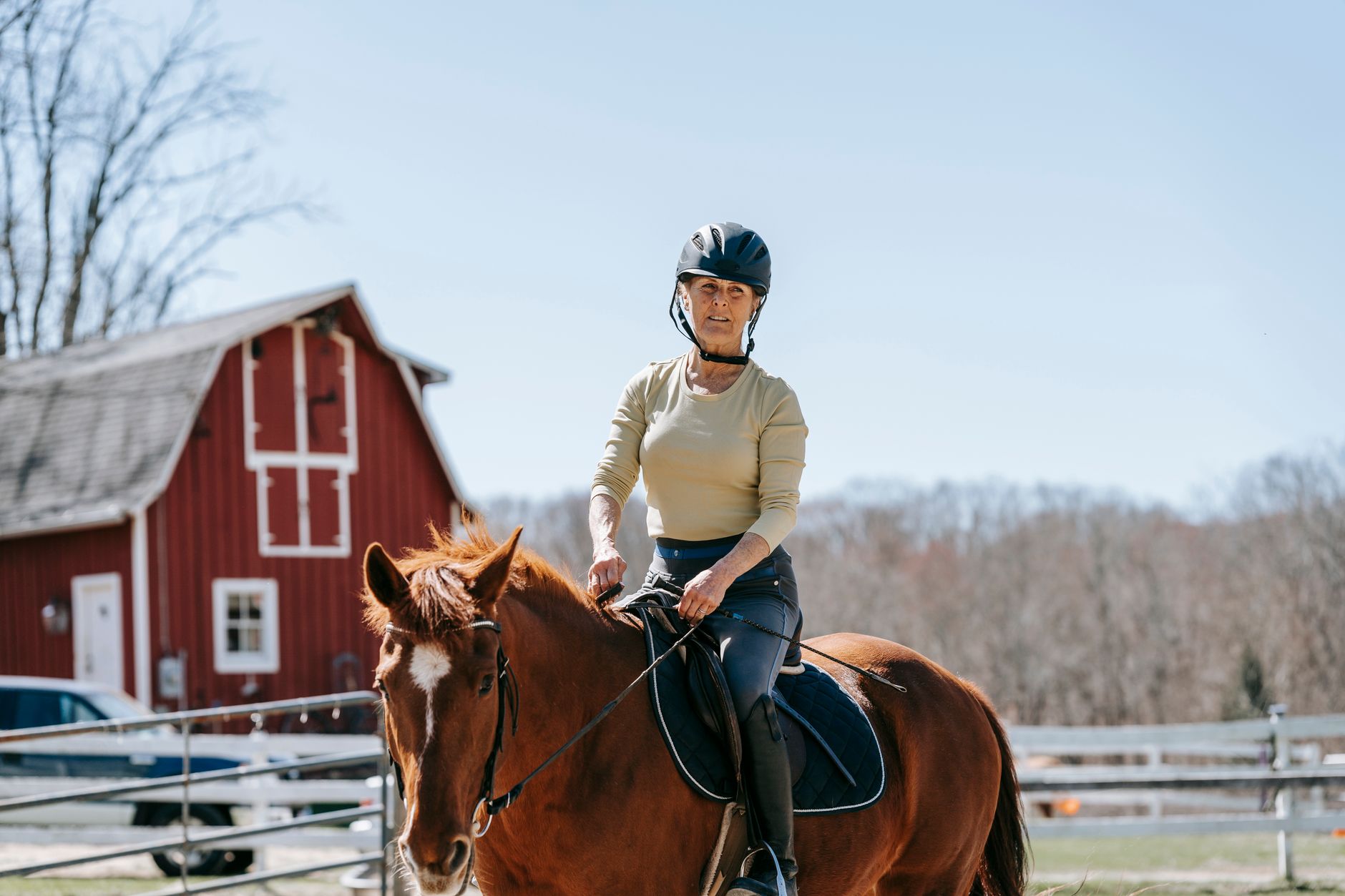
It was red, deep and even, the right red, glowing a little in the noon sun. Three sides and the peaks and the trim white again, and one gray strip down the northwest corner by the silo.
And above the haymow door, in white, R.J. 2026.
He looked at it for a long time. I could see his eyes moving, reading it. His mouth worked.
“Who,” he said finally.
So I told him. I leaned forward between the seats and told him all of it, plain, because I had promised him a long time ago that I always would.
I told him about Thursday night and the headlights. About the gray. About Gene at the farm store and the eight pails. About Nate and his rules, and Merle in the lift, and twenty-two kids, and the sloppy joes, and the Peterson twin who ate five.
I told him about Emma with the sash brush and Merle holding her belt.
I did not leave out who had painted it gray. Brad sat in the driver’s seat with both hands on the wheel and let me tell it, and he did not interrupt me once.
When I finished, Arlo turned his head slowly and looked at his son.
Brad looked straight ahead out the windshield. “I’m sorry, Dad,” he said. “I thought you weren’t coming home. I was scared and I did a stupid thing.”
Arlo didn’t say anything for a while. He looked back at the barn. Then his left hand let go of Brad’s arm and lifted, slowly, and pointed at the gray corner.
He looked at Brad, and pointed again.
Brad understood him. I think it was the first time in three weeks that anybody had understood him the first try.
“Yes, sir,” Brad said.
He pulled the car the rest of the way into the yard and parked it where his father could see the northwest corner through the windshield. He rolled Arlo’s window down so he could hear.