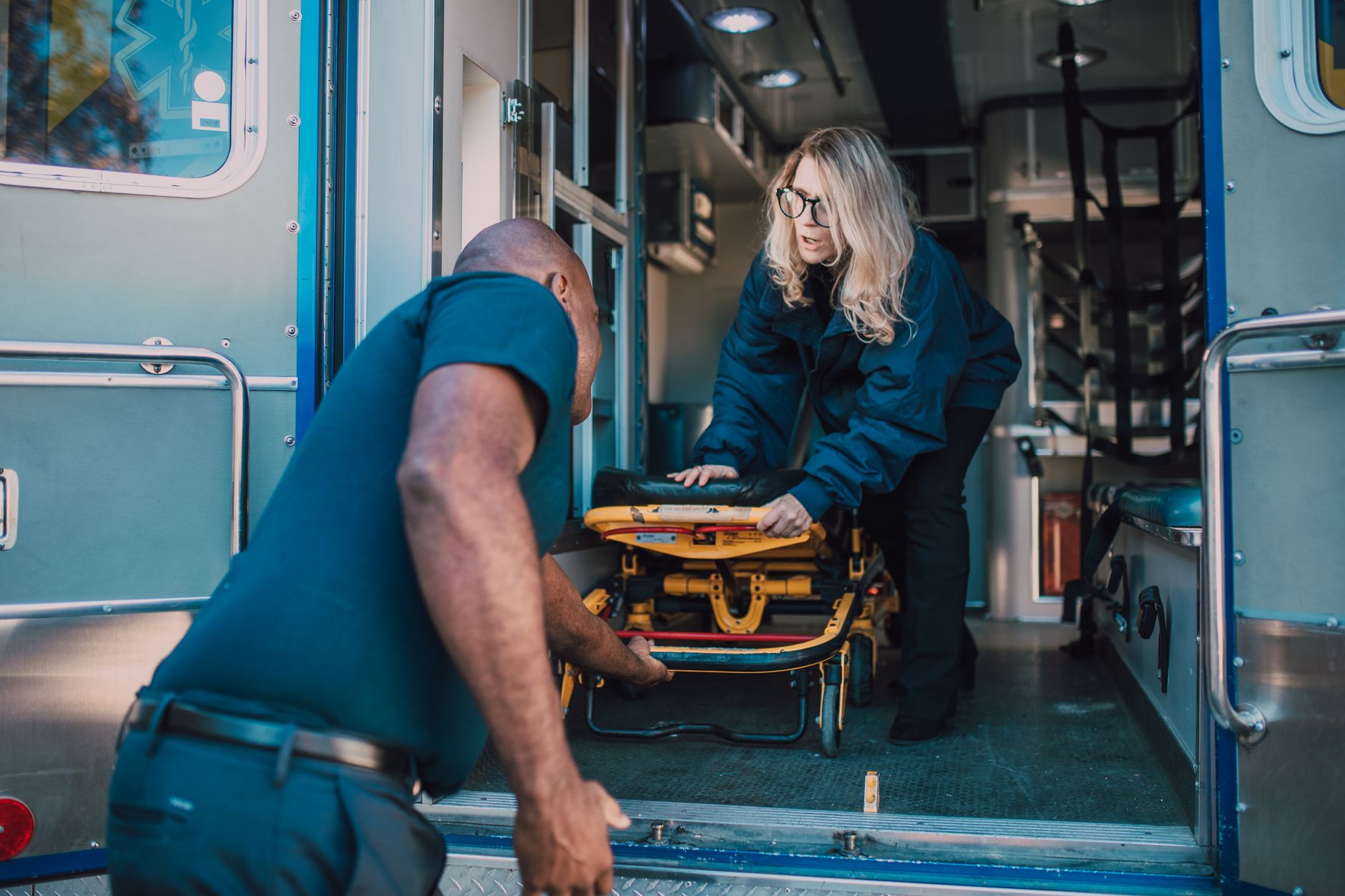
The Paramedic Who Knew My Name
It was a name only my students used. When a man in his forties said it to me in the checkout line at the grocery store, I knew before I turned around that I had taught him.
And I had retired in May believing none of it had added up to anything.
But on the last day of school, I stood in Room fourteen with a cardboard box and an empty bulletin board and a janitor named Orville waiting politely by the door with his keys, and I did the sum. It’s a habit. Nine hundred and some kids, and I could say with confidence what had become of maybe thirty.
My retirement party was a Friday in May in the school cafeteria. Eleven people came. I counted. There was a sheet cake with a frosting apple on it that someone had put a lot of hope into, and a card signed by the whole building, the signatures running off the page onto the back. Most said some version of Enjoy your retirement. One, from a first-year teacher whose name I had barely learned, said You were the first person to be kind to me here. I read that one three times in the parking lot.
I drove home with the card and a box from my desk: a stapler, a ceramic apple from a fourth-grade class, a coffee can of broken crayons I could not throw away. I put the box on a garage shelf over the paint cans and did not open it again.
Gerald, who has never been a man for speeches, said to me one night in August while we dried the dishes, “You seem quiet.”
“I’m not quiet.”
“You’re quiet like a woman doing arithmetic.”
“Thirty-eight years is a big number,” I said, “with nothing in it.”
He did not say anything to that. He put away the forks. He understands that some sentences are for hearing and not for fixing. But he stayed in the doorway a moment longer than he needed to, and then he went to watch the news.
That was in August.
It was October when the scoop hit the floor.
Dolores drove me down 231 at exactly the speed limit, both hands on the wheel, and did not talk. I was grateful. At the hospital they put me in a small room with a couch, a box of tissues, and a painting of a barn. I called Beth in Indianapolis and Ron in Fort Wayne and said the same sentence to both, in the voice I had used for thirty-eight years to announce a fire drill: “Your father has had a heart attack. He’s alive. Drive carefully.” Then I waited, and I thought about Marcus Deel. It took me nearly an hour to find him. Not the face, because I had no face to find. It was the name. I turned it over until it fell into place like a coin to the bottom of a well, and I heard it land.