The Morning Mom Took Back Her Checkbook
The signature
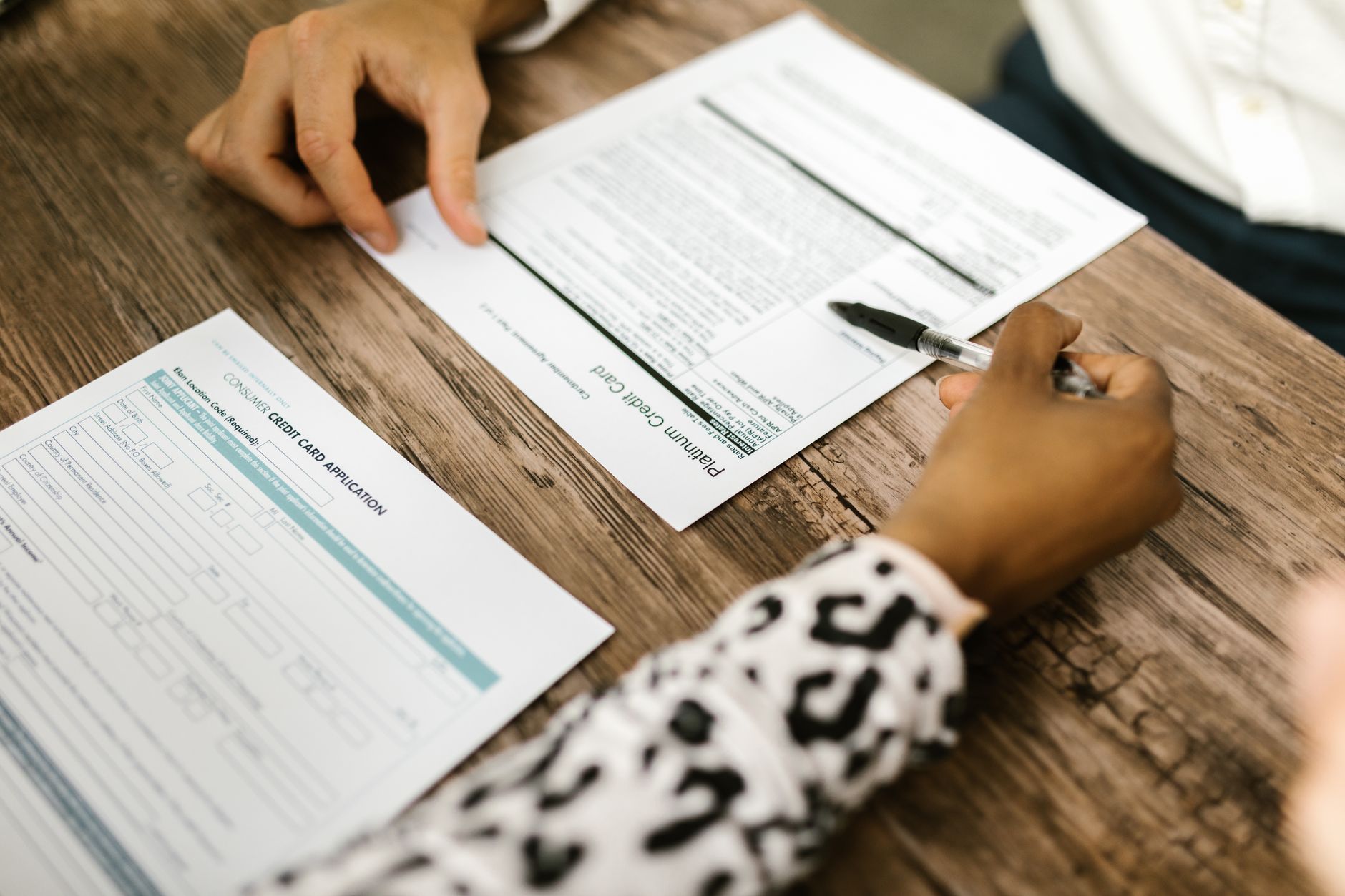
Mom took the pen.
She signs in the slow Palmer hand her country school teacher taught her in 1953. The teacher used to make them do ovals for ten minutes every morning before they were allowed to write a single word.
She wrote her full name the way she writes it on everything that matters. Marlys, then her middle initial, then our last name. Every loop closed. Every letter joined to the next. No hurry at all.
Her hand shook a tiny bit on the capital M, and she stopped. She took a breath. Then she started it again from the same place and finished it clean.
I kept my hand flat on her back the whole time. I could feel her breathing under the parka. I thought of my father’s square block printing in that 1972 notebook, and the place in April where her slanted writing took over.
Behind us the bell over the door chimed and let the cold in. Somebody stamped their feet on the mat. Mom did not turn around.
She wrote the date. She checked it against the calendar on the wall behind Karen. Then she set the pen down, straight, beside the form.
“There,” she said softly.
Karen took the form. She looked it over and initialed the corner. Then she did not move.
She looked at her screen for a long time. Long enough that I started to wonder if something was wrong with the form.
Then she reached under the counter and pulled out a printout, one sheet, warm from the printer. She turned it over just far enough for Mom to see the top line.
“Marlys,” she said gently, “do you know this account number?”
Mom put on her reading glasses. “No,” she said. “Should I?”
“Before you go,” Karen said, “there’s something about that $9,000 you need to see.”
What Karen said
Mom looked at the paper and then at Karen. “All right,” she said.
Karen turned it over and slid it across. It was a transaction record. The $9,000 had not gone to a scammer. It had not gone to a stranger. It had gone, on December 29th at 4:41 in the afternoon, into the business checking account of Greg’s insurance agency.
I had known in my stomach since Friday night. But it is different to see it printed out on a piece of paper, with an account number and a time down to the minute.
Mom read it. She read it slowly, the way she reads everything. Then she laid her hand flat on top of it.
Karen leaned toward her across the counter and lowered her voice, even though there was no one left in the lobby to hear.
“Marlys, I want you to know something,” she said. “When Greg brought you in here in October, he asked me to make him a joint owner on everything. You told me twice, right in that chair, that it was still your money. So I made him a signer and nothing more. I hope I did right by you.”
Mom’s eyes filled up. “You did,” she whispered.
“And I want you to know this too,” Karen said. “He came in himself on the 29th, right at closing, to make that transfer. I asked him if his mother knew. He said he would put it back before you ever noticed. He said it was just for a few days.”
She stopped and pressed her lips together. Then she went on.
“I taught that boy in Sunday school, Marlys. I taught him the Seventh Commandment with a felt board. I should have called you that night, and I didn’t, and I’ve been sick about it since your check came back. I’m sorry. That printout is yours. You have every right to see where your money goes.”
The lobby was very quiet. The radiator ticked. Out the front window the snow kept falling past the hardware store sign.
Mom reached across the counter and put her hand over Karen’s.
“You did more for me in October than my own son did,” she said. “Don’t you carry this one. It isn’t yours to carry.”
Karen nodded and wiped her eyes with the side of her finger. She said, “Thank you, Marlys,” very quietly, and then she straightened up and was the bank again.