The Kolaches That Sold Out Before Hers
“It’s Saturday,” he said.
“I know what day it is,” I said, and kissed him, and went.
The church kitchen at St. Wenceslaus is in the basement, down a set of stairs that have been painted battleship gray so many times the edges are rounded.
It has two big ovens, a long steel table down the middle, and a window up at ground level where you can watch people’s feet go by on the sidewalk.
When I came down the stairs at six on the dot, the lights were already on, and the whole room smelled like warm milk and yeast. A little radio on the windowsill was playing polkas from the Czech hour out of Columbus.
And Agnes was there. She was eighty-one years old and about five feet tall, in a flowered housedress and a white apron, with flour up past both wrists.
She had a ball of dough the size of a basketball in front of her, and she was punching it down like it owed her money.
She looked up at me over her glasses.
“You’re the Novak bride,” she said. It was not a question.
“I’m Brittany,” I said. “I’m a nurse. I work nights. Saturdays I’m free.”
Agnes looked at me for a long moment, up and down, from my ponytail to my tennis shoes. Then she reached under the table, pulled a folded white apron off a stack, and tossed it to me.
“Wash your hands,” she said. “Hot water. Then come here.”
That was the whole interview. I found out later that she knew exactly who I was and exactly what Rose had said at the wedding, because in a town of nine hundred, everybody knows everything by Monday.
She never mentioned it once. Not that day, not that year.
There were five of them that first morning. Agnes, and Marlene, and two sisters named Dorothy and Jean who were both in their seventies, and a younger one, Kathy, who was only sixty-four and got teased about it.
They all had their own places at that long steel table, and they all knew exactly where every bowl and spoon lived.
Agnes put me at the end of the table, next to her, where I could not do much damage.
“Watch,” she said. “Today you watch. Next week maybe you touch.”
So I watched.
I watched Agnes scald the milk in a dented aluminum pan until a skin just started to form, then pour it over butter and sugar in a crockery bowl and wait, testing it with her pinky, until it was warm and not hot.
I watched her proof the yeast in a cup with a pinch of sugar and set it on the back of the stove until it foamed up like a root beer float.
I watched the egg yolks go in, and the salt, and the flour, a cup at a time, while she worked it with a wooden spoon whose handle had been worn smooth as a bone.
She did not measure the last of the flour. She just kept adding a little and looking at it and adding a little more, and when I asked her how much, she said, “Until it’s right,” which was the single most useless and most true thing anybody ever told me in that kitchen.
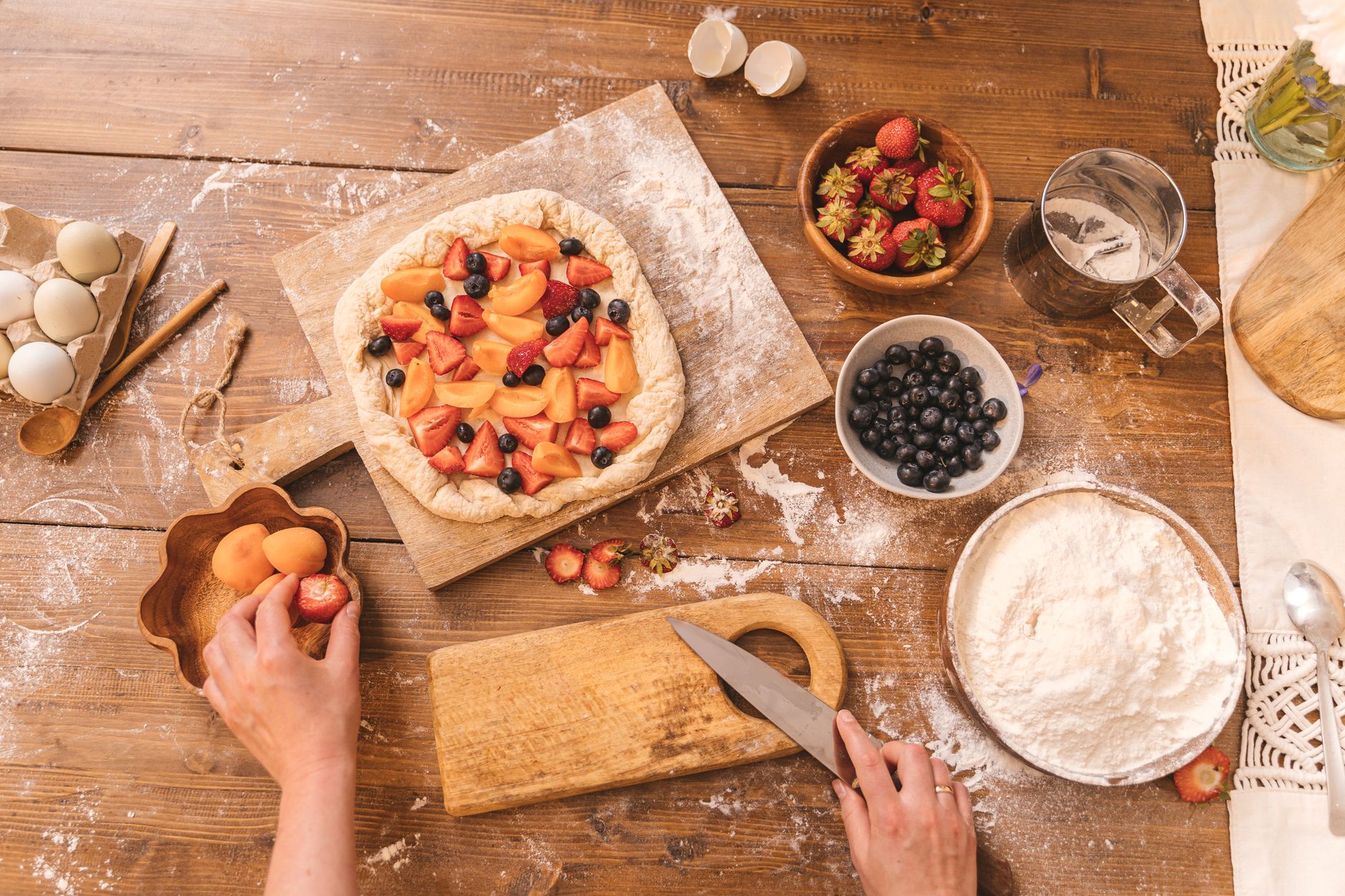
The dough rose under dish towels on the warm end of the table. While it rose, Dorothy and Jean cooked the fillings. Dried apricots simmered in a pot with sugar until they fell apart and turned the color of a sunset.