The Barn Where The County Got Married
Chapter 9
I have told you I never looked up. In forty years of weddings I never once tipped my head back and really looked at my own rafters, because I was always down on the floor with the broom or on the ladder with the lights or on the back bench with my face in my handkerchief.
So I did not know.
The rafters were covered. Every beam I could see, every board within reach of the loft, every inch of old cedar my father had cut by hand in 1931.
Names. Carved into the wood with pocketknives, small and deep and careful. Hundreds of them. And beside every name a date.
Earl’s name and his bride’s, May 1986, cut up near the loft rail where a boy could reach from the top of the hay.
The diner girl and her trucker. The soldier and his bride. The two widowed sixty-year-olds. The couple who finished by candlelight in the storm. The mother in 1991 and her daughter in 2013, their carvings not three feet apart, and I had never known either one was there.
Forty years of couples had been climbing up into my loft, quiet, while I was downstairs crying on the back bench, and they had been cutting their names and their dates into the rafters of the barn I gave them.
Not one of them had ever said a word to me about it.
And then I saw the peak. Up in the very center of the roof, in the oldest and highest beam, the first beam my father ever set, there were two sets of initials so weathered and so deep they had gone nearly black with age.
V and H. 1975.
Verna and Harlan. June of 1975. My own wedding. Cut by a hand that was not mine and not Harlan’s, because neither of us had ever carved a thing in that barn in our lives.
My father. It had to have been my father, up in the peak with his pocketknife, the summer he married off his only daughter in a barn he built with his own two hands.
He started it. The first carving in that barn was ours, and he put it there, and he never told me, and every couple for forty years had been climbing up to add theirs to his, and I had spent four decades looking at the floor.
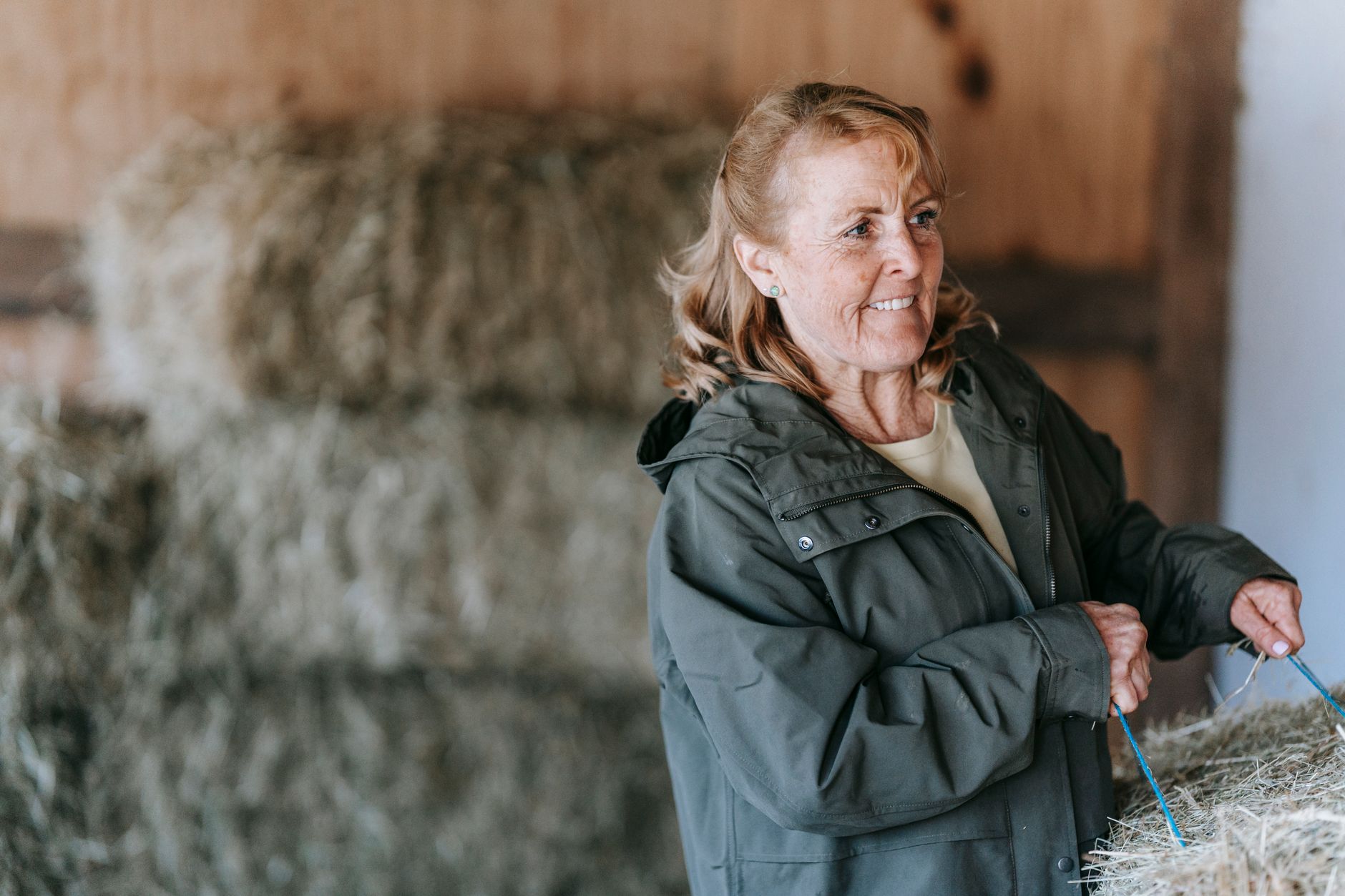
I sat down on the hay bale. My legs simply quit. My good dress and all.
And that is where I was, a seventy-year-old woman crying at her own granddaughter’s wedding for reasons nobody in that barn yet understood, when Earl Pruitt stood up.