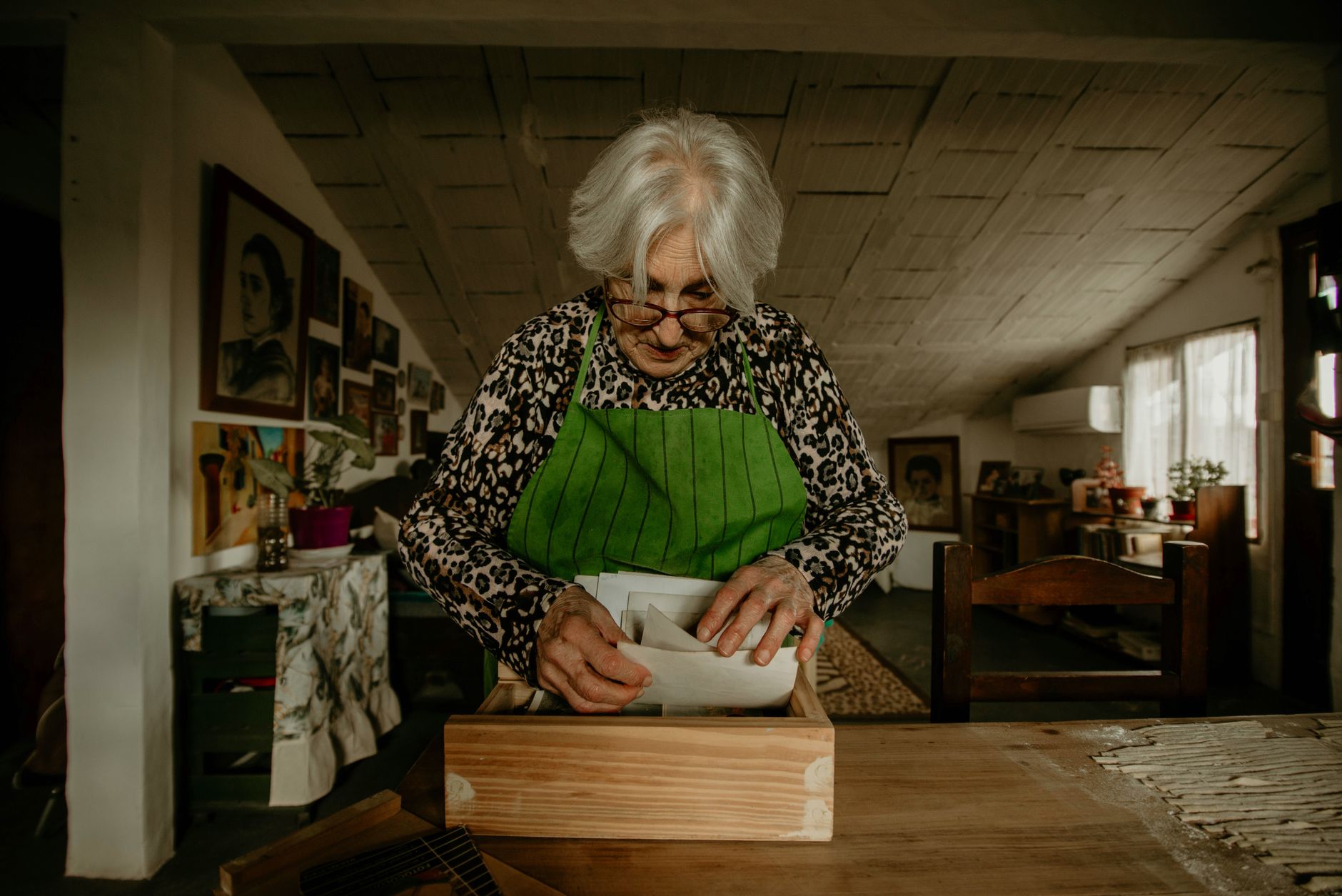
The Recipe Box That Came Home
Rhonda’s reason
What I did not know that Saturday night was that Rhonda was already in her car.
I found out later she had called Prairie View on Friday evening, and Mom had told her, very plainly, that there was a potluck at St. John’s on Sunday and she would see her there.
Mom did not tell her anything else. Rhonda told me afterward that she drove three hours across the state on Sunday morning, through Lincoln and down the two-lane, rehearsing what she would say to me in the church parking lot. She expected a fight. She thought she deserved one.
Jeff lost his job in August. He had worked twenty-four years at a cabinet plant on the south side of Omaha, the kind of place that makes kitchens for new subdivisions.
The company sold the plant to an outfit from Texas, and the Texas outfit closed it in six weeks.
Jeff is a good man, a steady man, the kind who fixes the neighbors’ snowblowers for free.
He had been out every day since August applying for jobs, and at fifty-four nobody was calling him back. Their youngest boy still had a year of tuition left at the college in Kearney.
Rhonda had not told anybody. Not Mom, not me, not her church.
She told me she was ashamed, and she told me she did not want Mom worrying about it in a new room where she could not even get up and make a casserole.
She said she had sat in her basement the week after Mom moved, with the rooster box in her lap, and scanned every card, and somewhere around the fortieth one she had thought about a woman at her work who sold old postcards online and paid her car insurance with it.
“I told myself Mom would never use them again,” she said. “I told myself you’d never notice. You never come to Omaha. You never asked about the scans. And I told myself it was just paper, and the words were safe on the thumb drive, and nobody was hurt.”
“Then the rolls sold,” she said, “in the first two hours. And I sat there and looked at that notice, and I knew. I knew right then. But I’d already paid the fees and I already needed the money and I just kept going. And then you called and I said they were just cards.”
The potluck
The harvest potluck at St. John’s Lutheran is the last Sunday of October, right after the late service.
It has been held in the same basement fellowship hall since before I was born, with the same long tables and the same white paper tablecloths off the same roll.
The altar guild runs it, which means Marlene runs it. Marlene is seventy-six and has been head of the altar guild since the Carter administration.
When I called her Saturday and said Mom was coming, she said, “Then Lorraine sits at the head table,” and hung up to go make phone calls.
When Mark and I wheeled Mom in, the ladies had already put a lavender cloth napkin at her place and a little jelly jar of mums from somebody’s garden.
Mom had worn her lavender church blouse, the good one with the pearl buttons, and Abby had done her hair.
She held a small stack of her cards in her lap, tied with kitchen string.
She had picked them out herself that morning at Prairie View: the scalloped corn, the ham balls, the sour cream raisin pie, Grandma’s angel food. I had carried the rest of the box in a canvas tote.
I set the basket of rolls down in front of her.
Two of the ladies had brought my extra pans out from the kitchen, still warm, wrapped in dish towels, and set them on the serving table between Marlene’s crockpot of ham balls and somebody’s green bean casserole.
“Whose rolls are those,” said Bev, who has been the church organist for thirty-one years.
“Mine,” said Mom. “Tina baked them. Off the picture.” And then, because the ladies all looked at her, and because she has never been able to leave a good story alone, she told them.
She did not tell them about Rhonda. I want to be clear about that.
She told them that her cards had gone on a little trip and come home again, and that one of them had gotten lost in Ohio, and that her daughter had baked from a photograph. That was all she said.
Then she untied the string and started passing her cards around the table. Marlene put her reading glasses on. Bev held the scalloped corn up to the light.
For half an hour, my mother taught a class. She told them which recipe came from which funeral, and which pie had won a ribbon at the county fair, and which bierocks recipe was her mother-in-law’s and which one was better. The ladies kept coming back for rolls.
Mark stood by the coffee urn with his plate, grinning, talking to Jim from the elevator about yield.
A few of the men had wandered over to the head table with their plates, the way men do at a potluck when they smell a story and do not want to look like they are listening.