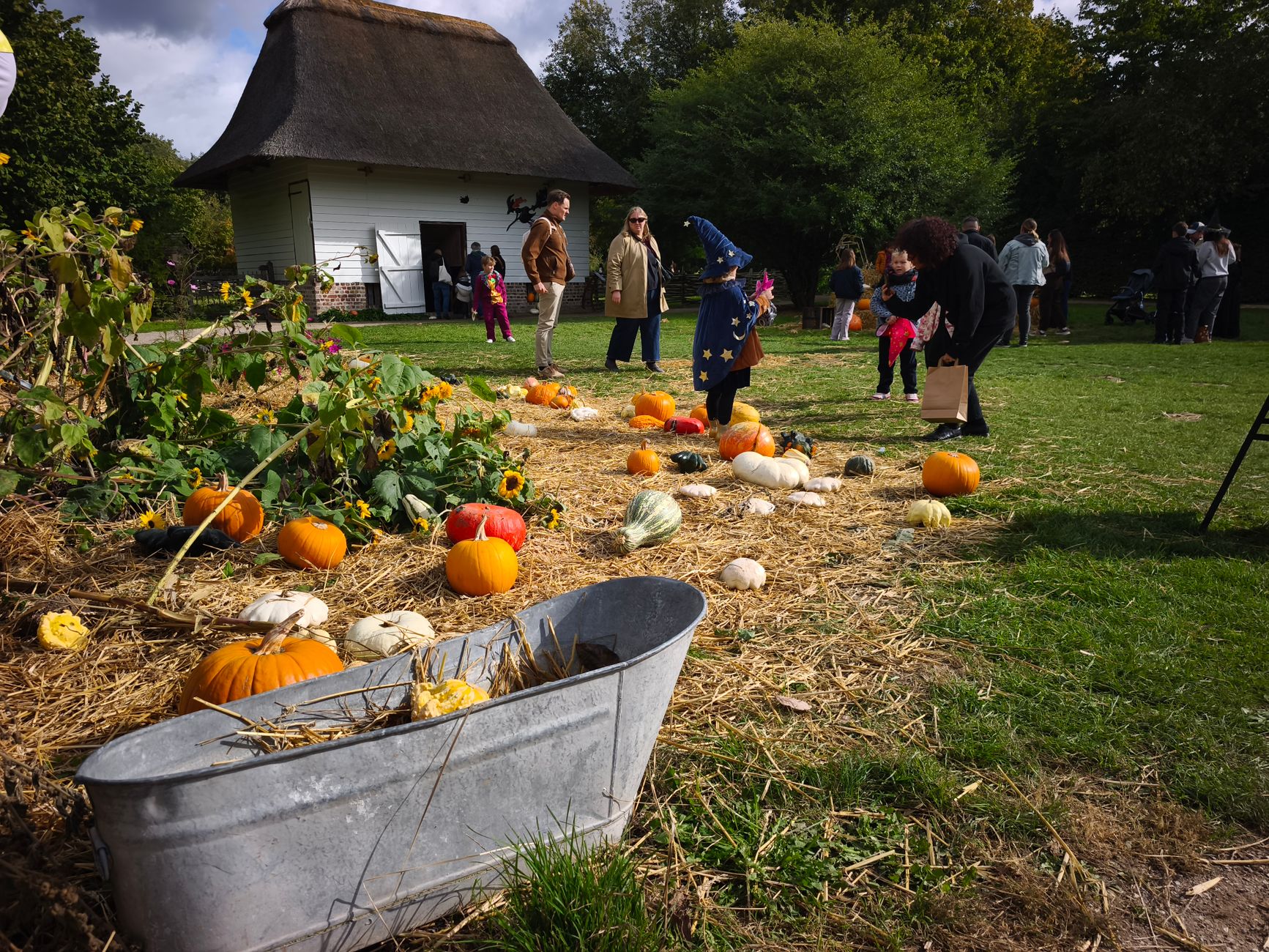
The Pumpkin Patch That Filled a School Bus
Roger mowed paths through the patch with the brush mower, wide enough for two little kids side by side, and he went over them twice so there were no vine stubs to trip on. Where the black-dirt end stayed wet, he hauled in four loads of wood chips from the pile by the windbreak and spread them by hand with a fork.
He finished the rails on the hay rack. Plain two-by-sixes bolted to the stakes, chest high on a six-year-old, painted barn red because there was half a gallon left over. He put straw bales down both sides for seats and a bale across the front so nobody could slide forward.
“First gear,” he told me. “Walking pace. I’ll have a grown-up at each corner, and nobody stands up while the wheels are turning. That’s the rule.”
“Who’s going to make twenty-four first graders sit down?”
“Mrs. Becker,” he said. “I’ve met first-grade teachers. They could run the Army.”
I set up the hand-washing station by the barn hydrant. Two galvanized washtubs on sawhorses, a pump bottle of soap, a roll of paper towels on a broom handle, and a five-gallon pail for the trash.
I filled a cooler with juice boxes. I baked four pans of apple bars, the same ones I’d been cutting when Courtney told me we weren’t good enough, and I didn’t think that was funny at the time, but I do now.
I went through the patch with a wheelbarrow and set aside thirty of the nicest round ones near the wagon, in case some child got overwhelmed and couldn’t choose. I’ve seen it happen. You put a six-year-old in front of six hundred pumpkins and some of them just freeze.
Mrs. Becker had called me on Wednesday with one more thing.
“I wanted to tell you about one of my kids,” she said. “A little girl named Emma.”
“She moved here in August, she and her mom, they’re staying with an aunt in the apartments by the feed mill. I asked the class who’d been to a pumpkin patch before, and she was the only one who didn’t raise her hand. She’s never picked one off a vine. She asked me if they were going to be in a store.”
“Well,” I said, and I had to stop a second. “They won’t be in a store.”
“I didn’t think so,” she said. “I just wanted you to know who she was.”
Friday came up bright and cold. Forty-eight degrees at noon, a blue sky with no clouds at all, the maples along the lane gone that deep orange they get right before they drop. It had rained Wednesday night, so the patch was damp and the low end was soft, but the chips held it.
At twelve-forty I heard the bus downshift on the county road.
I was standing by the barn in my quilted vest and my rubber boots. Roger was on the tractor already, the hay rack hitched, the engine idling. Our neighbor Kim had come over from the next farm to help, because word gets around out here and she said she wasn’t missing it.
The bus came up the lane slow, big and yellow against all that orange, kicking a little gravel. The driver swung it wide by the machine shed and stopped right where Roger had told her to, by the barn hydrant.
The door folded open.
They came down those steps like popcorn out of a kettle.
Twenty-four first graders in puffy coats and knit hats, and the very first one off the bus, before his feet even touched the gravel, was Brody.