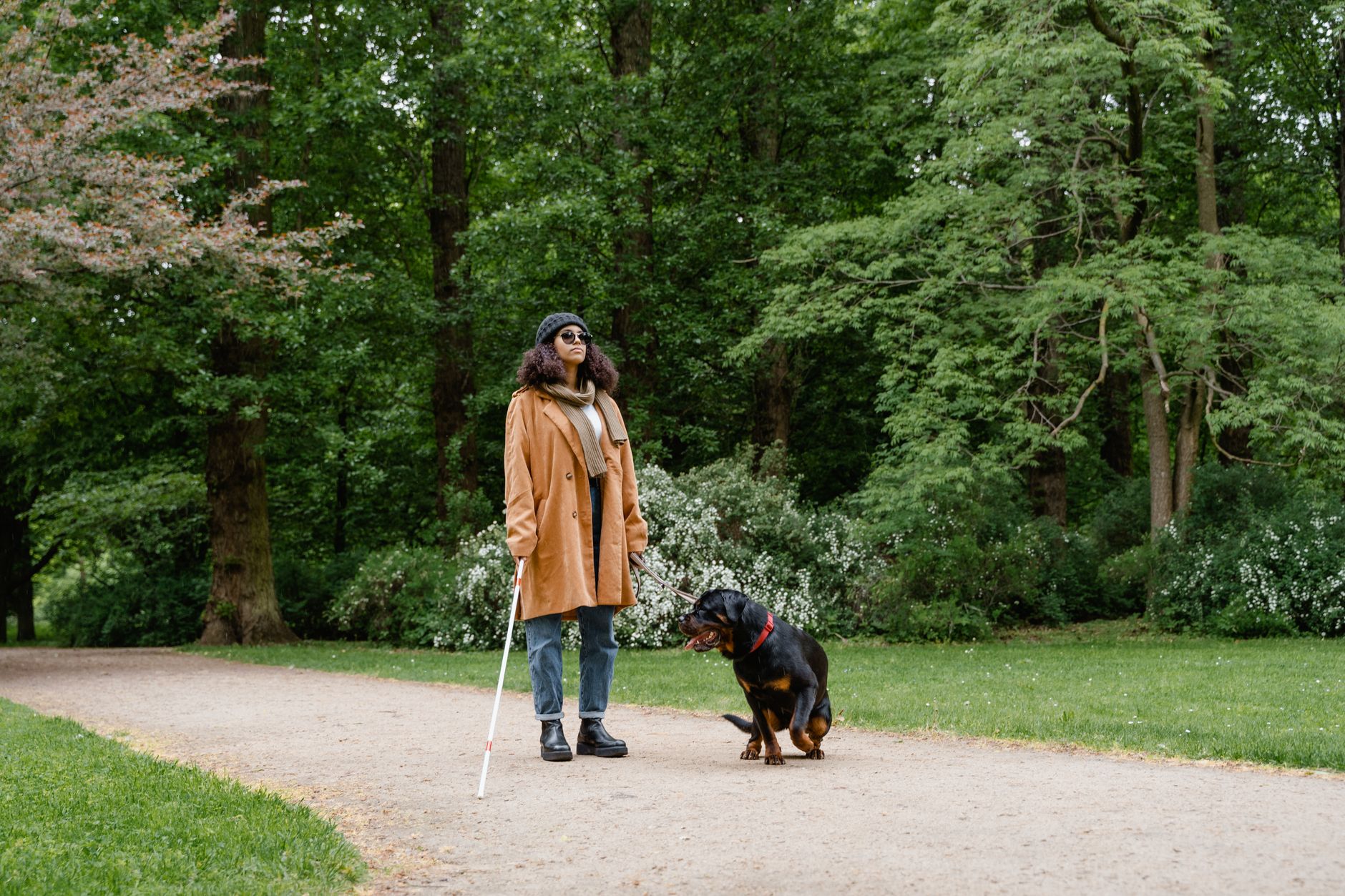
The Page the Landlord Never Read
I read the line about plain to see for a long time. I thought of my brother standing in his doorway with a harness in his hand. Plain to see.
Then I folded the page in thirds, put it in my purse, and went to find the neighbors.
Here is the thing nobody tells you about a small town. People are not waiting to be asked to do the right thing. They are waiting to be told what it is.
At 7:40 on Friday morning I walked Walt’s route with him.
I had never done it. For 4 years I had said, “Have a good walk,” from my kitchen window, like a woman telling a child to be careful. I put on my good walking shoes and my church coat and took his right elbow, which he did not need, and he allowed it, and we went out into a morning so clear and cold it looked washed.
He did not talk. Bishop’s harness made its small leather sound. Before we reached the end of Elm I made myself ask him.
“Walt, I want to tell the people on your route when he’s coming Saturday. I won’t ask them for anything.”
He walked twenty steps before he answered.
“I did not ask for a parade, Pauline.”
“I know it.”
“No signs. No shouting. Nobody makes that man feel small. He has a job to do, same as I do.”
“Then what do I say?”
“Tell them what time,” my brother said. “Nothing else.”
“All right.”
“And if he says he’s sorry, you let him be sorry in his own time. I’ve said some things in my life I’d like another chance at.”
“I will.”
At the corner by the school, in her yellow vest, was Mildred Nolan, the crossing guard, with her stop sign and her thermos.
“Morning, Walt,” she said. “Morning, Bishop. Hold, Bishop. Thank you, sweetheart.”
“Morning, Mildred,” Walt said. “My sister’s with me.”
“Pauline,” Mildred said. She is a woman of about 60 with a grandson in the third grade and a voice that stops traffic. “You’ve got a look.”
I told her what time. That was all. I said Walt’s landlord would be walking the building Saturday at 10, and that Walt had asked me to say nothing more than that. I did not say the words “please” or “stand with us.” Mildred looked at my brother’s face, and she wrote nothing down.
“Ten o’clock,” she said.
Virgil Dillard was already out in front of his barber shop with a push broom. He is 71, with forearms like fence posts and a gray flat-top he has not changed since the Reagan years. He heard me out with the broom handle propped on his hip. “I’ve been handing that dog a biscuit through my window since the week he came to town,” he said. “Off duty only. Walt made me promise.” He leaned the broom against the wall. “What time Saturday?”