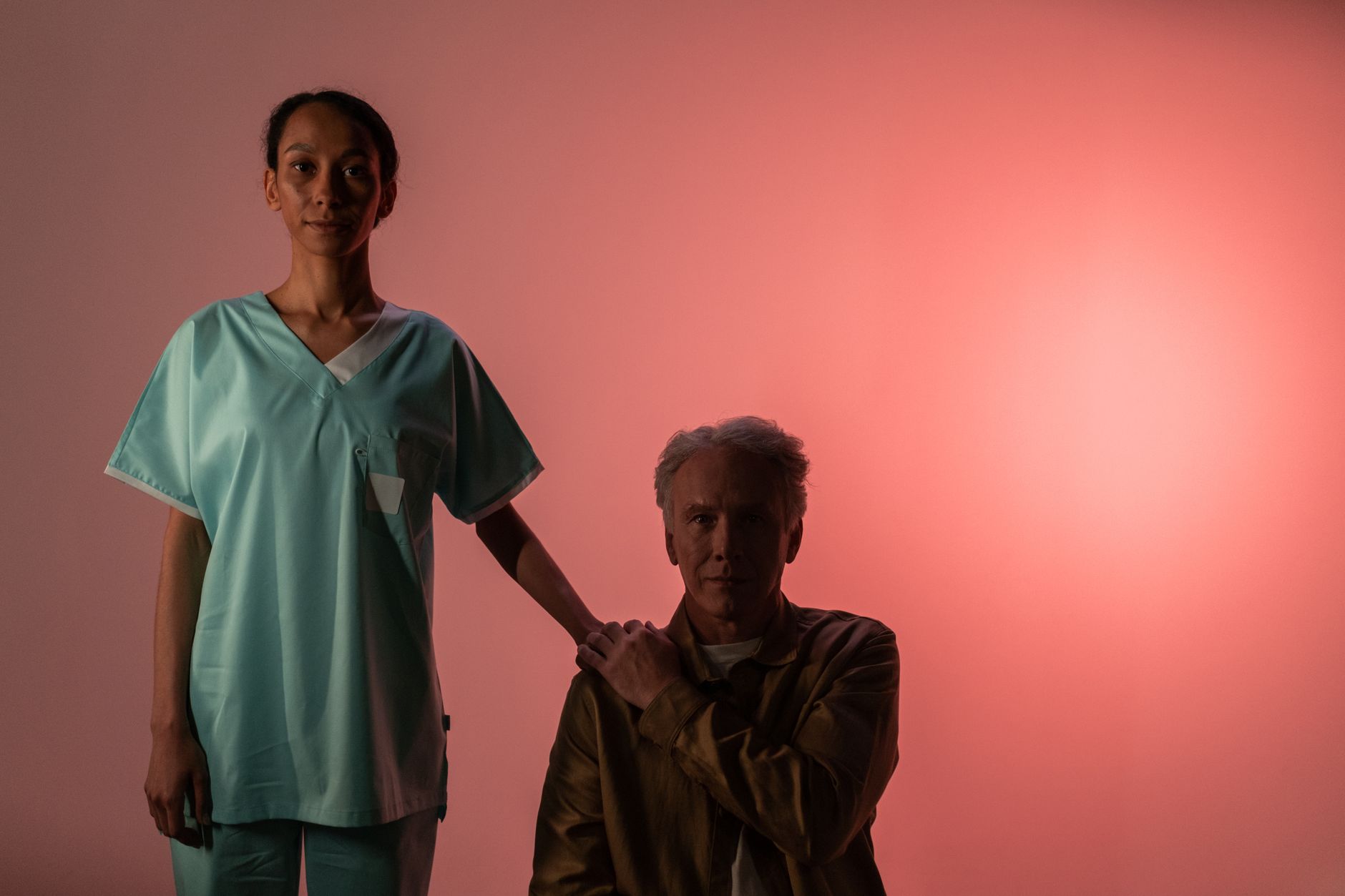
The Nurse Who Waited Thirty Years
“Your father’s heart is working at a fraction of what it needs,” she said. “I will try anything you ask. But I would be doing it to his body, not for him. I think it would take away the good hours he has left.”
“How many hours?”
“Days,” she said. “Maybe not many.”
My brother Zeb drives a fuel truck out of Williston, North Dakota, and he was a thousand miles away with a full tank trailer that was not his to leave. He called Sunday night from a truck stop. The company’s relief driver could not get to him until noon Tuesday, and after that it was sixteen hours of road.
“I’ll be there by sunup Wednesday,” he said. “Don’t let him go before I get there, Bea.”
“I can’t promise that.”
“I know. Tell him I’m coming anyway.”
I told Dad. He had not said a word since Sunday morning, and his eyes had stayed shut except for a slit now and then when somebody turned him. But I leaned to his ear and told him anyway.
On Monday we signed the paper. Comfort care. A word that sounds like a quilt. It meant no more needles for the sake of numbers, a small pump to keep him from hurting, and people to keep his mouth wet and his pillow turned. Dr. Reinholt took my hand in both of hers.
“The night staff on this floor are the best I know,” she said.
That is how we came to be sitting in his room at ten past seven on Tuesday, with the light going out of the window and the heater ticking under the sill, when the best night nurse she knew walked in and said my father’s name like something she had been saving.
The long middle of the night
Brendan fell asleep in the recliner by eight, boots still on and chin on his chest. He had driven more miles that week than all summer, and I let him sleep. That left the nurse and me.
She checked the monitor and the little pump on its pole. She turned Dad slowly, a pillow at his back and another between his knees, talking the whole time in the voice you would use on a child nearly asleep. “There we go, Mr. Bernard. Nice and easy. I’ve got you.” She dipped a pink sponge on a stick in water and touched it to his lips and then the inside of his cheek, and did it again.
When she was done she did not leave. She pulled the other chair up close to his shoulder, not down at the foot where most people put themselves, and sat.
“You don’t have to stay,” I whispered. “I know you’ve got other patients.”
“I have four. I’ll get to every one. Don’t you worry.”
Around eleven the charge nurse looked in, a heavy gray-haired woman named Karen with scissors clipped to her pocket and the walk of someone who has been on her feet since before I finished high school. She looked at the chair, and at the nurse’s hand lying over my father’s, and at me.