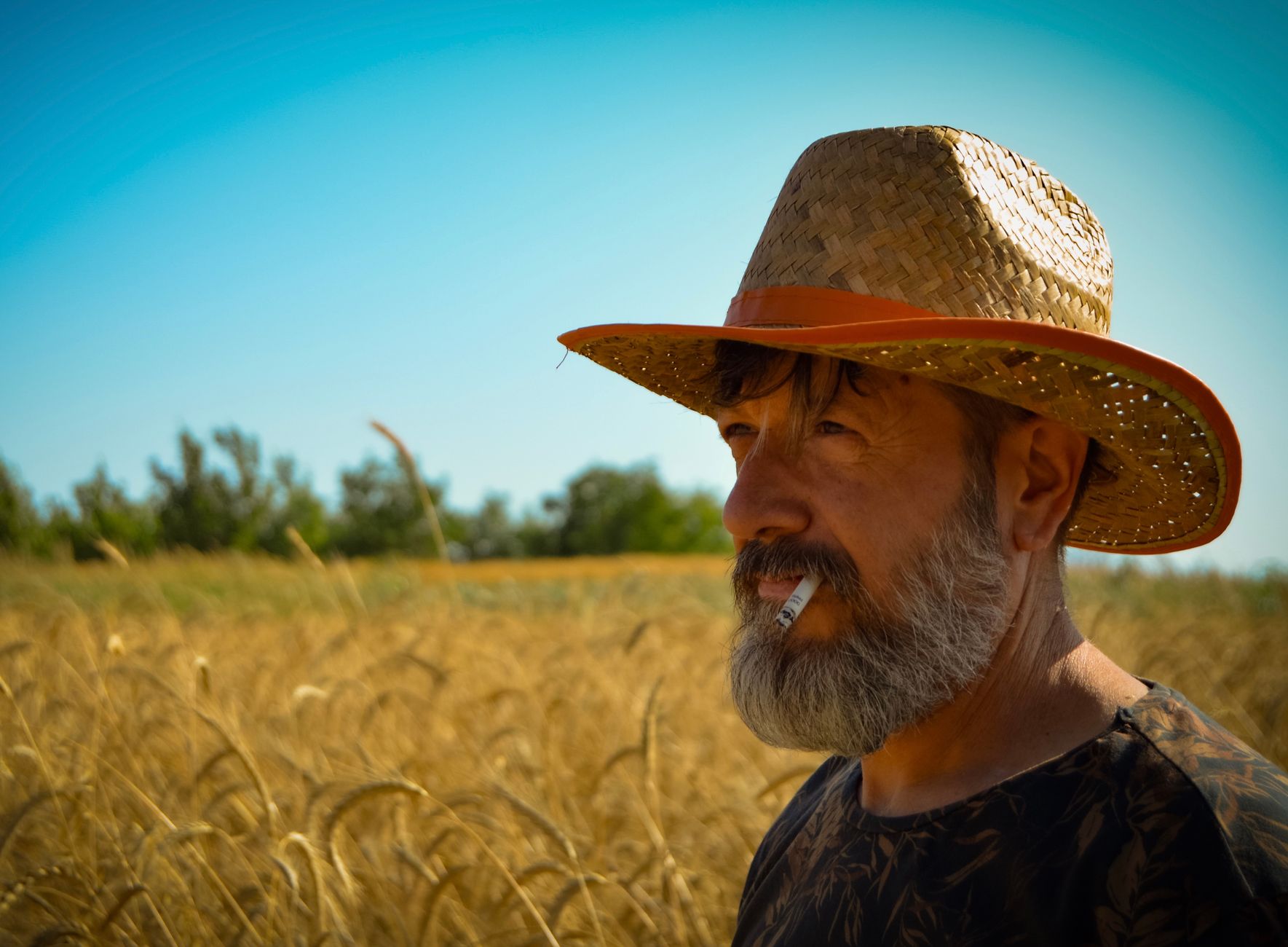
The Note the Bank Called After the Drought
Arlen
The Tillman place touches ours on the east side, a quarter mile of fence between my bottom and his east forty. Arlen Tillman is eighty-four years old. He keeps a diary, a plain black five-year book from the feed store, and he has written in one every day since 1961: the weather, the moisture, what he planted, who stopped by, and what they wanted.
He met me on the porch in his good coat, which he wears on any day he thinks he might be needed.
“Your boy’s note come due?” he said.
I had not told him a thing. I stood there with my mouth open.
“I saw your truck go to town Monday last and I saw the look on you come back,” he said. “Come in. Beulah has coffee.”
The kitchen smelled of toast and Pine-Sol. Beulah set a cup in front of me and a slice of pound cake. I told them the whole thing, the letter, the thirty days, the number, the forty-five hundred, and the thirty acres the bank would not let me sell.
Arlen did not say a word the whole time. When I stopped, he got up, left the room, and came back with this year’s book. He licked his thumb and found October.
“Ninth,” he said. “Thursday. Fella came by about two in the afternoon. Name of Doug Marsh. Land man out of Kansas City, drives a white Silverado with a toolbox.” He turned the book around so I could see his handwriting, small and square and slanted. Doug Marsh, land buyer, wants lane easement across east 40 to reach Becker bottom. Says they close first wk of Jan.
I read it. I read it a second time.
“October ninth,” I said.
“That’s what the book says.”
“The bank’s letter was dated November third.”
“Then somebody knew nearly four weeks before you did,” said Arlen. “Maybe longer.”
Beulah put her fork down.
The anger did not go hot. It went cold and very still, like the creek in January. There is a kind of anger that wants to shout and a kind that wants to measure, and I have learned that the second kind is the one worth being afraid of.
He had not called the note because of the drought. He had called the note because he already had a buyer. The drought was a story he could tell. The letter was only the paperwork on a thing that was decided before the first corn leaf curled.
“I told that Marsh no,” Arlen said. “I told him there is no easement across my land to reach a man’s farm that is not for sale. He said the Becker farm would be for sale by the new year. I said I’d believe that when Ron Becker told me so himself.”
“I didn’t tell him.”
“I know it.” Arlen shut the book. “I put the date in anyhow. When a man is lying, it helps to have the day he said it.”
I took a drink of coffee to have something to do with my face.
“Ron,” he said, “do you know how your dad kept this place in 1985?”
I knew. I did not want to say it.
“Ellsworth Tillman,” I said.