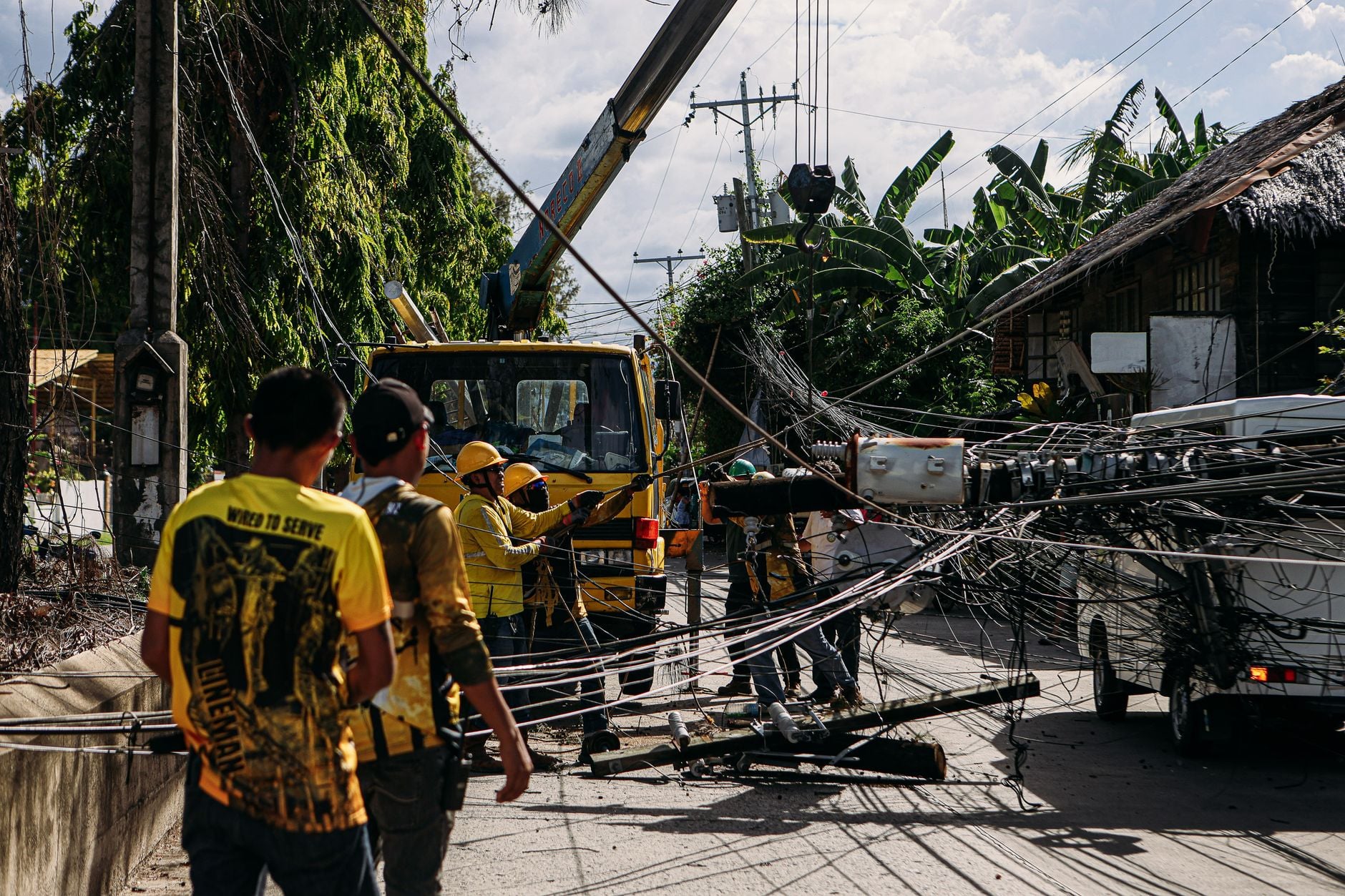
The Night the Lineman Came Home
Brad said it with his fork in the air, a piece of turkey still on the end of it, the way a man says something he has been saving up since the car ride over.
“Forty-one dollars an hour,” he said. “That’s what they pay linemen now. Forty-one dollars an hour to sit in a truck and drink gas station coffee.”
A couple of the cousins laughed, the polite kind of laugh people give when they are not sure if they are supposed to.
My mother-in-law, Janet, set the gravy boat down very carefully, as if it had gotten heavy.
“And then they turn around and raise our rates,” Brad went on. “Eleven percent this year. I looked at my bill. It’s robbery, is what it is. A co-op is supposed to belong to the members.”
Under the tablecloth, my wife, Nicole, put her hand on my knee. She did not squeeze.
She just left it there, warm and still, the way you put a hand on a dog that has heard something in the yard.
My name is Jake Sorensen. I was thirty-nine that fall, and I had been a lineman for the rural electric co-op for seventeen years, the last eleven as a journeyman. Forty-one dollars an hour was about right. Brad had done his homework.
I did not say anything. I took a roll from the basket and passed the basket to Nicole’s aunt, and I buttered the roll and ate it, and the conversation drifted off toward the Vikings the way it always does at that table.
People have asked me since why I did not just answer him. I could have. I had answers.
I could have told him about the rates and the wholesale power cost and the new substation, or about the man I knew who lost three fingers in a hot tap.
But it was Janet’s table, in Janet’s house, on Janet’s tablecloth with the pilgrims embroidered on the corners.
Brad and Kara’s baby girl, Harper, was four weeks old and asleep in a car seat by the radiator, and Brad had dark circles under his eyes like coal smudges.
And nobody, in the whole history of the Dakotas, has ever won an argument over pumpkin pie. I have been to enough family dinners to know that. So I passed the rolls, and I let it go.
On the drive home, the heater in the pickup roaring and the fields gone gray and flat on both sides of the highway, Nicole was quiet for a long time. Then she said, “He’s not sleeping. The baby’s up every two hours.”
“I know,” I said. “I wasn’t going to say anything.”
“I know you weren’t.” She looked out the window at the snow fence going by. “It’s not really about you. It’s never really been about you. It’s about Dad.”
I knew a little about her dad. Dale Kessler had been a lineman for the same co-op I worked for.
He died of a heart attack in the pole yard at fifty, the winter Nicole was seventeen, three years before I hired on. The old hands still told stories about him.
I had always figured Brad’s contempt for my job was the banker kind, the kind that looks at a man in coveralls and adds up what he costs.
Brad was a loan officer at the bank in town. He wore a quarter zip with the bank’s name on it to church.
“What about your dad?” I asked.