The Harvest the Town Boy Brought In
Who calls the custom guy
The first thing Gordon did when he could hold a phone was call Dale, a custom harvester out of Morris who’d done work for the Lindahls years back.
Dale was booked solid. A wet September had backed everybody up. The earliest he could get there was the second week of November.
Gordon hung up and stared at the hospital wall for a long time. Then he said, “Then it waits.”
Amanda and I were sitting on the window ledge. Sue was in the chair by the bed, still in the same sweatshirt she’d had on when he fell.
“Dad,” Amanda said. “It can’t wait. You know it can’t.”
She was right, and he knew it. Beans that stand too long in October start to shatter, pods splitting open and dropping beans on the ground before the head ever gets there. Corn stalks get weak and lodge in the first good wind. And in west-central Minnesota, the second week of November can mean snow.
“Curt could come up on weekends,” Gordon said.
“Curt has run a combine twice since high school,” Amanda said. “And he’s got the twins. Dad.”
Gordon closed his eyes. “Arnie can’t do it alone. His knees.”
The room got quiet. Everyone knew what nobody was saying. Sue looked at me. Amanda looked at me. Gordon kept his eyes shut.
I could have made him ask. I thought about that. I had eleven years of “all right, Gordon” stacked up inside me, and some small mean part of me wanted to sit on that window ledge until he said my name.
But he was lying there with a rod in his hip and gray in his face, and that’s not who I want to be. So I said it.
“I’ll bring it in, Gordon.”
He opened his eyes and looked at me for a long time. He didn’t say yes. He didn’t say no.
“Don’t run it in the wet,” he said finally. Then he turned his head toward the window.
That was all I got. I took it.
Two weeks
I called Jeff that night. I had three weeks of vacation banked because I never take it. I asked for two of them, starting Monday.
Jeff didn’t even let me finish. “Go,” he said. “Go bring in your father-in-law’s crop. I’ll cover the school job.”
Then I drove over to Arnie’s. He was sitting in his kitchen with the scanner on and a cup of coffee, like he’d been waiting for me.
“I heard,” he said. “Who’s running the cart?”
“I was hoping you would.”
Arnie set his cup down. “Son, I’ve been waiting four years for somebody to ask me that.”
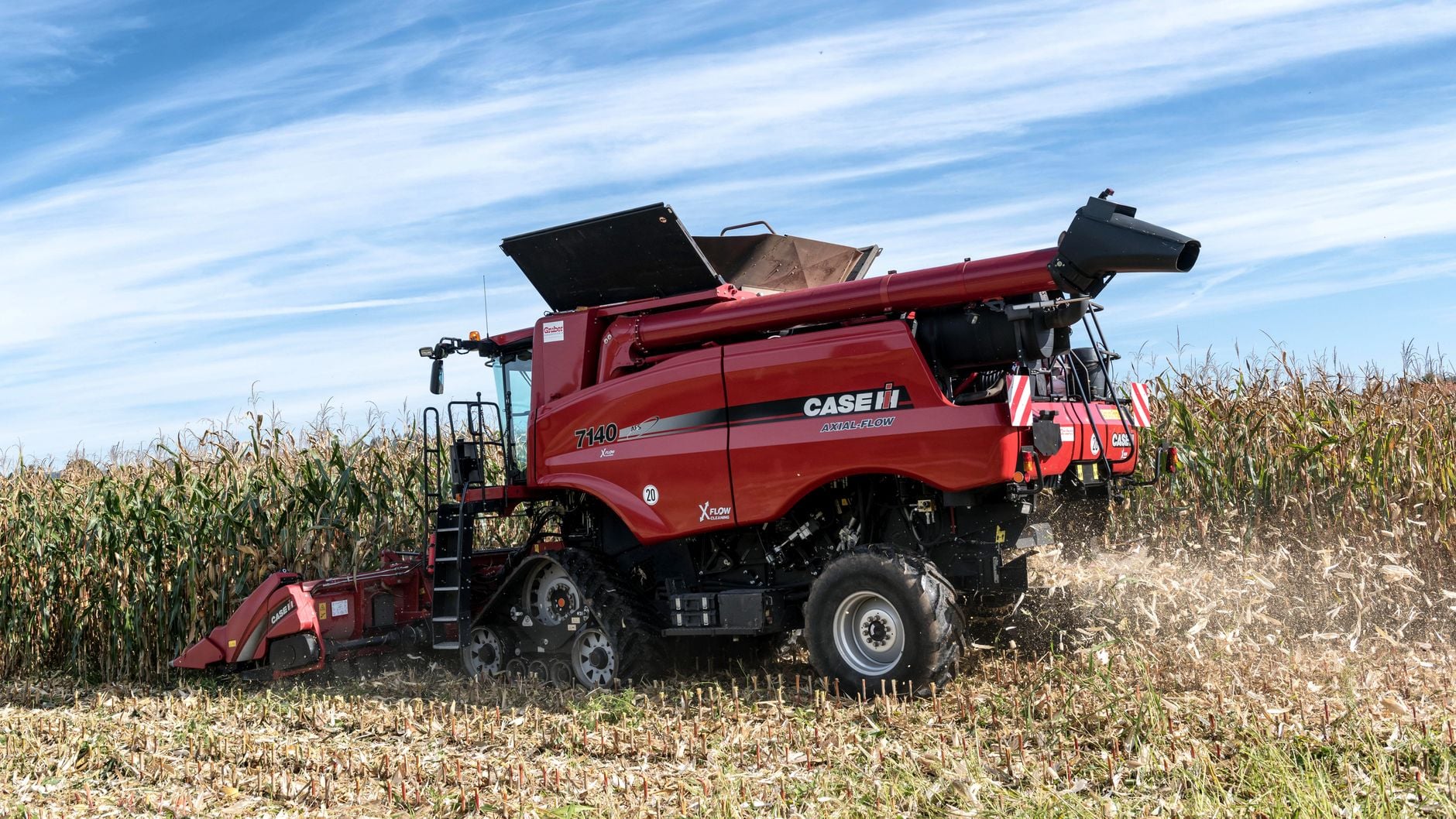
We made a plan at his kitchen table on the back of a seed corn calendar. Beans first, all 290 acres, before they shattered. Then the 350 acres of corn, dried on the farm in Gordon’s dryer and binned at home, the overflow hauled to the elevator in Benson.
Arnie on the grain cart, because the cart tractor has a heated cab and a good seat for his knees. Amanda in the red grain truck. Sue in the old blue one, the one with the stiff clutch she’d been driving since 1985.
The kids would go to school and then to Arnie’s wife, Karen, who said she’d keep them in cookies and homework till we came in.
That Sunday night I went out to the machine shed alone. I turned on the lights and stood beside the combine for a while.
Then I climbed up the ladder he’d had his hand on the day before he fell. I opened the cab door and sat down in his seat.
It smelled like him. Coffee and Copenhagen and the orange hand cleaner he kept in a tub by the door. There was a spiral notebook wedged in beside the seat, the cover soft from handling.
I opened it. Thirty-one years of Gordon’s handwriting. Every field, every year. Yields off the yield monitor, moisture, date, weather. “Home quarter, corn, 1998, 142 bu, dry fall.” “North eighty, beans, 2012, drought, 38 bu, bad year.”
His best year on the home quarter was 2021. One hundred ninety-eight bushels of corn to the acre. He’d underlined it twice.
I closed the notebook and put it back exactly where it was. Then I sat in the dark for a while before I went home.