The Ditch That Drowned My Corn
Saturday
They were all four of us in my field at seven on Saturday morning, and Michelle Wirick brought her grandson.
His name was Noah. He was nine, towheaded, with a baseball cap too big for him and a tape measure on his belt that he’d borrowed from his grandfather’s shop. Michelle said he had asked to come, and I couldn’t see how it would hurt anything. Harlan arrived last, with a steel thermos. He poured a cup from it and held it out to me without comment, and I drank it, and that was all that was said about eleven years.
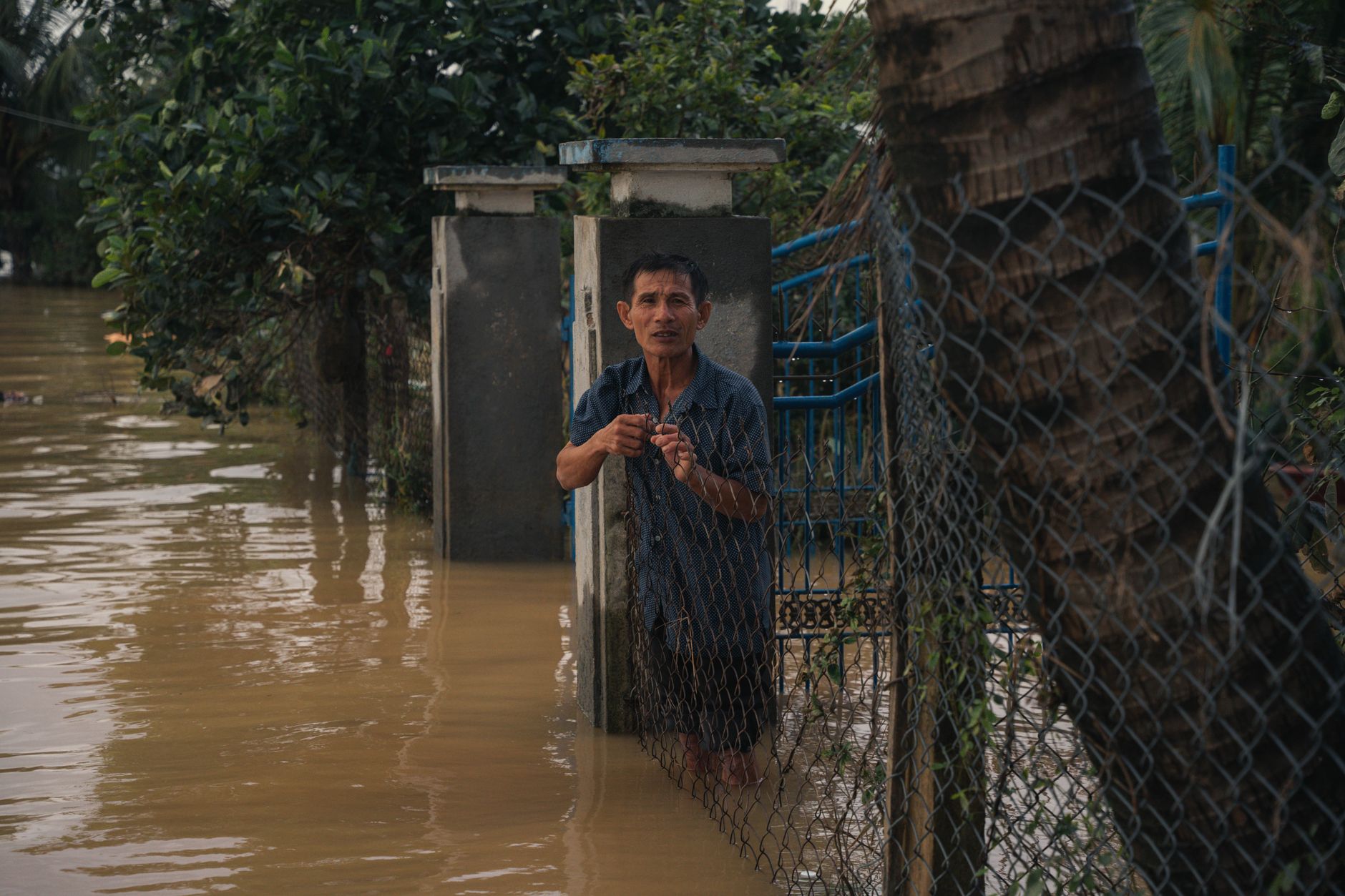
The water had gone down by then. Where it had stood it had left a line, the way a bathtub does. Silt and cornstalk trash and dead grass in a ragged brown ribbon all along the north fence and across the low corner, marking the crest of Wednesday, a good deal higher than the water I had stood in on Thursday.
“Start at the post,” I said.
We did. We found the 2008 ring and Noah stretched his tape from the ring to the wrack line, and called out the number, and his grandmother wrote it on the back of a feed-store envelope.
“Fourteen inches over, Mr. Teague.”
“Fourteen over 2008,” Harlan said. “On an inch and a half of rain.”
We walked the line. All morning we walked it, along the fence, across the low corner, down toward the creek. Lyman Keck, who is not a talker, pointed at a cottonwood root on his side of the fence. “That ain’t been wet in my lifetime,” he said, and the silt line was four feet up it.
We stuck wire flags in the ground every hundred feet and Noah pushed his tape through every one and Michelle wrote the numbers down. She wrote a very tidy hand. She had been the school bookkeeper for forty-seven years, and she kept the envelope in a freezer bag against the damp. I thought: she is going to be the best witness any of us has.
By ten o’clock we had gone up the slope and were standing at the edge of the subdivision.
Trent Garrity’s ditch started at a cul-de-sac they had not built houses on yet. It was a clean, new cut, six feet across and four feet deep, with rock-lined sides at the top and raw clay at the bottom, and it ran straight east for nineteen hundred feet along the back of the lots until it hit the road ditch beside County Road 450, and there it went into a culvert. A twelve-inch culvert. Under a gravel road.
“It’s carrying four lots’ worth of water,” Lyman said slowly. “Maybe more. Through a twelve-inch pipe.”
“It can’t take it,” Harlan said. He walked down into the road ditch and slapped the concrete lip of the pipe. “So it backs up, and it rises over the gravel, and it comes across the road in a sheet. Right onto Lowell’s fence. The old culvert under this road was twenty-four. I used to run the grader over it for the township.”
I looked at the ditch for a long time. Then I looked at what was at the head of it, where the old clay tile ought to have come in from the Lindquist land. There was nothing. A flat patch of fresh fill, the grass seed just beginning to come up.
“The tile’s been plugged,” I said. “Somebody found it and capped it. That water used to go west through the old tile, slow, a little at a time. Now it’s got nowhere else to go.”
Noah, standing beside me with his tape, asked why anybody would do that. I told him I figured somebody thought it was cheaper to send the water to my place than to build the pond the plans called for, and that somebody figured I’d be tired of it before long.
Michelle put her hand on his cap. Her pasture was three-quarters of a mile down, and she had told me on the way up that she’d been wondering whether she could keep the place.
“Lowell,” she said. “How do we make them listen?”
“We do what Dallas Rasmussen told me to do. We stop being one old man with a grudge. We get everybody who’s being hurt, we get it measured, we get it written down, and we put every one of us in front of the board on the same morning.”
“When does the board meet?”
“First Tuesday of the month. That’s the seventh of July. The agenda closes ten days before.”
That left us three weeks, and one thing we did not have, which was the person who had done the work.