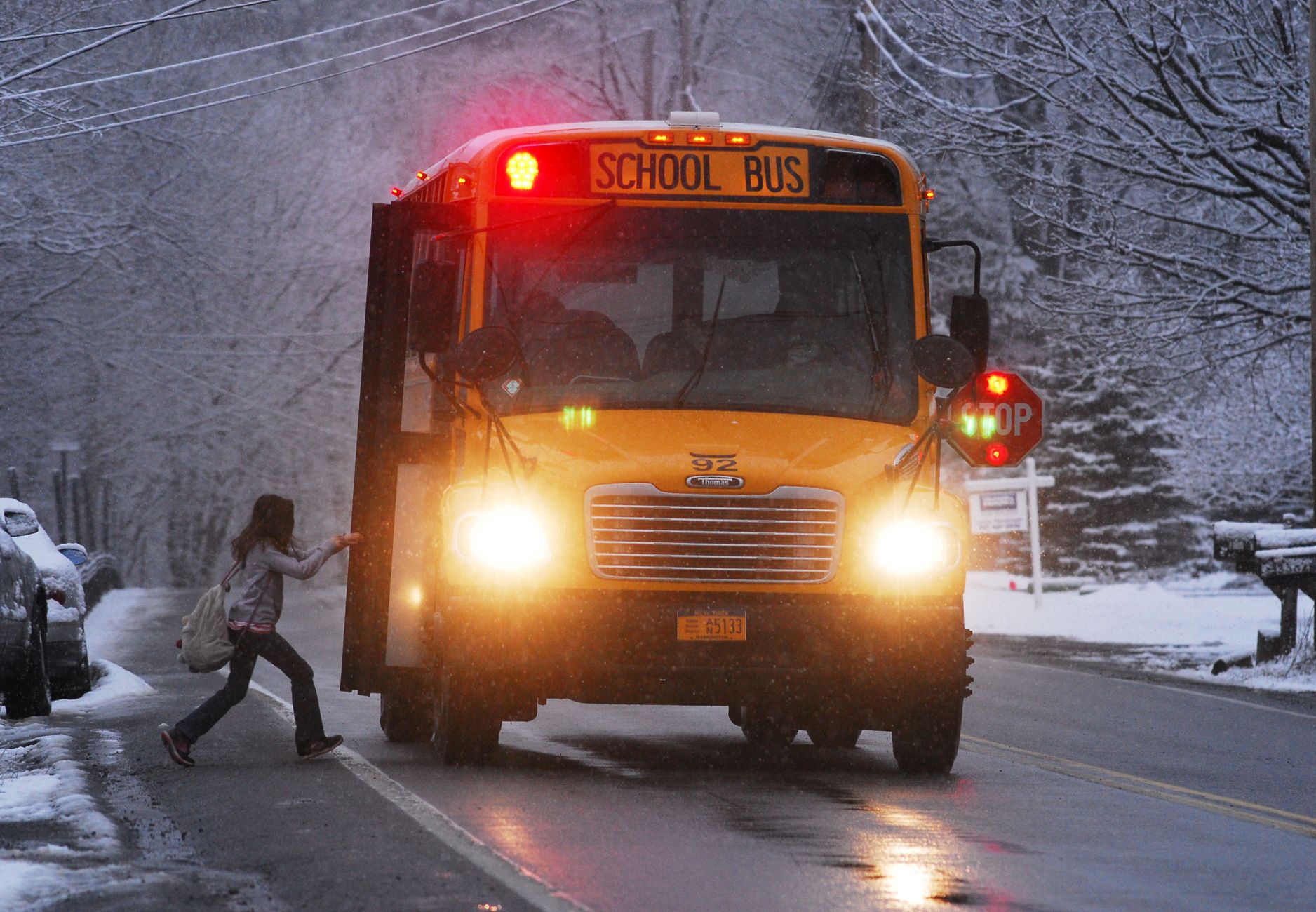
The Bus That Was Never Full
I had expected a fight and rehearsed answers to it. But when Rhonda opened the door in her stocking feet with a dish towel on her shoulder, she took one look at the five of us on her mat and knew.
She did not say, “What’s all this?” She did not say, “Hon.”
She stepped back and held the door.
We sat in her kitchen. Her husband Jeff, a heavy, sunburned man who sells crop insurance, took one look at our faces and went down to the basement with the dog.
Sandy put the bank statement on the kitchen table.
Nobody spoke. The refrigerator hummed. A clock over the stove, in the shape of a rooster, ticked down the seconds.
“Rhonda,” Sandy said. “I need you to tell us about the eleventh of April.”
Rhonda sat down hard in her kitchen chair, put both hands over her mouth, and began to cry in the quiet, shaking way of someone who has held a breath for six months.
“I was going to put it back,” she said.
“I know.”
“I was going to put it back in June. The pledges came in, and the principal needed the sound system, and it was only supposed to be a few weeks.” She wiped her face with the dish towel. “And then it was August, and then it was the trip.”
“You told Wyatt the bus was full,” I said.
I said it quietly. It was the first thing I had said since I sat down.
She looked up at me.
“The Reyeses and the Boldts came to me the last week of September,” she said. “I paid them out of what was left. That was the fund. That was supposed to be the fund doing its job. And then your text came, on the Monday, and I knew there was nothing left to pay yours with.” She pressed the towel flat on the table. “I told Gene Prather on the second to drop one name. I told myself I would work it out by Tuesday.”
“I had the money, Rhonda. It was in my hand.”
“I know it was. I saw the envelope.” She said it to the table. “By then I had said it to Gene, and I had said it to myself so many times I couldn’t take it back in front of the children. If I took your sixty-five dollars, I had to say why I’d told him to drop him.”
“So you chose my son.”
“I’m going to tell you the truth, and it’s going to be ugly.”
“I’d like that.”
“I picked Wyatt because I thought you’d take it.”
The kitchen was very still.
“Of the three, yours was the one who never asks for anything,” she said. “That’s the whole reason. I thought if I told the boy and not the mother, and did it kindly, you would let it go.”
I let that sit.
I felt a hundred and ten pounds of anger on my chest, and I wanted to say several things that would have been true and would have felt wonderful.