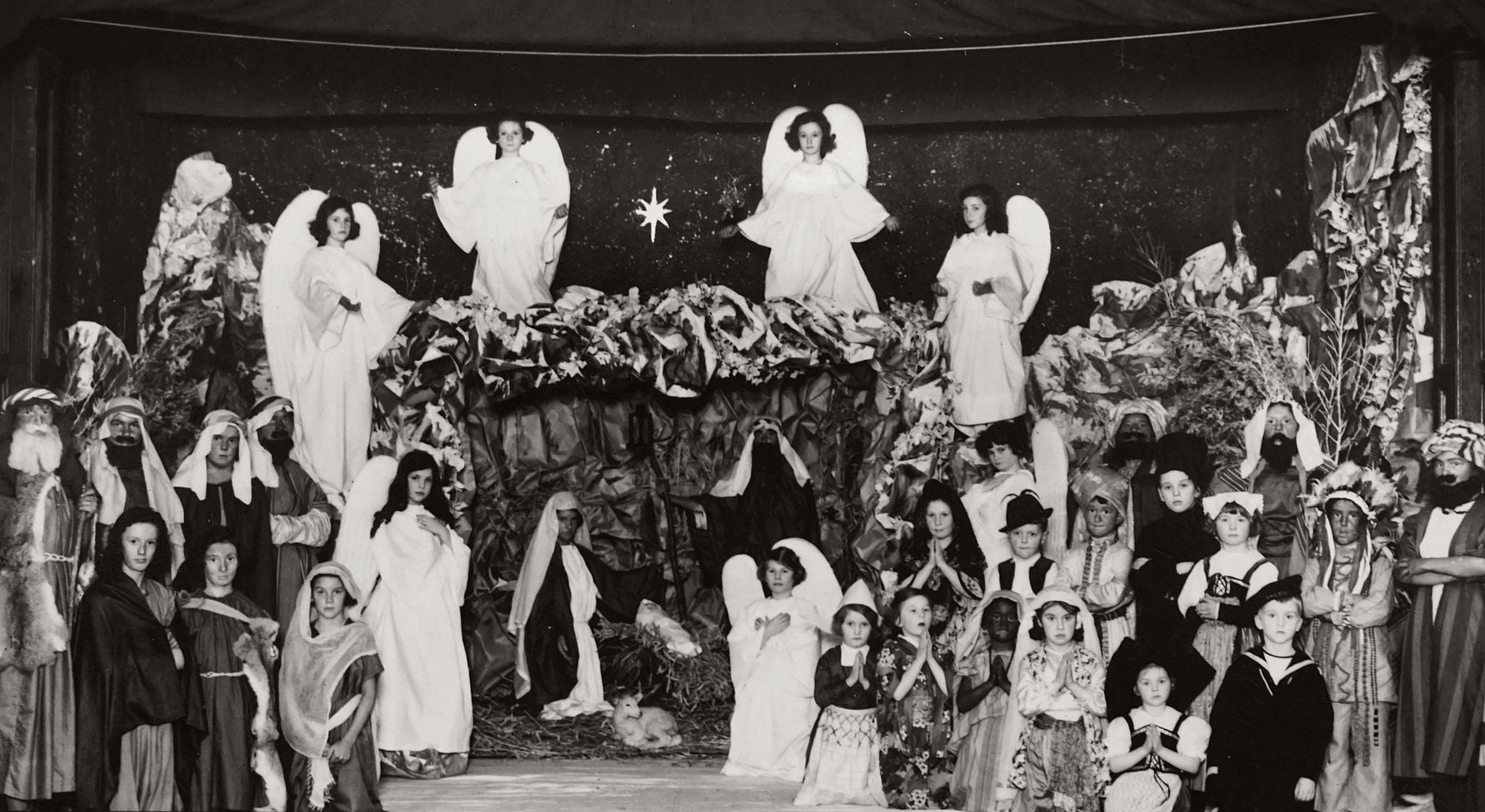
One Quiet Question Before the Pageant
I want to be fair to my sister-in-law. Jeanette is my husband’s older sister, forty-seven, a woman who taught third grade for twenty years and can run a bake sale like a general. She took over the pageant two years ago when Doris Albright’s hip finally sat her down, and she had been terrified ever since of doing it worse than Doris. Doris sat in the front pew every year with her walker parked in the aisle, and Jeanette believed, with no evidence at all, that Doris was timing her.
I did not raise my voice. Dustin does not do well with loud. Raised voices land on him like a hand dragged across a chalkboard, and the worst thing I could have done was make him the reason for a scene. He would have carried it for weeks. He would have decided he was a problem.
I could have told her to put him back. She would have smiled and said of course, and then put him at the end of the line with a look like a woman minding a stove. A reluctant yes is a no in a better coat.
I could have called Pastor Ken. He was in Omaha until Thursday, sitting with his mother after her surgery.
I could have called Bob. He is a lineman for the rural electric co-op, and that weekend an ice storm had taken poles down across three counties. He had been working the storm since Friday. He would have come down off the job and said something to his sister he could never take back.
So I set down my coffee cup.
I did not look at Jeanette. I turned to the long table, to the nine mothers and their coat hangers and their tinsel, and I spoke to them in the same voice I would use to ask if anyone needed more napkins.
“I only have one question,” I said. “It’s for all of you. If it were your child, would you want him sent home the week before?”
Nobody answered.
The glue gun clicked once more and stopped. A piece of tinsel slid off somebody’s lap onto the linoleum. Over by the piano, the sixth graders went on with “Away in a Manger,” not knowing they were the only sound left.
Kris Calhoun, who has sat behind me in the third pew for nine years, looked down at her hands. Roxanne Foley, whose Ben had just been handed my son’s line, set her glue gun on the table. Connie Hoyt stared straight at me, her jaw working.
“Annette,” Jeanette said, very low, “don’t make this into something.”
“I’m not making anything,” I said. “I asked.”
Then I crossed the hall to the coat rack and took Dustin’s brown flannel robe off its hook. I’d sewn it in November from a bedsheet, and it still smelled like my iron. I held out my hand.
Dustin looked at it. He took it.