The Tuesday Volunteer Who Did Puzzles With Dad
The whole room went quiet. I mean it was not actually quiet, there was a television going and a lady by the fish tank singing to herself and somebody’s walker squeaking in the hall. But it went quiet for me.
“She died, you know,” Dad said. “I keep forgetting.”
He was still holding my hand. His voice was very calm. It was not a grief voice. It was the voice of a man reporting a fact he has been told and cannot quite keep hold of.
“I’m sorry,” I said. It was all I could get out.
“She was the one who did the puzzles with me.” He looked down at the lighthouse. “Every Christmas. Her mother’d put the table up in the front room.” He let go of my hand, carefully, the way you’d set down something you didn’t want to break. “Her brother never had the patience. He’d do the last piece. That was his.”
Then he picked up a piece of gray wave and went back to work, as if he hadn’t said anything at all.
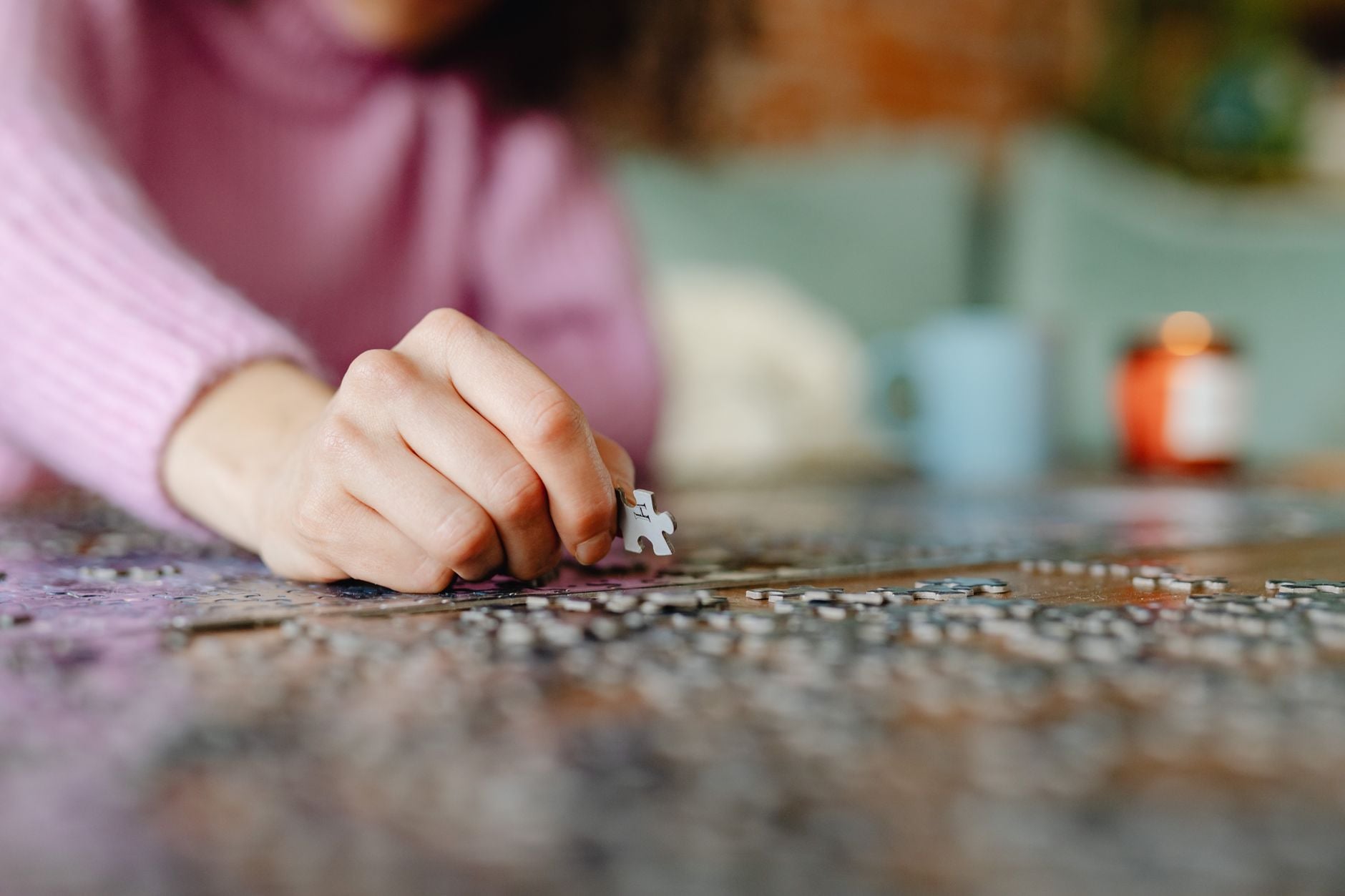
I sat there. I kept my face still. I did what Beth taught us, I stayed in his world, and his world had a dead daughter in it whose hands I happened to have. I fit three more pieces. I said, “These waves are hard,” and he said, “Do them by shape.”
At three thirty, Beth came over and said it was time for exercise group. I said goodbye to my father. “See you next Tuesday, Arnold.”
“Bring that one back,” he said. “We’re not done.”
I left the puzzle on the table, half finished, the lighthouse with a hole in the red stripe. I walked out to the Jeep. I sat down behind the wheel.
And then I did cry, for the first time since the last Saturday in August. I cried so hard that the lady who brings the Meals on Wheels came over and knocked on my window to see if I needed help. I told her no. I told her my father had just told me about his daughter.
Beth tells Steve
I found out later what happened that evening. Beth told me, and then Steve told me his part, and the two halves fit.
Beth had watched the whole thing from across the room. She told me she went into her office afterward and shut the door and sat for a while with the light off. Then she went out to the dining room at five and waited for Steve.
He came in like always, with his cap in his hand, and sat down across from Dad for supper. Beth let them eat. When Dad went down the hall with an aide afterward, she asked Steve if he had a minute, and took him into her office, and shut the door.
“You’ve never asked me about the Tuesday volunteer,” she said.
He said he didn’t know there was one.
“Your dad has a Tuesday volunteer. She does puzzles with him. She’s been coming since September. Jeff signed off on it. She’s been through every bit of training and the background check, and she has never once told him who she is.” Beth pushed a folder across the desk, my volunteer folder, with my application right on top.
Steve looked at the name for a long time.
“Today,” Beth said, “she brought the lighthouse.”
She told him what Dad had said. All of it. My daughter’s hands. She died. I keep forgetting. Her brother would do the last piece.
Steve told me later that he didn’t say anything for so long that Beth went and got him a cup of coffee. He just sat there turning his cap around by the brim, thinking about the day in June when he’d sat on the edge of Dad’s bed and said it.
“He cried all night,” Steve told me later. “All night, Lin. Then he quit asking, and I told myself I’d done him a kindness.” He shook his head. “I didn’t think about what he wasn’t saying. I thought about me, mostly. About not having to hear it anymore.”
Beth didn’t let him off the hook, either. She told me she said to him, “Steve, I’ve watched you come in here every night at five for nine months. I know what it cost you. But your dad has been carrying around a dead daughter since June, and he still sets out two chairs.”
That was the part that broke him, she said. The two chairs.