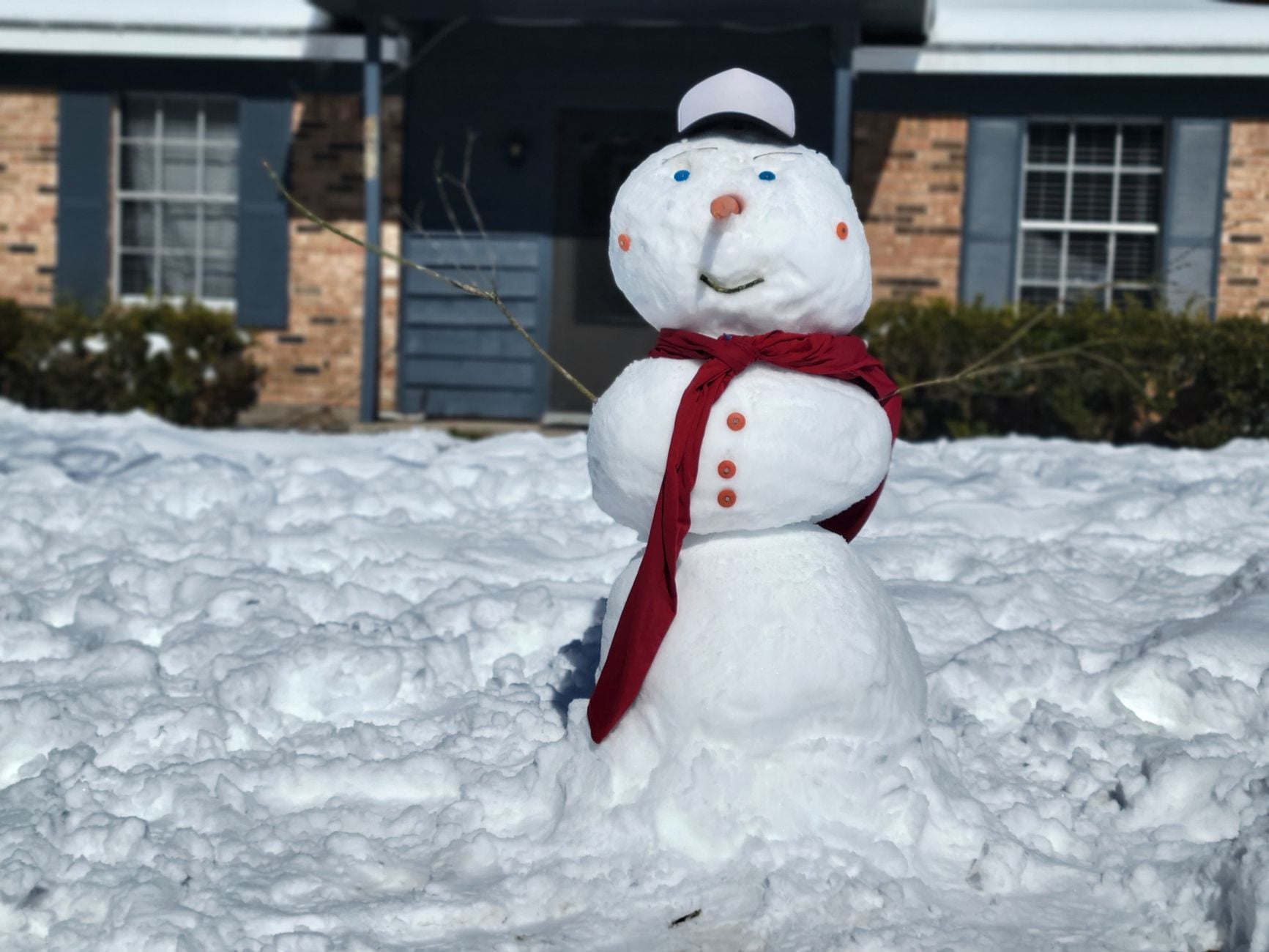
The Fifth Snowman in the Front Yard
The fifth snowman
I came down the steps and around the spruce.
There was a fifth snowman at the end of the row.
He was shorter than mine, and a little bent forward at the top, like a man with a sore back. He had a corncob pipe stuck in the side of his face. He was wearing a red and black plaid cap with the earflaps tied up, an older one than the one on Earl’s head, faded nearly pink.
And leaning against his middle, with its rope looped over one of his stick arms, was a sled.
Not a plastic one. A wooden sled with steel runners and a steering bar, the old kind, the kind my grandpa had in his barn. The varnish was dark and worn on the slats where small hands had held on years ago. The runners had been wiped clean and shined.
There was a shipping tag tied to the steering bar with a piece of baler twine. In square, careful pencil, it said: For Jace, Kenzie, Brody and Lily. Take turns. Biggest one steers.
The kids came running. Brody saw the sled and made a sound like a teakettle.
I looked over at Earl’s driveway.
Earl had gone back inside.
Earl’s kitchen
I left Jace in charge, which means I told him the sled did not go in the street, and I walked over to Earl’s back door in my Sorels and my pajamas and knocked.
He opened it with a cup of coffee in his hand, like he’d been expecting me, and stood back to let me in. His kitchen smelled like coffee and Lava soap. There was a little transistor radio on the windowsill, playing the farm report even on Christmas.
“You were up,” I said.
“I’m always up,” he said. “Forty-two years of milking. Three o’clock, my eyes open. Doesn’t matter if there’s a cow or not.”
“You saw me.”
“Saw your porch light come on at three,” he said. “Figured either something was wrong or you were up to something. Watched long enough to see it was the second one.”
“Why didn’t you come over?”
He took his time with that one. He set his cup down on the table.
“Because you didn’t ask,” he said. “And because it looked to me like a thing you needed to do yourself. A man can tell when somebody’s working something out. You don’t walk up and grab the shovel out of their hands.”
I sat down at his table. I didn’t mean to. My knees just went.
“When’d you build it?”
“Soon as you went in,” he said. “Six-fifteen, about. Took me an hour and a quarter. Yours were better. Mine’s got a bad back, like the fella who built him.”
“And the sled.”
He looked out the window toward the yard for a while before he answered.
“That was my boys’ sled,” he said. “Dale and Mike. Bought it at the hardware store downtown in 1971 for eleven dollars. Been hanging in the rafters of my garage since the boys went off to school.”
“I took it down,” Earl said. “Tightened the bolt on the steering bar. It was loose. Rubbed the runners with a paraffin candle, so it’ll go. It’ll go. You tell them to stay off Third Street hill. That hill’s too steep for that sled. The hill behind the Lutheran church is about right.”
“Earl,” I said. “That’s your boys’ sled.”
“It’s a sled,” he said. “It’s been in my rafters fifty years. A sled in the rafters isn’t doing anybody any good.”
Then he said the thing I’ve thought about every day since.
“I heard those kids come home last night,” he said. “Quiet. I’ve lived next to you a year and a half, and I never heard those kids come in that door quiet. I figured something happened over there. I don’t need to know what.”
I didn’t tell him. Not then.
I just sat there at his kitchen table in my wet pajama pants and put my face in my hands. And Earl, who is not a hugging man, reached over and set his big hand on the back of my head, the way you’d steady a calf, and left it there till I was done.