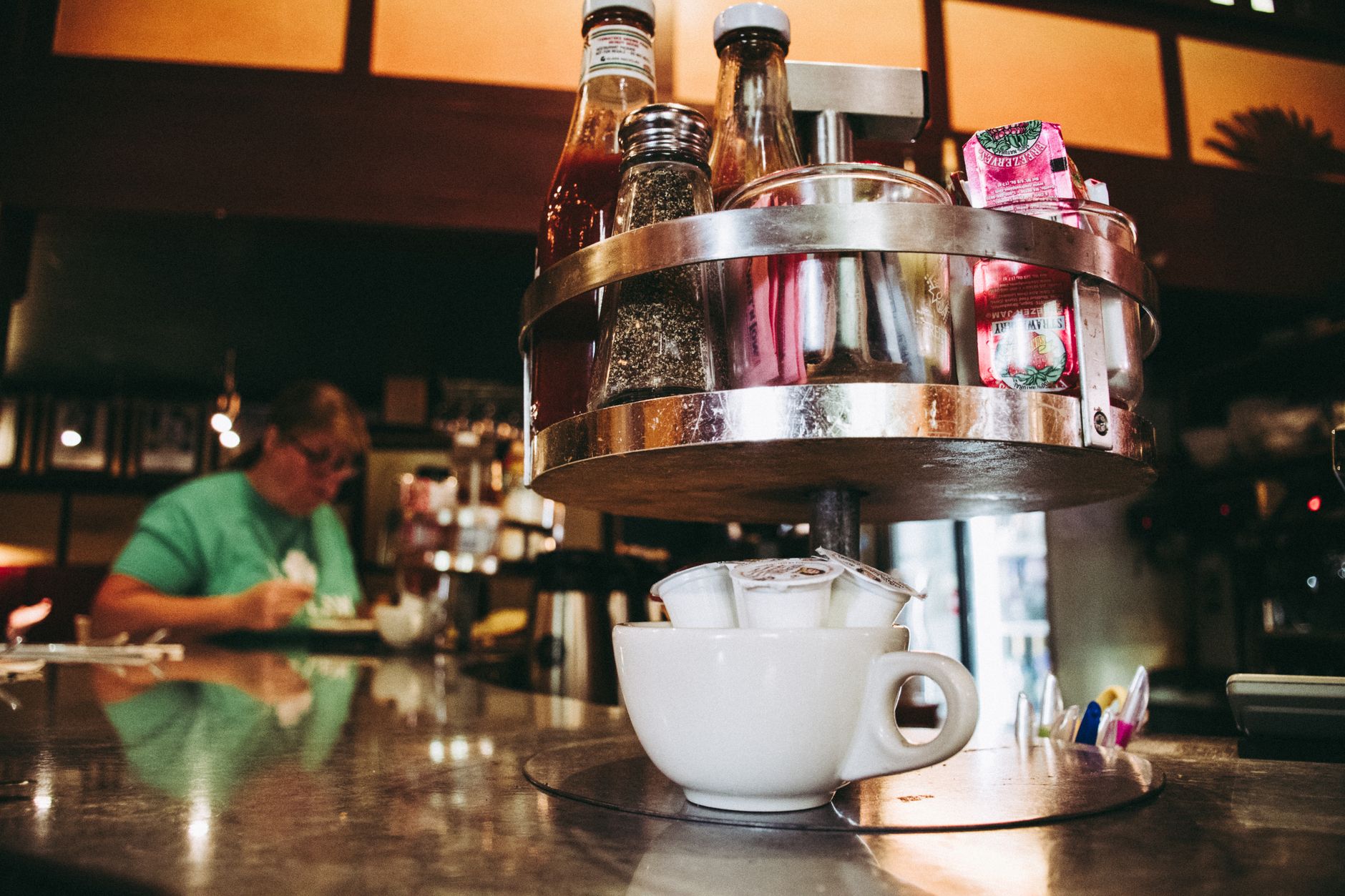
The Coffee Pot at the Feed Store
Brooke Hollis told me in the kitchen, with the swinging door still moving behind her and Jeff standing right there at the grill with a spatula in his hand.
“Deb, you’re sweet,” she said. “Everybody loves you. But at 54, you’re just too slow for the new concept.”
Jeff stopped scraping the flat top. I heard the hood fan running over us, and the ticket printer chattering out an order nobody went to get.
I had a tray of clean coffee mugs on my hip. Twenty-three years, and I still carried them six at a time with my fingers through the handles, the way Marlene taught me the week I started.
“Okay,” I said.
That was all I said. I set the mugs on the rack, untied my apron, and folded it in thirds the way I always did, like it was a flag.
Brooke looked like she had expected more. She was thirty-one, maybe thirty-two, with her hair pulled back tight and a little gold necklace she touched when she was nervous. She touched it then.
“It’s not personal,” she said. “We just need the mornings to move faster. Ryan did the numbers. We’re keeping you on Tuesday and Thursday lunch.”
Two shifts. I had worked five a week since my youngest was in diapers, and every one of them started at five in the morning, when the town was still dark and the only lights on Main Street were ours and the grain elevator’s.
“Okay,” I said again, and I went out the back door to my car.
The new concept
The Main Street Cafe sits on the corner of Main and Second in a town of 1,400 people in north-central Iowa. You can see the grain elevator from the front booth and the Lutheran steeple from the back one, and in late October the whole place smells like corn dust and diesel.
Marlene Dietz ran it for thirty-one years. When her knees gave out, she sold it in August to Ryan and Brooke Hollis, a young couple from Des Moines who had come up to visit Brooke’s grandmother every summer when Brooke was a girl.
The grandmother passed in the spring. She left Brooke what she had, which turned out to be about $180,000, most of it from a lifetime of teaching third grade and never buying anything new. Brooke and Ryan put every dollar of it into the cafe.
Everybody in town knew that, because in a town of 1,400 everybody knows everything. And I will say this for them: they worked. Ryan painted the whole dining room himself in two weekends. Brooke reupholstered the booths in a dark green vinyl that I will admit looked nice.
Then the chalkboard went up.
It hung where the old pie case used to be. It said things like “Smashed Avocado Toast, sourdough, chili crunch, soft egg, $16” and “Pour-Over Coffee, $3.50.” The bottomless cup, which had been a dollar since the Clinton years, was gone.
The farmers read that chalkboard the way they read a hail forecast. Nobody said much. They just read it, and ordered eggs and toast like always, and left a little quieter than they came in.
I had seen it coming. What I had not seen coming was being the thing that got cut to make room for it.