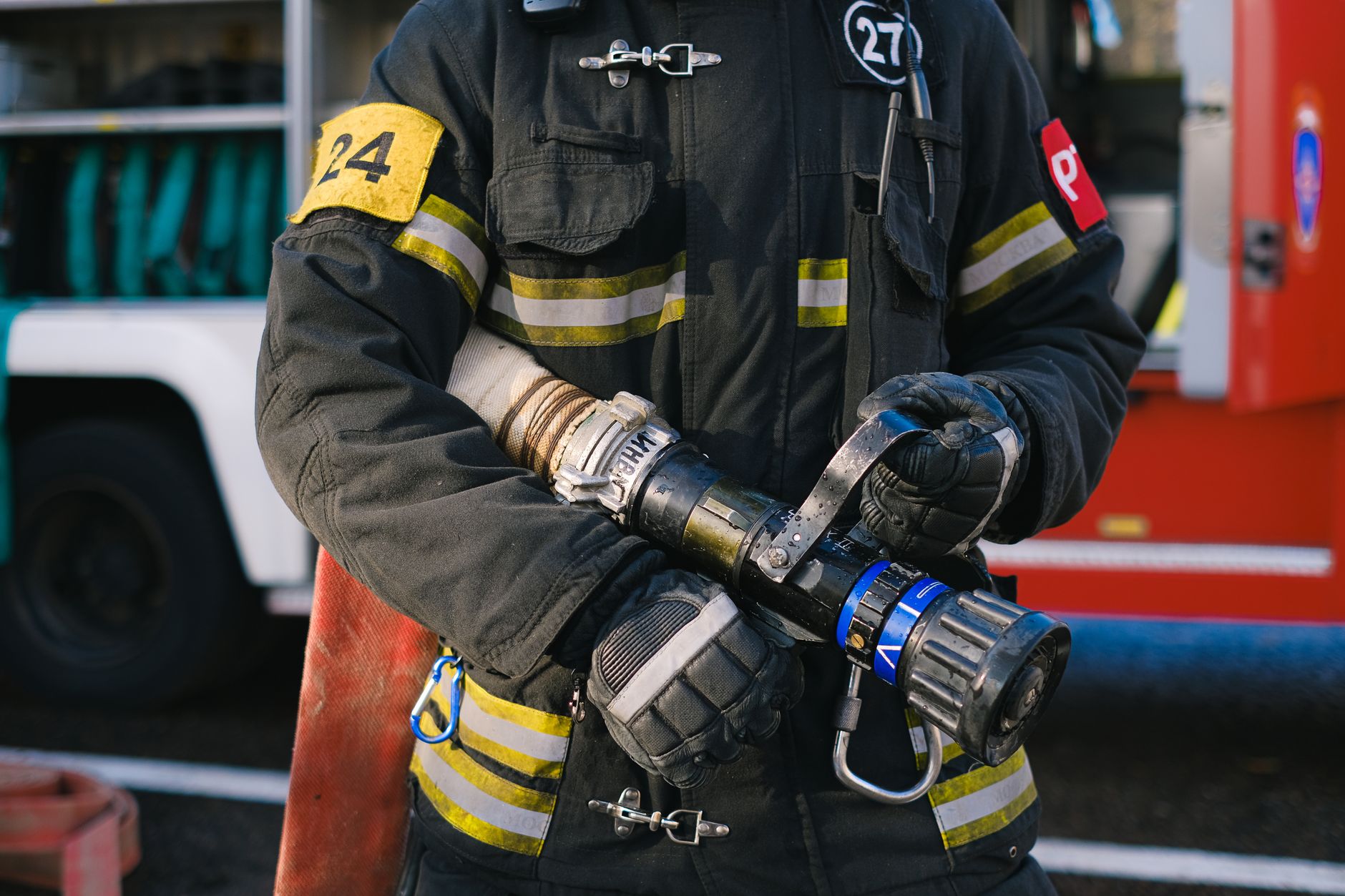
Nineteen Firefighters in the Front Pews
The Kessler Fire
The pager had gone off at 6:04 that morning. Mike was already in the parlor, halfway through milking, and I heard the tones from the kitchen because he wears it clipped to his belt even in the barn.
It is a little gray Minitor, the same model he has carried for most of his twenty-two years on the department. The tones go off, high then low, and then the county dispatcher comes on in that flat calm voice they all have.
“Ellerton Fire, respond to a barn fire, N4127 County Road K, the Kessler farm. Caller reports livestock inside.”
I was at the door of the parlor before the dispatcher finished. Mike was already pulling the milkers off the cow he was on. His dad, Gene, was seventy-four and still helped with chores most mornings.
“Go,” Gene said. “I’ve got them.”
Mike was in the truck in under two minutes. The fire hall is a mile and a half into town, a steel building next to the village shop with three bays and a hook for every member’s gear along the back wall.
I did not see the fire. I heard about it the way wives always hear about it, in pieces, over the next week. Tom Kessler’s old bank barn went up from the hay mow, probably a heat lamp in the calf pen below it, though nobody ever knew for sure.
Tom and his son Eric got all sixty-one cows out before the first truck arrived. They opened the stanchions and drove them through the snow into the night pasture. Mike told me later that the cows were the only reason he cried that day, and it was from relief.
There are no hydrants out on County Road K. The department ran a tanker shuttle from the hydrant at the edge of town, and two neighboring departments came in on mutual aid with their tankers. They cut through the ice on the Kesslers’ farm pond and drafted water from it.
They could not save the barn. A barn full of dry hay is gone the minute the mow catches. What they could save was the milk house, the machine shed, and the Kesslers’ house sixty feet away, and they did.
Mike was on a line on the west side for most of four hours, keeping the fire off the machine shed. At ten, Duane, our chief, walked over and tapped him on the helmet.
“Go to church,” Duane told him. “Your girl’s reading. The young guys can roll hose.”
Mike drove back to the hall, hung up his gear, washed at the sink, and drove straight to Trinity. He did not stop at home because home was four miles the wrong way and the service started at 10:30.
He made it with two minutes to spare. And then Harold sent him back down the steps.