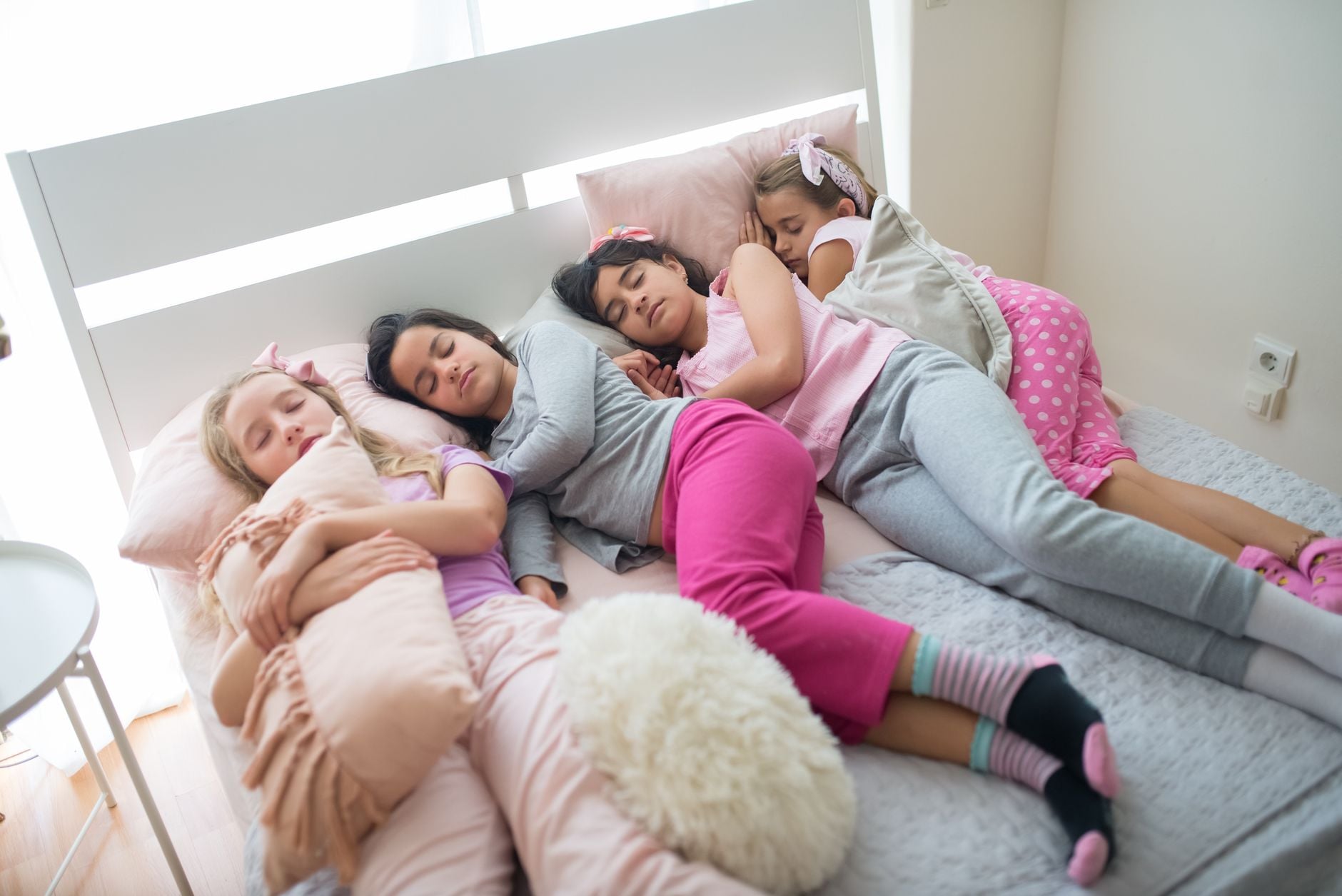
Eleven Girls on a Trailer Floor
I sat back in my chair. My mother’s “Hm” from Thursday came back to me all at once.
“My mom worked nights at the truck stop out on the highway,” Courtney said. “We had a single-wide like this one. Older. The heat never worked right, and in January I slept in my coat.”
She turned her coffee cup around in her hands.
“When I was in sixth grade, there was a girl named Kristen. We were best friends. I’d been to all her birthdays. And when we turned twelve, her mother called my mother and said I couldn’t come to Kristen’s slumber party. Because of where we lived.”
She looked up at me.
“She said, ‘You never know.'”
The kitchen got very quiet. Out in the living room I could hear girls whispering and somebody zipping a sleeping bag.
“I cried all night,” Courtney said. “My mom was at work. I was by myself. And I decided that night that nobody was ever going to say that to me again.”
“I worked two jobs in high school. I went to Wichita State. I got my real estate license. I married a good man and came back here and bought a house on the lake road, and I sell houses to people in this town, and I have spent twenty years making sure nobody in it remembers lot 17.”
“So why,” I said. I didn’t say it hard. I just needed to know.
“Because I’m scared,” she said, and her voice broke. “Isn’t that stupid? I’m forty years old, and I was scared that if Kaylee came to the party, somebody’s mother would ask where she lived, and then somebody would remember where I lived, and it would all come out. That I’m still that girl in her coat.”
She put her hand over her mouth for a second.
“And when I called you Sunday, I heard myself say it. You never know. I heard Kristen’s mother’s voice come right out of my own mouth. I hung up and threw up in the downstairs bathroom. And I still didn’t call you back. I’m sorry. Brandi, I am so sorry.”
I sat there and looked at her. She was not a monster. She was a woman who had been hurt the same way my daughter had been hurt, and she had carried it for twenty-eight years, and it had curdled into the exact thing that hurt her.
That didn’t make what she did all right. But it made it a thing I understood.
“I’m not the one you owe it to,” I said.
She nodded. She’d known that already. “Can I talk to her?”
I went and got Kaylee. She came in with her hair sticking up on one side and cinnamon sugar on her pajama sleeve, and Addison came right behind her, because those two weren’t going to be separated again that weekend.
Courtney stood up. She got down on one knee on my kitchen linoleum in her good wool coat, so she was looking up at Kaylee instead of down.
“Kaylee,” she said, “what I said about your house was wrong. It wasn’t true and it wasn’t fair, and it wasn’t about you.”
“I grew up in this court, and I was ashamed, and I took my shame out on you. I’m sorry. I hope you’ll come to Addison’s house again sometime, if your mom says it’s okay.”
Kaylee looked at her for a long time. Twelve-year-olds can look at you like a judge.
“You lived here?” Kaylee asked.
“I did.”
“Which one?”
“Seventeen,” Courtney said. “The one with the green shutters now.”
Kaylee thought about that. Then she said, “Our cinnamon rolls are better than the bakery’s. Grandma said Addison can teach you.”
Courtney laughed, a wet surprised laugh, and wiped her eyes with the back of her hand. “I’d like that,” she said.
Addison put her arms around her mother’s neck from behind. And that was the closest thing to forgiveness a twelve-year-old was going to hand out before breakfast, and Courtney knew it, and she took it.