The Town Girl Who Bought the Farm Back
Behind the Barn
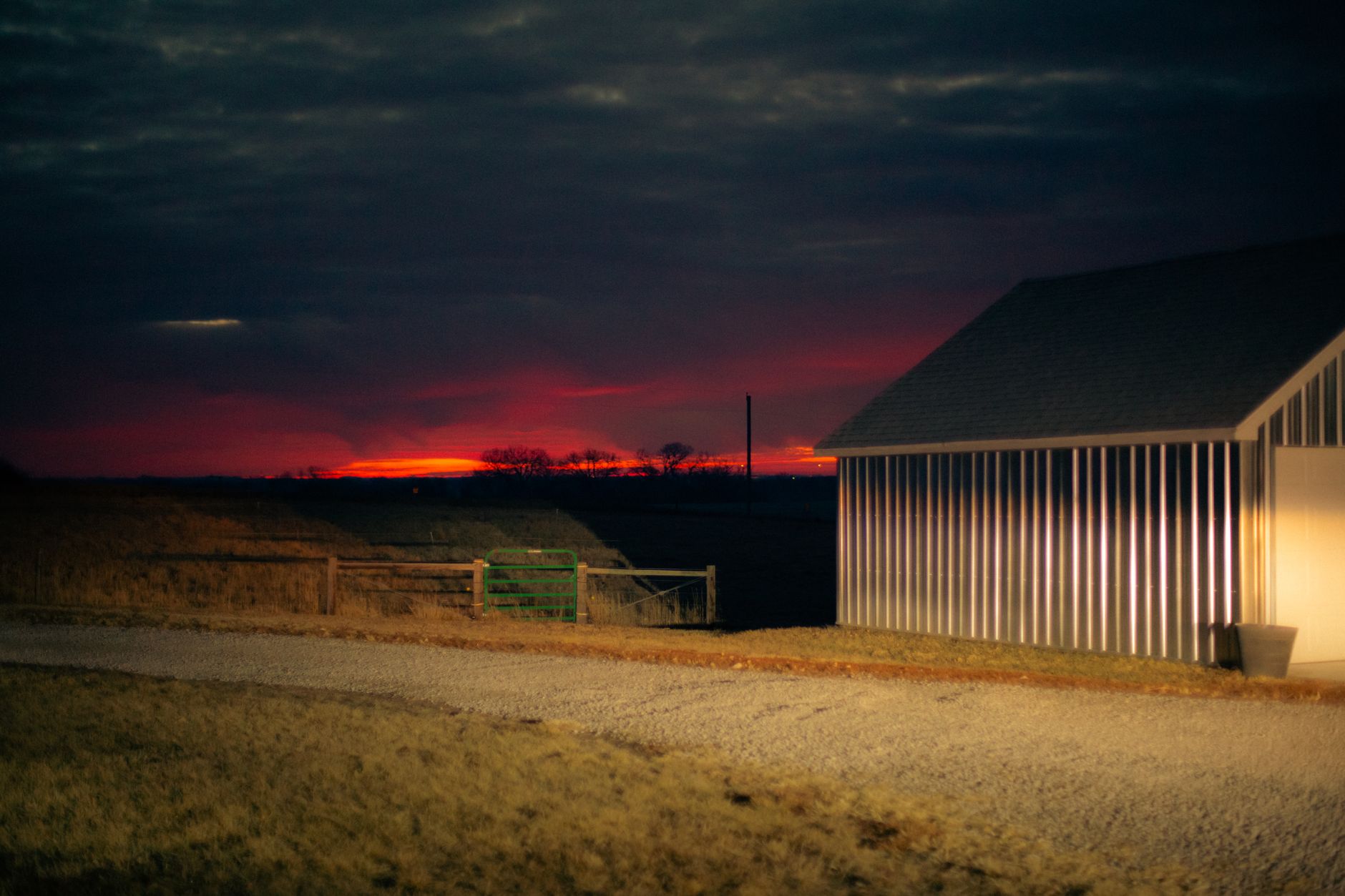
He was standing on the south side of the barn, out of the wind, where June used to hang wash. He had his seed cap in both hands and was turning it around by the brim the way he used to turn that coffee cup on the oilcloth.
Luke had seen him too. He came around the corner of the barn a few steps behind me and stopped. Walt looked at his son, and then at me.
“You bought it,” he said.
“We bought it,” I said.
He nodded. He turned the cap around one more time. When he started talking, he talked to the barn siding, not to either of us.
“Your mother and I carried a note on this place for thirty-one years,” he said. “Thirty-one years. Every November the corn check came, and every November it went to the bank. Some years it wasn’t enough. I renewed that note more times than I can count.”
He stopped. Started again.
“June kept the book,” he said. “Every payment, in her writing, in a green ledger in the desk.”
“When she died there was eleven thousand dollars still owing. I buried her owing that bank. I sat in that kitchen the week after the funeral and looked at her writing and I could not stand it.”
Luke took a step closer. Walt held up his hand, not unkindly. He needed to get through it.
“When you two sat at that table and asked to buy it on a contract,” he said, “I saw the whole thing.”
He turned the cap. “Thirty years of you paying me the way I paid the bank. Two kids and a county paycheck. Every November. I wasn’t going to hand my boy the same note I carried. I’d rather sell it to a stranger and pay the bank off clean.”
“Dad,” Luke said. “You could have told us that.”
“I know it.” Walt’s voice cracked on the second word. “I didn’t know how. Your mother was the one who knew how to say things.”
Then he looked at me. It was the first time in four years he had looked straight at me for longer than it takes to pass the potatoes.
“The boys at the co-op asked me why I didn’t sell to Luke,” he said. “I couldn’t tell them my boy couldn’t afford it. I couldn’t do that to him, in front of those men. So I said it was you.”
He swallowed. “That was the worst thing I ever said about anybody. And I said it about the girl who stood up at Easter and thanked me.”
The wind came around the corner of the barn and pulled at his coat.
“I’m sorry, Amy,” he said. “I don’t expect that to fix it.”
I thought about the supply closet with the door shut. I thought about four years of 6:30 on Saturday mornings in the dark, and Hailey’s thermometer in the pantry, and Luke at four in the morning eating cereal standing up.
And I thought about a seventy-two-year-old man sitting in his pickup at the end of a gravel drive once a month, looking at a ditch somebody had mowed, and driving on.
“It doesn’t need fixing, Walt,” I said. “You told me. That’s the part I needed.”
He put his cap back on. Then he took it off again. Luke stepped in and put his arms around his father, right there by the barn.
Walt held on to his son with the cap crushed in one hand. I walked back around to the yard and let them have it.
Outstanding as usual, thank you 😊