The Teacher Who Paid My Lunch
I come every Thursday at eleven-thirty, because the home serves the noon meal at a quarter to twelve and I had an idea about that.
The home lets family bring a tray and eat alongside a resident in the day room, so you do not have to be hunched over a nightstand. You can sit at a real table in the good window light, like people.
So that is what we do. I carry in two trays. One for her and one for me. And Dorothy Vance and I eat our lunch together every Thursday at the same table, by the big window, in the sun.
It is nothing fancy. It is care-home food, a roll and a scoop of something and a little dish of pears. But it is two trays, and it is two of us, and there is a seat for everyone.
Some Thursdays she knows I am someone to her, though not who. Some Thursdays she thinks I am a teacher too, and we discuss our difficult students like two colleagues, and I play along and we laugh.
Some Thursdays she is far away, and I just sit and eat beside her and tell her about my week, about my grandchildren and the weather and the state of the corn, and she looks out the window, and that is fine too.
I do not need her to remember me. I spent fifty years needing to know who she was. It turns out I do not need her to know who I am. The accounts are settled either direction now.
But I did tell her, in the end. I need to tell you about that, because it is the warmest thing that has happened to me since I lost Carl, and I think you should have it.
It was the fourth or fifth Thursday. She was having a clear day, a bright one. The sun was on the table and she had eaten all her pears and was in a good humor.
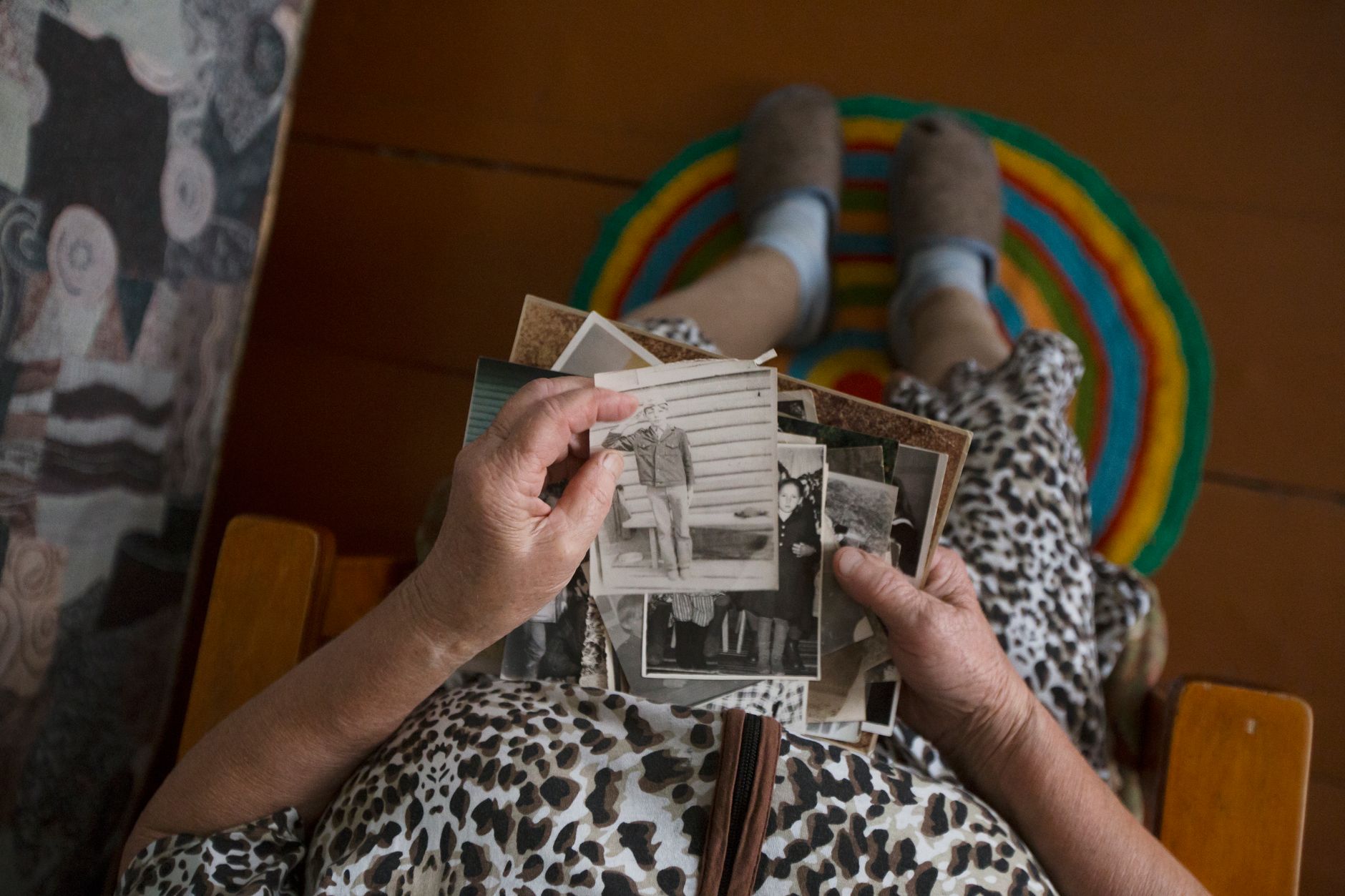
I had brought something with me. A photograph. My mother had kept it, and I had it in a box, and I dug it out: the second grade class photo from that year, black and white, the whole room of us lined up on the school steps.
I set it on the table between our two trays and I put my finger on the little girl in the third row with the tight braids and the dress her mother pressed with a stove iron.
“Miss Vance,” I said. “Do you know who this is?”
She bent over it. She studied that photograph a long time with her cloudy eyes. And then she put her finger down, not on the little girl, but up at the back, on the tall plain young woman standing at the edge of the children.