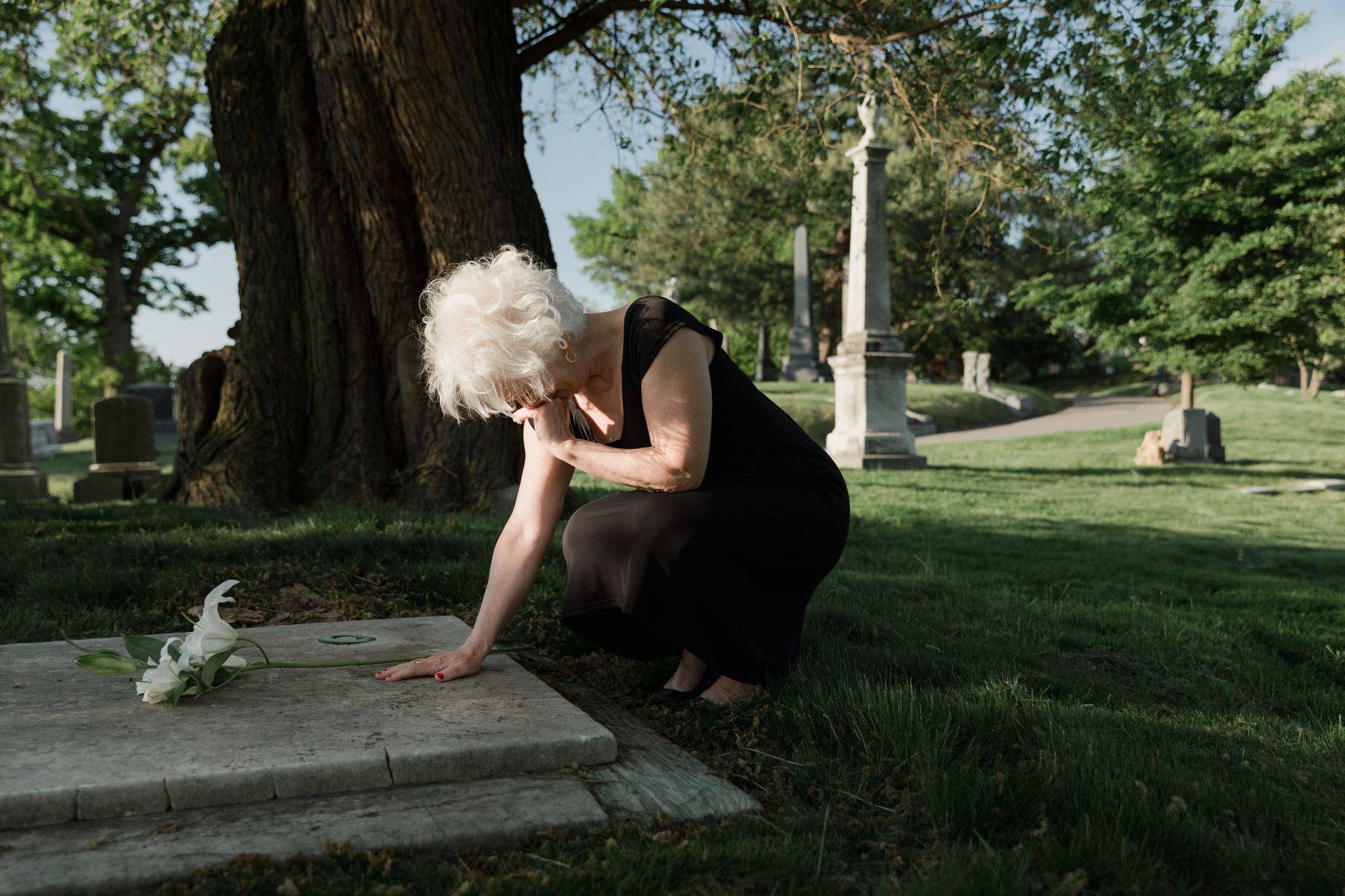
The Stranger Who Tended Roy’s Grave
“Every school day for two years,” Russ said. “He never missed. Even in the summer he’d leave one in a coffee can on the mailbox post at the end of our lane, and I’d find it in the morning. I thought it was my own private miracle. I was ten years old. I thought God had a guy.”
I laughed. I could not help it. It came out wet and broken, and he smiled a little, and then we both looked away from each other.
“He did,” I said. “That was Roy.”
When I had gotten myself under control, I asked him why. Why now, why this, why two years of flowers on a grave.
He told me all of it. He told it slowly, with long stops, and I am going to put it down as plainly as he said it, because I think that is the way Roy would have wanted it told.
The winter Russ was twelve, the Voss place lost its heat. The propane ran out in the first week of January, and his father did not have the money to fill the tank and was not, that month, much interested in finding it. Russ went to school in the clothes he slept in, a thin denim jacket, no gloves. The morning it was eight degrees, he climbed up the steps of Roy’s bus with his lips gone gray.
Roy did not say anything. He pulled the bus onto the shoulder, right there, with thirty children aboard, and set the brake. He took off his barn coat, the brown canvas Carhartt with the corduroy collar, and he came down the aisle and put it around that boy’s shoulders and zipped it up to his chin.
“It came to my knees,” Russ said. “I could have lived in it.”
“I remember that coat,” I said slowly. I could feel something moving under my ribs. “He came home that night without it. He said he left it hanging at the district garage. I was put out with him, because I had just sewn the pocket.”
“It was on my back, ma’am.”
“I know that now.”
“I wore it every day until I was sixteen. Then I wore it in the truck, in the shop, in the Army Reserve, in every cold place I ever stood. I patched the elbows myself.” He lifted the bundle in his lap. “I never could make myself give it back. I never could make myself keep it, either. I just carried it.”
He unwrapped the feed sack.
The coat was brown. It was faded to the color of weak tea in the shoulders and the cuffs were rebuilt in new canvas, with careful, even stitches. Somebody had cleaned it and oiled it, and it lay across his knees as soft as flannel.