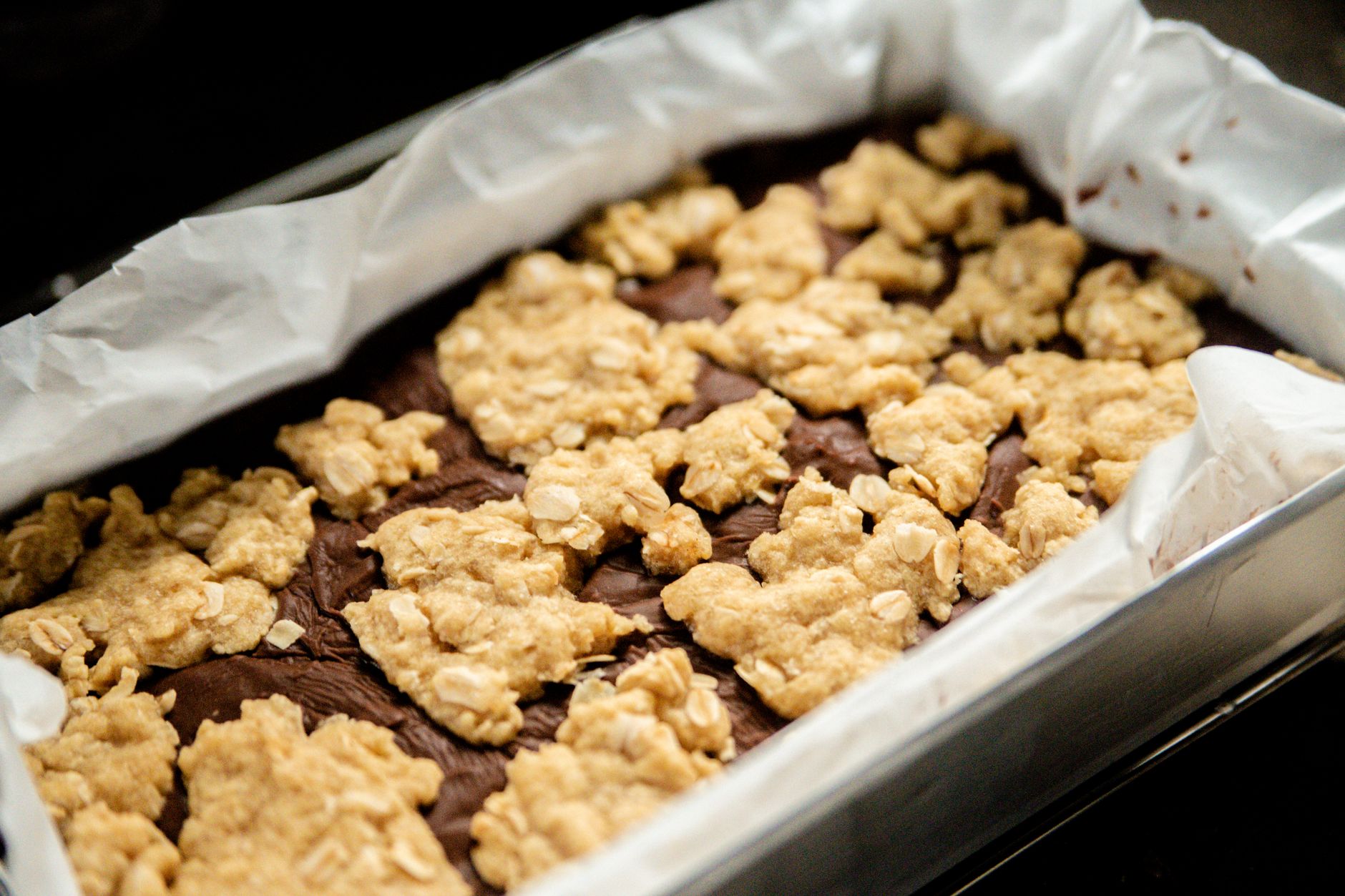
The Pan of Bars on Nicole’s Porch
Zero. Zero. Zero. Fourteen zeros. The app sent them all to Shane’s lawyer.
On Saturday night I got out Jean’s recipe card.
I have had that card since I was sixteen. Nicole’s mother wrote it out for me on an index card with a little red apple in the corner, the year I made a pan for the FFA bake sale and burned the first batch.
Scotcheroos. One cup sugar, one cup light corn syrup, one cup peanut butter, six cups of Rice Krispies. Melt the butterscotch chips and the chocolate chips together for the top.
At the bottom, in Jean’s slanty writing, it says, Don’t let the syrup boil, Amber. I mean it.
Every funeral, every graduation, every confirmation in our town for forty years has had a pan of those bars on the table.
Jean brought them to my mother’s funeral. Nicole brought them to my wedding shower. I brought them to Dale’s lunch at the church, and Jean held my face in both hands in the church basement and said, “You’re my other girl, you know that.”
I made them at six on Sunday morning. I did not let the syrup boil.
Pastor Dan preached on Joseph that morning. The brothers, the pit, the coat. I sat in our pew on the left side, where my family has sat since my grandparents, and I did not hear most of it.
I heard the end, though. Joseph telling his brothers, you meant it for evil, but God meant it for good.
Nicole and Kyle go to the Lutheran church on the other end of town. Jean comes to ours. She sat four pews ahead of me that morning in her navy coat, and she did not turn around, and I did not know if that meant she knew or did not know.
After church, Pastor Dan shook my hand at the door and held on a second longer than usual.
“You doing all right, Amber?” he asked.
“I’m going to go see Nicole,” I said.
He looked at me over his glasses. He has been our pastor for twenty-two years. He baptized both my kids. “Do you want somebody to go with you?”
“No,” I said. “This one’s mine.”
The pan was on the floor of my car in the church parking lot, wrapped in plastic wrap, with a dish towel over it. The sky was that flat gray that January gets in southern Wisconsin, when it cannot decide whether to snow.
Jeff’s truck pulled in beside me. He rolled his window down. He had come to the late service on purpose.
“Dad says you’re going over there,” he said.
“I am.”
“I’ll sit at the end of the block. In the truck. I won’t get out.”
I thought about it. “End of the block,” I said. “Engine running. Radio on. You don’t get out unless I wave.”
“Deal.”
That was my brother. He did not argue. He just made sure there was a truck at the end of the block.