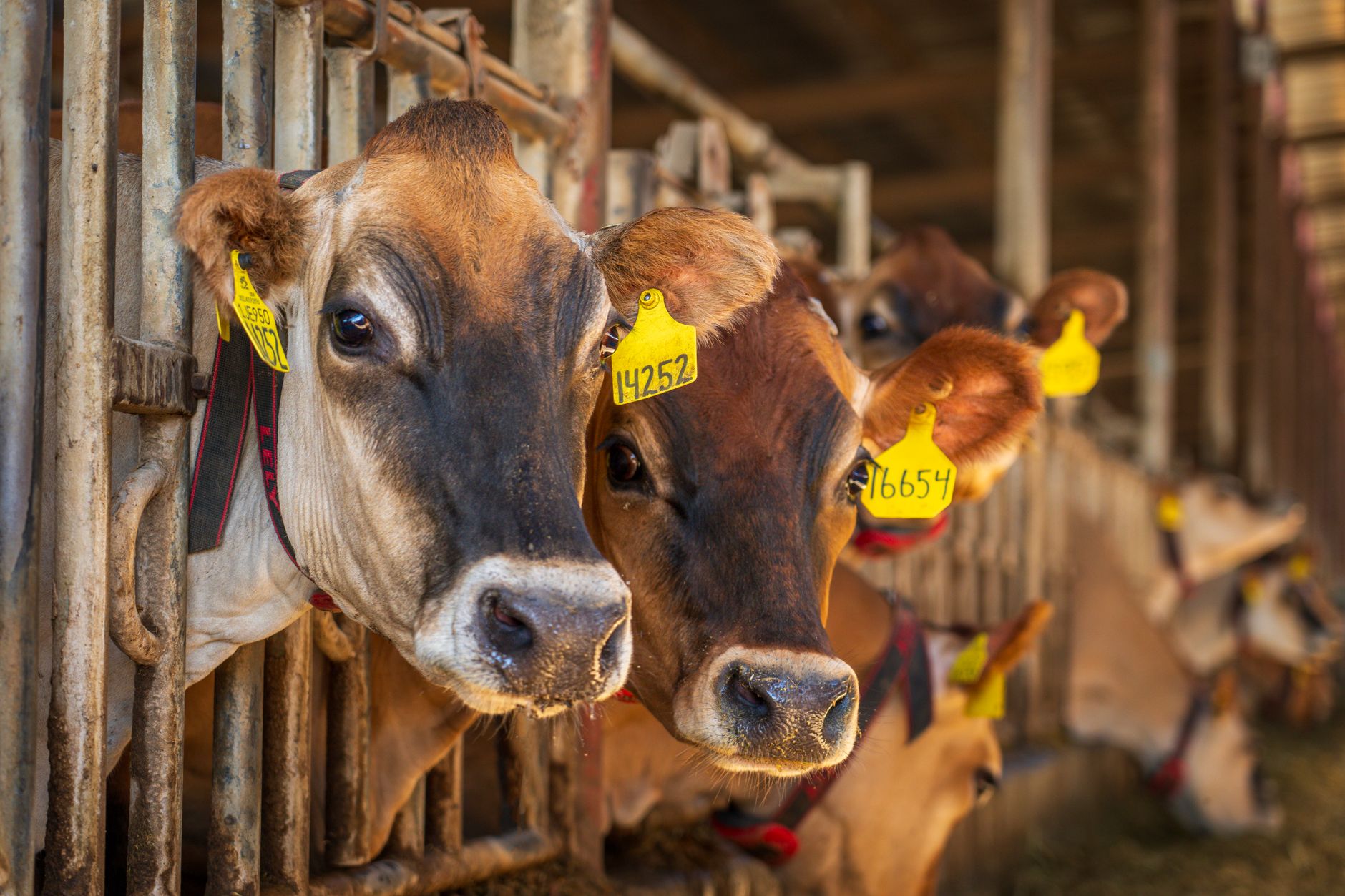
The House Cow My Father Gave Me
The part I did not know
I want to tell you what he said next exactly the way he said it, because I have turned it over so many times since.
“After your mother,” he said, and then he stopped, and started again. “After your mother died, I couldn’t look at you.”
I did not say anything.
“You have her face,” he said. “You have her whole face, Jess. You came in the parlor that first morning after the funeral, with your hair braided back the way she wore it, and I looked up from the cow and I thought it was her. Just for a second. And it about killed me.”
He finally turned and looked at me. It was the first time in fourteen years he had looked me full in the face, and I watched his chin start to go.
“So I quit looking,” he said. “I looked at the cows. I looked at the clipboard. I let you walk that cow down the road and I stood there and I let you go, because I was a coward, and I could not stand to see your mother walk away from me twice.”
Pearl swung her big head around and nudged him in the chest, the way she does when you stop scratching. He laughed, a short wet sound, and put his hand back on her.
I had spent fourteen years thinking my father could not stand the sight of me. And all that time, he could not stand how much he missed her.
I did not cry right then. I am not much of a crier. But I put my hand on Pearl’s neck next to his hand, and we stood like that for a while, the two of us and the old cow, with the gallon of milk sitting in the grass by his boot.
“I’m sorry, Jessie,” he said. Nobody had called me Jessie since Mom.
“I know you are, Dad.”
“It’s not enough.”
“No,” I said. “But it’s a start.”
The ask
He did not ask me that day. He came back the next Saturday, and stood in line again, and paid nine dollars again. And the Saturday after that.
On the third Saturday, Luke came with him. They both stood in line. They both paid.
When the line was gone, I brought them up on the porch, and Matt made coffee, and Dad set his gallon on the porch rail and folded his hands.
“The dairy’s in trouble,” he said. “You know that. Luke told you.”
“He told me.”
“We’ve got a hundred and fifty cows and a good barn and a road with four thousand cars a day going past it to the lake. And we ship every drop to the co-op at a buck fifty-five a gallon.” He shook his head. “You’ve been doing it right for nine years on ten acres with a bucket milker, and I’ve been doing it wrong for forty.”