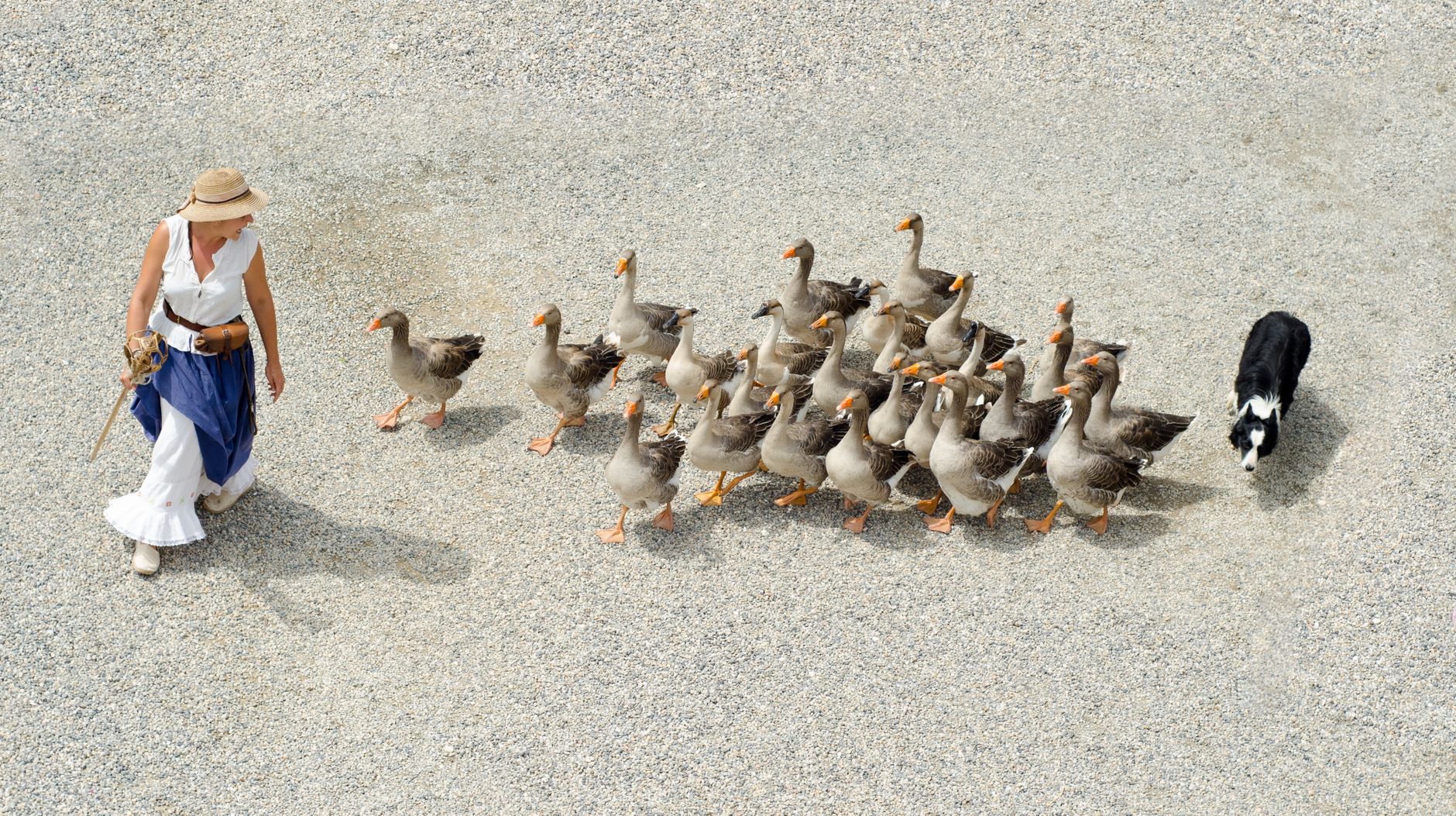
The Dog Who Brought the Cows Home
Branding morning
At five-thirty I got up and put on my father’s canvas jacket. It was the brown one with the corduroy collar and the torn left pocket. I had taken it home after the funeral, and I had not worn it yet.
Duke was at the truck door before I opened it. He had heard the jacket. I swear he had. He was standing on his hind legs with his front paws on the door, his whole back end going.
I opened the door and he jumped up on the seat and sat down in the exact place he used to sit in Dad’s truck, right in the middle with his shoulder against the driver.
Pete had my sorrel mare, Ginger, loaded in the stock trailer by the time I came out. He did not ask me if I was sure. He just said, “I’ll be right behind you,” and climbed into his own pickup.
You could hear the cattle before you could see the yard. Cows bawling up on the hill, calves bawling back from somewhere else. That is a sound that goes right into you if you grew up with it. Every cow on that hill was looking for something.
The yard was full. There were two big stock trailers parked by the barn, and a horse trailer with four saddled horses tied to the side, and a camper with a propane tank where the cook was getting set up. The branding pot was out by the big corral, the propane heater going already, the irons laid in it in a row.
Kurt was standing by the branding pot with a cup of coffee in his hand. The hired men were sitting on their four-wheelers behind him, engines idling. The big corral was empty except for a few of the eleven pairs from the night before, standing in the far corner with their heads up.
Kurt saw the dog before he saw me. I watched his face. He looked at Duke on the seat, and then at Pete’s trailer pulling in behind, and then at me getting out of the truck in Dad’s jacket.
He set his coffee down on a fence post. “What are you doing here, Jill?”
“Came to help,” I said. “If you want it.”
He looked up at the hill. The bawling was louder than ever. You could see dark shapes of cows moving along the edge of the north draws, way up there, maybe a mile off.
“I’ve got a crew,” he said. One of the hired men laughed, not mean, just young.
That was when we heard the horn.
Gus Lindquist came through the cattle guard in his old green Ford, the one with the cracked windshield he says he is going to fix every spring. He pulled up beside my truck and saw Duke sitting there on the seat, and he leaned his whole head out the window.
He laughed. It was a big, open, delighted laugh, loud enough that every man on a four-wheeler turned around to look.
“Well, now,” Gus said. “Now we’ll get it done.”
Kurt’s face went red, all the way up into his hair. He was forty-seven years old and for a minute he looked about twelve, standing at the gate of the calving lot with his ribs taped.
“Jill,” he said, and his voice was tight. “It’s a dog.”
I did not answer him. I did not say anything clever. I opened the truck door and Duke came down off the seat and walked, not ran, walked, straight across the yard to the pasture gate on the north side of the big corral.
Pete had Ginger out of the trailer by then and was tightening her cinch. He handed me the reins without a word.
I led Ginger over to the gate. Kurt followed a few steps behind me, then stopped.
“Dad never let anybody gather that pasture with machines,” I said, quietly, so only he could hear. “Not once.”
“I didn’t know that,” he said.
“I know you didn’t.”
I opened the gate. And Kurt said, so low I almost did not hear him, “Dad used to stand just like that.”
I put two fingers in my mouth.