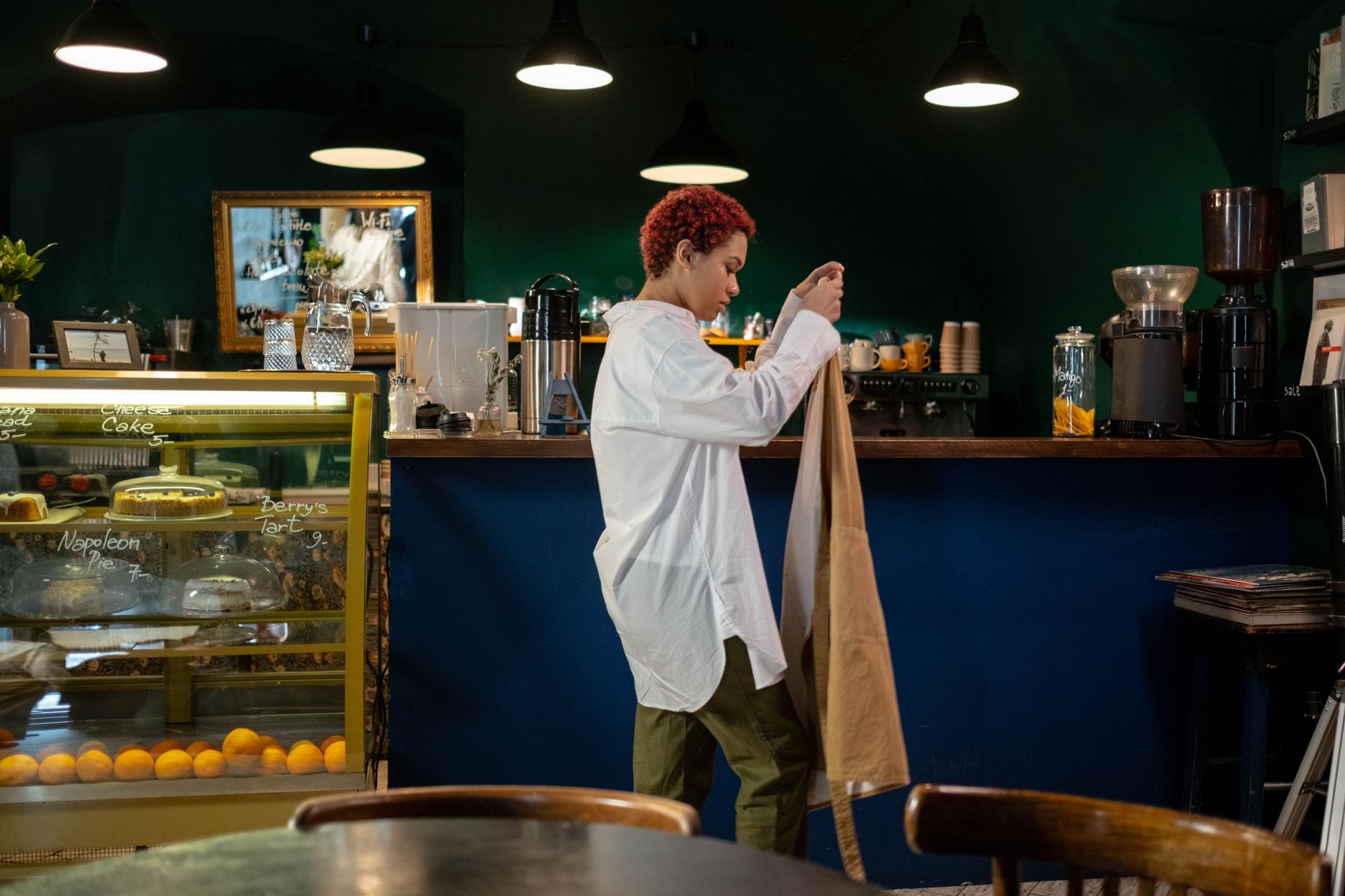
The Cap At The Counter
“Folks called it an accident,” Walt said, “and I have let them call it that for thirty three years, and I will let them keep calling it that. But I was his father. I passed him in the dark every morning for two years. I knew my boy was drowning long before that bridge.”
I put my hand over his hand on the counter. I did not plan to. It just went.
“I am sorry, Walt,” I said. It was all I had.
He let my hand stay a second, then he patted it, the way an old man does, and he picked his coffee back up, and he looked out the window at Main Street coming awake.
“Marie passed in oh four,” he said. “And I have been coming to this counter every morning since, and for a long time I did not know why I kept coming. A man my age, no family, no reason to be anywhere by any particular hour.”
“And then in March,” he said, “that boy walked in to cook the eggs.”
Out back I heard Eli stack the last box and start toward the door.
Walt looked at me, and he said the thing I have not been able to stop turning over since. He said it quiet and he said it sure, like he had worked it out a long time ago on a lot of dark mornings.
“A boy coming home needs one face that already knows him,” Walt said.
Eleven words. I counted them later, lying awake. A boy coming home needs one face that already knows him.
“My Danny came home,” Walt said, “and there was nobody at the counter for him. The parade was over and the town went back to work and his own father went back to work, and he sat in a quiet house and he drowned in it before he ever got to that bridge.”
“I cannot do one thing for my son,” Walt said. “That door is shut and I will not get it open in this life. But I can get up at a quarter to six, and I can sit at this counter, and I can be one face that is already here when that boy walks in. So that is what I am going to do, every morning, for as long as the Lord lets me do it.”
Eli came back in then, wiping his hands on his apron, and the morning went on like mornings do. Walt folded his paper. I picked up the pot. The farmers started rolling in at half past.
But I was not the same after that, and I do not think I ever will be.