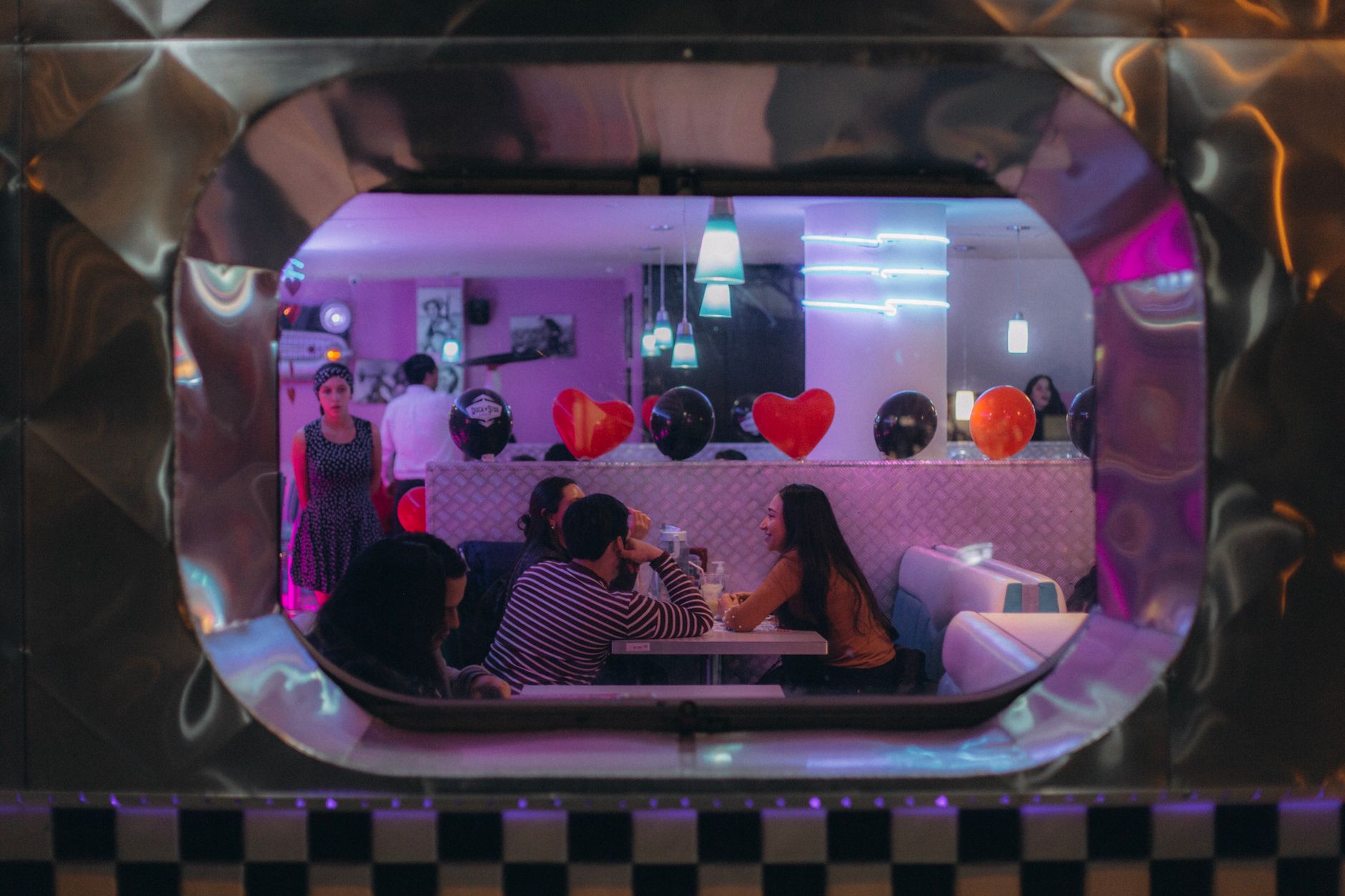
The Booth by the Window
What I was doing there
My father died the November I was seventeen, on the tractor, in the middle of soybean harvest, on ground we rented from a man in Salina. His heart. He was forty-nine. A neighbor found him at the end of the row with the engine still running, and I have always been grateful it was a neighbor and not me.
When a man who rents ground dies, the work dies with him. The lease and the equipment all had to be settled in ninety days. My mother, Lori, cooked in the elementary school cafeteria and cleaned the Methodist church on weekends. She was the strongest person I knew. She also cried in the laundry room with the dryer running so I would not hear.
I had been accepted into the diesel program at the technical college in Salina. My father had been teaching me engines since I was eight. The funeral cost $9,200. By August the school wanted a deposit and a filled-out tool list: wrenches, torque wrench, micrometers, a rolling chest. $1,900, and that was the cheap version.
So I deferred a year and took the busboy job “until spring.” Then spring came, and Mom’s hours got cut, and when the year ran out the money still had not come back. I never sent the deposit. Nobody calls that a decision. You never decide to give up your life. You just keep saying “until spring.”
The booth
The next Thursday he came in at 6:40, same as before, and Vern’s crew had the window booth, same as always.
I watched him look at the booth. I watched him look at the stool. I watched him decide.
“Sir. Hang on.”
I told Vern’s crew that Donna needed the booth wiped down, which was a lie, and I am not proud of it. They shuffled off to the round table, grumbling. The seat vinyl had a crack patched with brown tape. I laid down a clean roll of silverware and poured the coffee. “This one’s got the best light.”
He sat down slowly, like a man half expecting it to be taken back.
“I’d just as soon sit at the counter,” he said. His voice was low and dry and very even.
“The counter wobbles.”
Something moved at the corner of his mouth. Not a smile, exactly. The place where one used to live.
“Then I suppose I’ll take the booth.”
Donna caught me at the dish station twenty minutes later. She was fifty-eight, big and tired and kind, and she had run the place twenty-six years and talked to you with her eyes on the grill.
“You can’t hold a booth for one egg, Wade.”
“It’s a Thursday booth. He only comes Thursdays. Vern’s crew can have it every other morning.”
She looked at the old man, who was reading a folded sports page somebody had left behind. Her face loosened.
“Four months, I bet. I never once asked his name. Isn’t that something?” She turned back to the grill. After a minute she said, not looking at me, “Keep his coffee hot. And tell Vern if he gripes that I said so.”