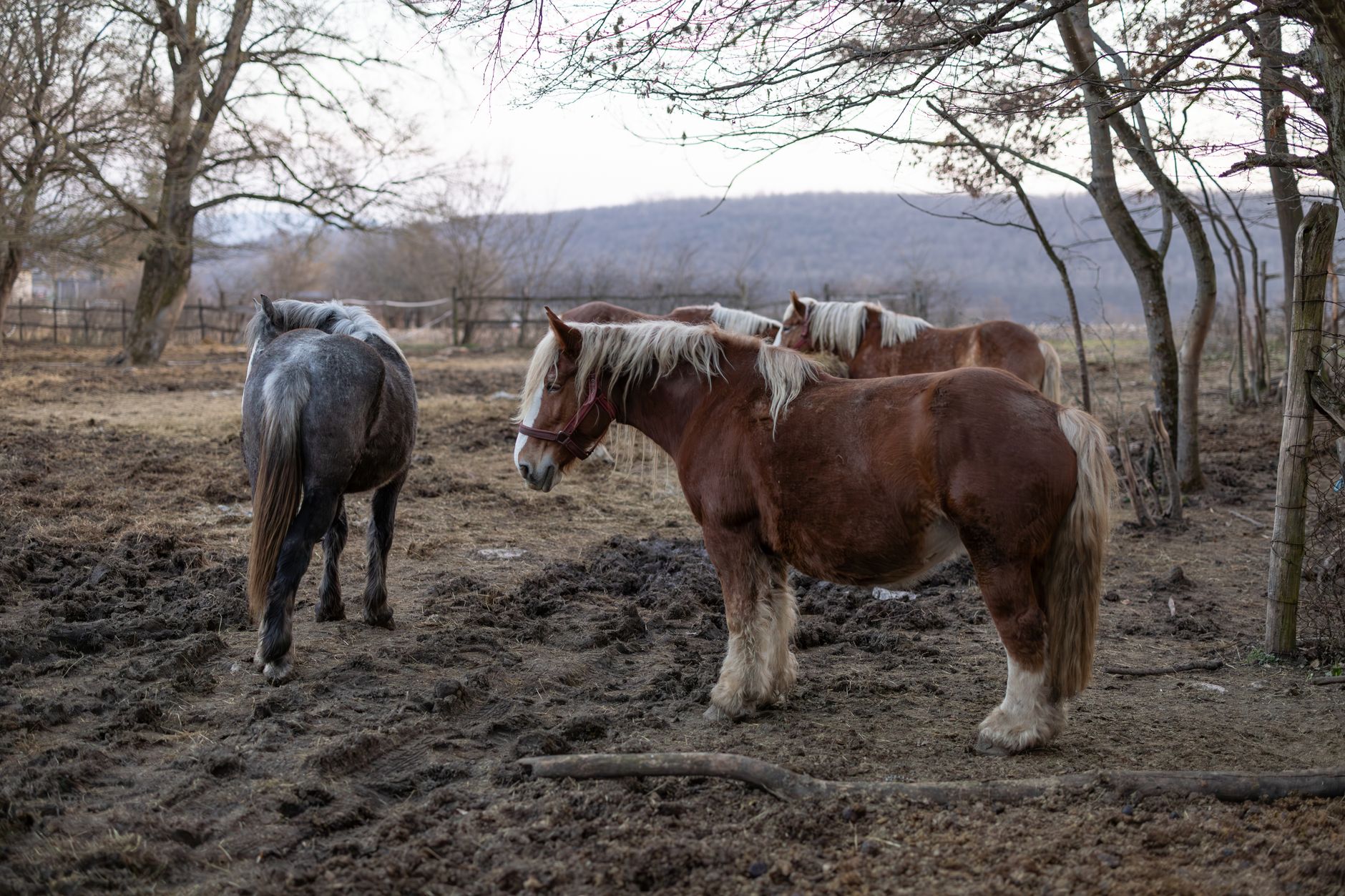
The Draft Horses My Brother Sold
But by the time I got to church that Sunday, old Mrs. Halvorsen took my hand in both of hers in the narthex.
She said, “I heard what your brother did, and I heard what that Olson boy said to you, and I want you to know I put something in an envelope for Katie’s horses, and I’m not the only one.”
She would not take it back when I tried to tell her she didn’t need to.
The fair board leader was a woman named Pam Driscoll. She had run the 4-H draft horse program for eleven years.
She had watched Katie groom and lead those two mares at every county fair since she was old enough to hold a halter rope steady.
Pam started a jar at the fairgrounds office labeled, simply, Haugen Team Fund. No explanation was needed, because by then everybody who walked in already knew the story.
Farmers who had known Oscar Haugen their whole lives put in twenty dollars, fifty dollars, whatever a man could spare in a hard year.
It was not charity, several of them told Tubby. It felt like paying down something they owed to Oscar himself.
For fifty years he had helped pull their trucks out of ditches and loaned out his grain auger without ever once asking what he’d get back.
It took eleven days. Eleven days of envelopes and folded bills, and one check from a man two townships over who’d bought his first tractor off our dad the same year Merle had.
At the end of it Pam Driscoll called me and said the jar had four thousand three hundred and ten dollars in it, more than enough.
She asked if I wanted the extra hundred and ten to go toward Katie’s fair entry fees next summer. I said yes.
And I cried standing at my own kitchen counter in a way I had not let myself cry since the morning of the funeral.
Pam read me some of the names off the envelopes, because she thought I’d want to know. Some of them I’d expected and some of them undid me worse than the big gifts did.
The Lindqvist boys had been in Katie’s 4-H club years back and had long since aged out into their own places.
They put in forty dollars between the two of them with a note that said, for the team, from the guys who used to lose every showmanship class to her.
A widow out past the creamery who hadn’t kept livestock in a decade sent ten dollars in a church envelope with Oscar’s name misspelled and the right sentiment anyway.
Russ did not say much about any of it, which is his way. But he drove out one evening and split a cord of wood for Pam Driscoll’s elderly father without being asked.
That was the only language he had for what he was feeling, and I understood it perfectly.
I never told Dale about the fund. I didn’t have to. Small towns don’t keep secrets, not good ones and not bad ones.