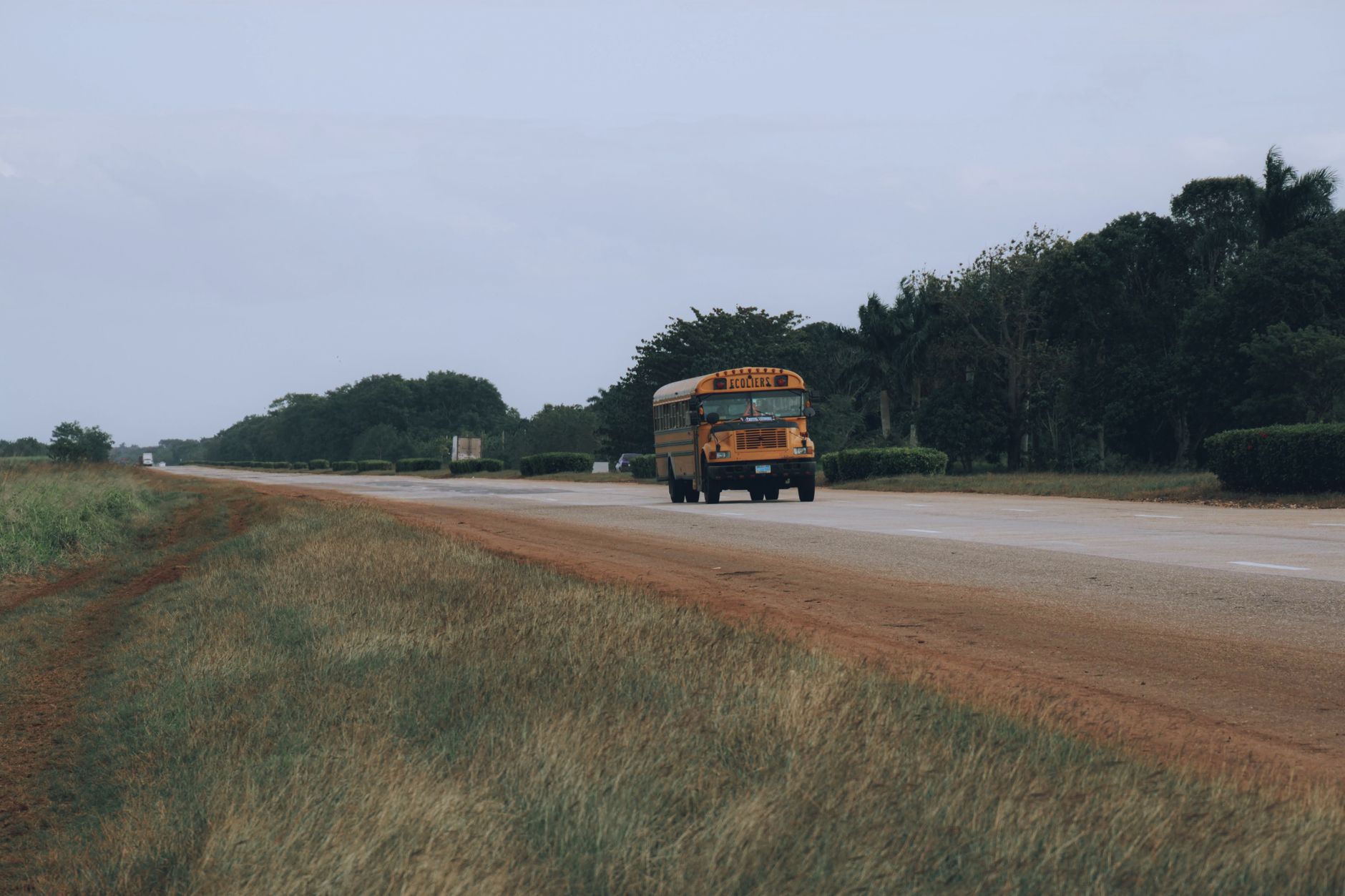
The Nine Kids on Coon Hollow Road
We both thought of it at the same time.
Pleasant Grove Baptist has a white Ford van, a fifteen-passenger, that carries the youth group to camp in June and the seniors to the Branson Christmas shows in December and otherwise sits beside the fellowship hall under a sweetgum tree. I had been driving it for the church for ten years. I was already on the insurance.
I called Reverend Dunn that night. He is a big, slow-talking man who was a lineman before he was called to preach, and he listened to the whole thing without interrupting once.
“Sandy,” he said when I finished, “that van sits idle two hundred and fifty mornings a year. Come by tomorrow.”
It was not as simple as taking the keys, and I was glad it wasn’t. Reverend Dunn called the church’s insurance agent and asked the question straight: could a member drive neighbor children to school in the church van, no charge, as a ministry of the church. The agent said yes, with an approved driver on the policy and a signed permission from every parent. Wednesday night the deacons met in the fellowship hall and voted, six to nothing, to pay the gas out of the missions fund, sixty dollars a week.
“We send money to children in Honduras,” old Mr. Hadley said, the same Mr. Hadley whose log trucks ran that road. “I reckon we can send some up Coon Hollow.”
I thought the driving was mine to give, so I gave it. Nobody paid me a nickel and I would not have taken it.
Dale changed the oil and put two new tires on the front. I went to the Walmart in West Plains and bought two booster seats, because Missouri wants a child under eight in one, and there would be three little ones in that van and the church only owned one.
Then I went up the hollow, one porch at a time.
I had waved at those families for years through a bus windshield, but I had not sat in many of their kitchens. I sat in all four that week. I told them the same thing each time. The bus was not coming up. I was not driving the bus anymore. If they wanted, a church van would be at their mailbox every morning and I would be the one driving it.
Donna Pruitt was the last one. She is raising her two grandchildren in a single-wide at the very top of the hollow, back a lane from the road. She is my age and has worked the line at the chicken plant for eleven years, and she looked like she had not slept since the district’s letter came in July.
“I been trying to trade shifts,” she said. “They won’t let me. I leave at five. Jaylen gets his sister up and dressed and gets her to the bus. He’s nine, Sandy. He’s done it since she started Head Start, but the bus came to the mailbox then.”
“It’ll come to the mailbox now,” I said. “It’ll just be white.”
She put her hand over her mouth and signed the paper without reading it. I made her read it.
I took a job, too, because we could not do without my check. Jeff at the feed store had been after me for years to work his counter. Nine to two thirty, which fit between a morning run and an afternoon one like it had been cut to measure. It paid less than the bus, and more than twelve dollars.