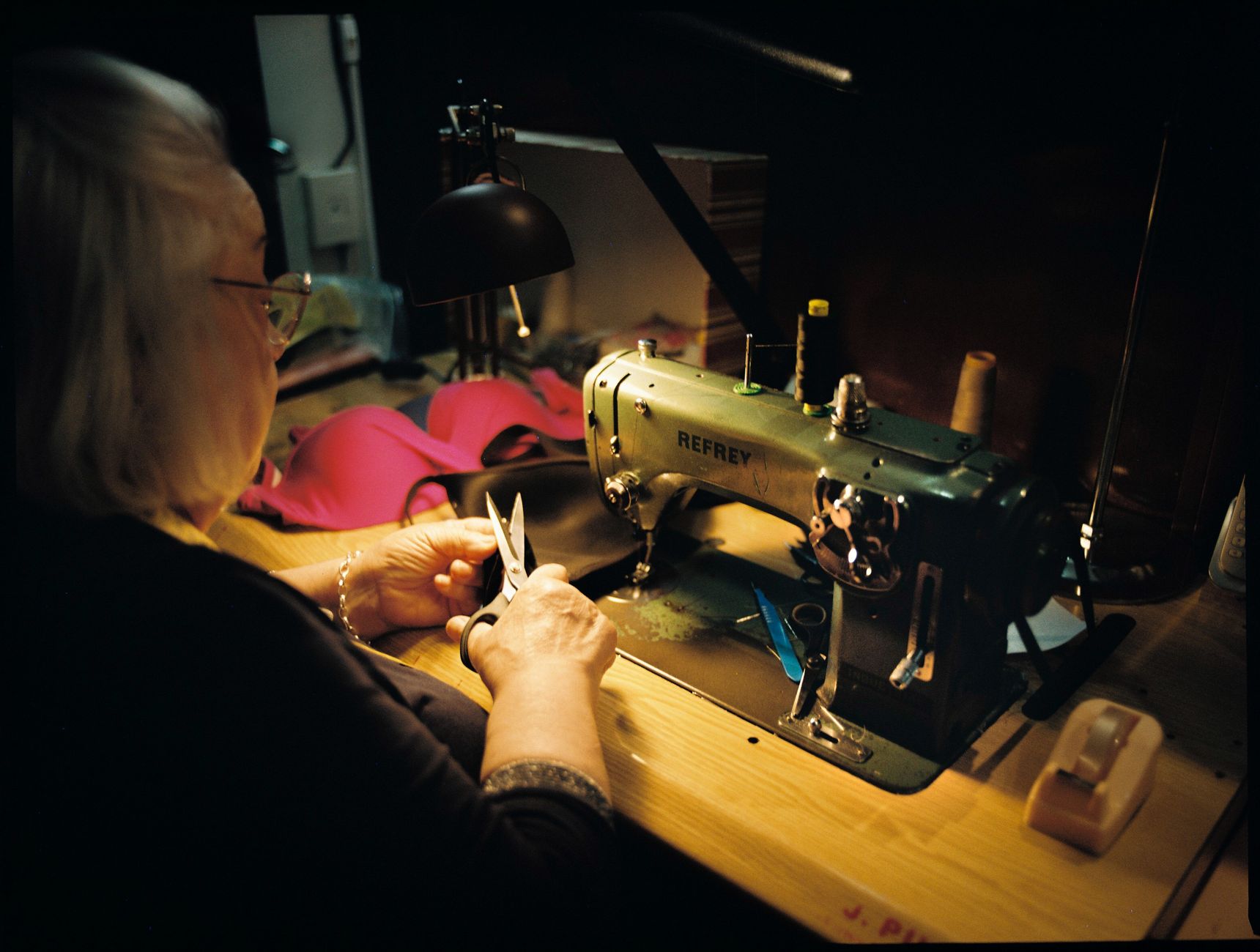
The Blue Dress In The Church Vestibule
I said, “Ask.”
He said, “Put me in there somewhere. Where nobody’ll see. I want to be in it.”
I laughed at him. I said, “You’ll be standing right next to it.”
And he said, “That’s not the same. I want to be sewed in.”
Roy was not a man who said things like that. He drove a dump truck and patched roads and plowed snow off Highway 150 at four in the morning for twenty-nine years. He told me he loved me maybe twice a year, at Christmas and when I had the flu.
So I got my mother’s blue floss out of her button tin, and I stitched his initials and the date inside the hem. He stood in the doorway with his hand over his eyes the whole time. It took me twenty minutes. He never moved.
When I was done I said, “There. You’re my something blue.”
He said, “Good.” Then he went home and ate supper.
He died on a Sunday in March, six years ago, of his heart, in the driveway, with the hood of the truck up. He was fifty-three. I found him.
And I had been sitting in that house for six years thinking there was nothing of his left to find.
Deb got down on the floor with me. That is no small thing for a woman with her knees.
She read it. Then she put her arm around my neck and we sat there on my sewing room floor like two little girls, with a wedding dress across our laps, and cried until the dog came in to see about us.
“Well,” Deb said finally, wiping her face on her sleeve. “You can’t cut that off.”
“No,” I said. “I can’t.”
But the hem had to come up fourteen inches. Everything below the chalk was coming off, and Roy was below the chalk.
I did not sew another stitch that night. I turned the lamp off and went to bed, and I held that piece of hem in my hand the way you would hold a letter.
In the morning I knew what to do.
I cut the strip out. A piece of the old hem about five inches long and two inches wide, with his initials in the middle of it. I pressed it flat and put it in the top drawer of my machine cabinet, with my good shears.
Then I cut the skirt.
Then came the part Deb truly did think was crazy.
“Blue,” she said. “Carol Jean. The child said champagne.”
“I can’t wear it white. And I can’t get this to champagne. It’s old white polyester satin. If I try for tan it’ll come out the color of a dishrag. It’ll take a clear color, though.”
“So pick a different clear color.”
“I want that one,” I said.
Deb knew which one I meant. She had been sitting on the floor with me.
Satin from a 1994 bridal pattern is polyester, unless you were rich, and I was not. Ordinary dye, the kind in the little box that our mothers used on curtains, will not touch polyester.
There is a dye made for synthetics. It comes in a bottle, and it only works hot. Not washing machine hot. Stove hot, just under a boil, and held there, and stirred the whole time so it does not streak.
I used my canning kettle. Twenty-one quarts, blue speckled enamel, the same one I have put up tomatoes in since Brittany was in diapers. It will never see another tomato, and I knew that when I filled it.