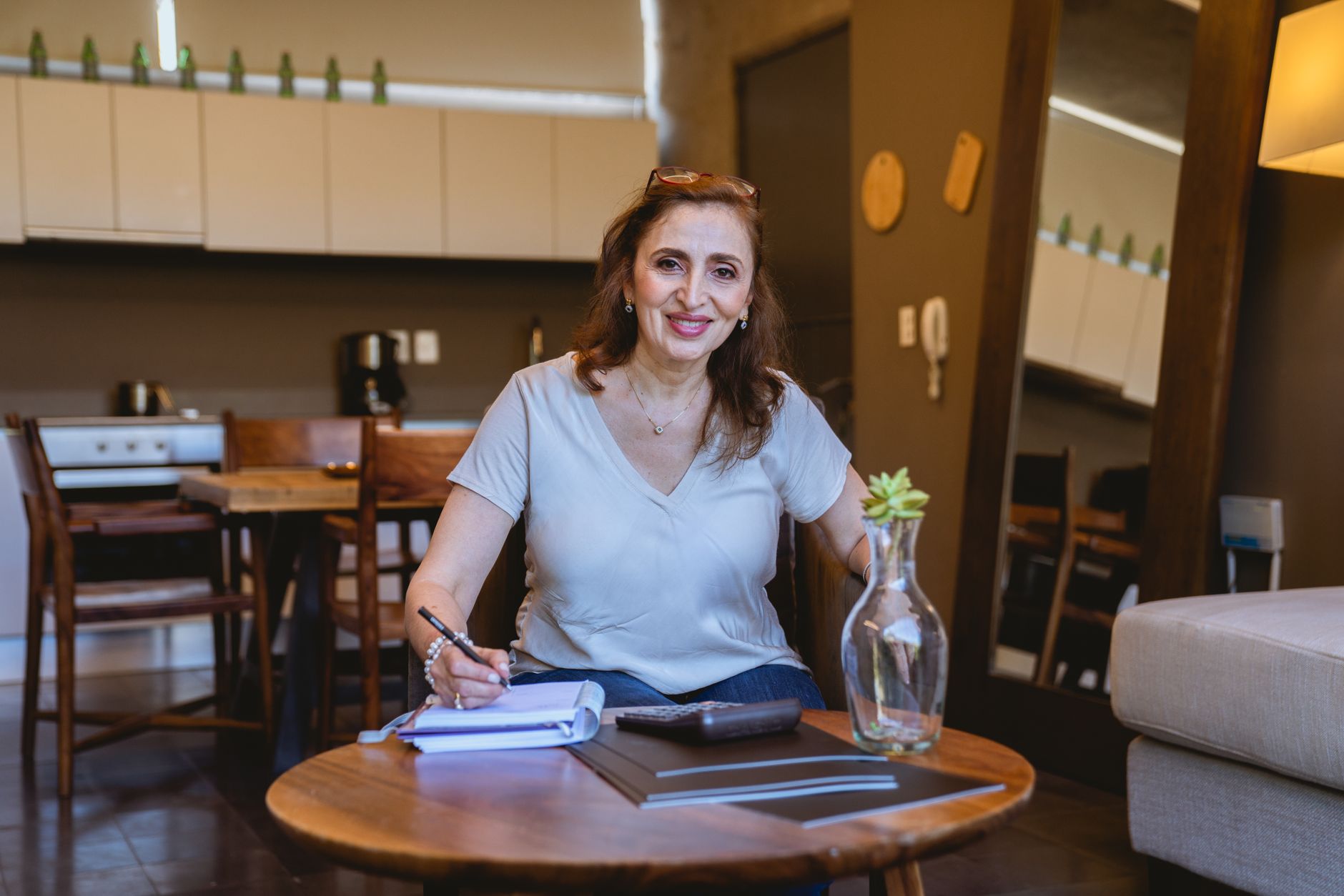
The Notebook That Spoke For Her
Allie grew up doing homework at that kitchen table while I managed Grandma’s pills, the organizer with the days of the week printed on the lids always sitting at the edge within reach, a coffee cup always going cold beside the notebook because I never finished a cup in one sitting those years. By the time Allie was sixteen she could do half the morning routine herself, and some mornings before school she’d sit across from me in that soft early light with her own coffee going cold too, and we wouldn’t talk much, we’d just be there together, the two of us and the notebook, getting Grandma up and dressed and medicated before the bus came and before I had to be at the school.
The sixth year was the hardest, the year Mom stopped walking without help, the year the falls started, the year Brenda came four days a week and I covered the rest, the year I gave up the last of my hours at the school because there was nothing left of me to give the front office. The sixth year was the year she stopped knowing my name most days and still, somehow, reached for my hand every single time I walked into the room, like some older and truer part of her knew exactly who I was even after the rest of her had let it go.
She died on a Tuesday morning in late October, at home, in her own bed, with Brenda there and me there and the first frost already laid down silver on the fields outside her window. It was quiet. It was, in the end, a mercy, and I have told myself that every day since, because it is true, and because some days it is the only thing that keeps the grief from flattening me.
Craig came for the funeral. He gave a fine eulogy, the kind you’d expect from a man who is good at talking for a living, about Mom’s potato salad and her garden and the way she used to call everyone “hon” whether she liked them or not. People cried. I cried too. He was not wrong about any of it. He just did not know the last six years of her well enough to put them in a eulogy, so he reached back further, to the mother before the disease, the only version of her he had kept up with.
The church was nearly full. Half the town turned out, the same ladies who’d carried hot dishes out to the house for years, Pastor Nolan, Jeff from two farms down in his one good suit, cousins and aunts I hadn’t seen since Christmas, Brenda sitting near the back with a tissue already out before the first hymn started. Allie sat between Dave and me the whole service and held my hand through both prayers. Craig’s wife Kim sat beside him in the family pew, quiet, watching the room the way she watches most rooms, taking stock of things before she says a word about them.