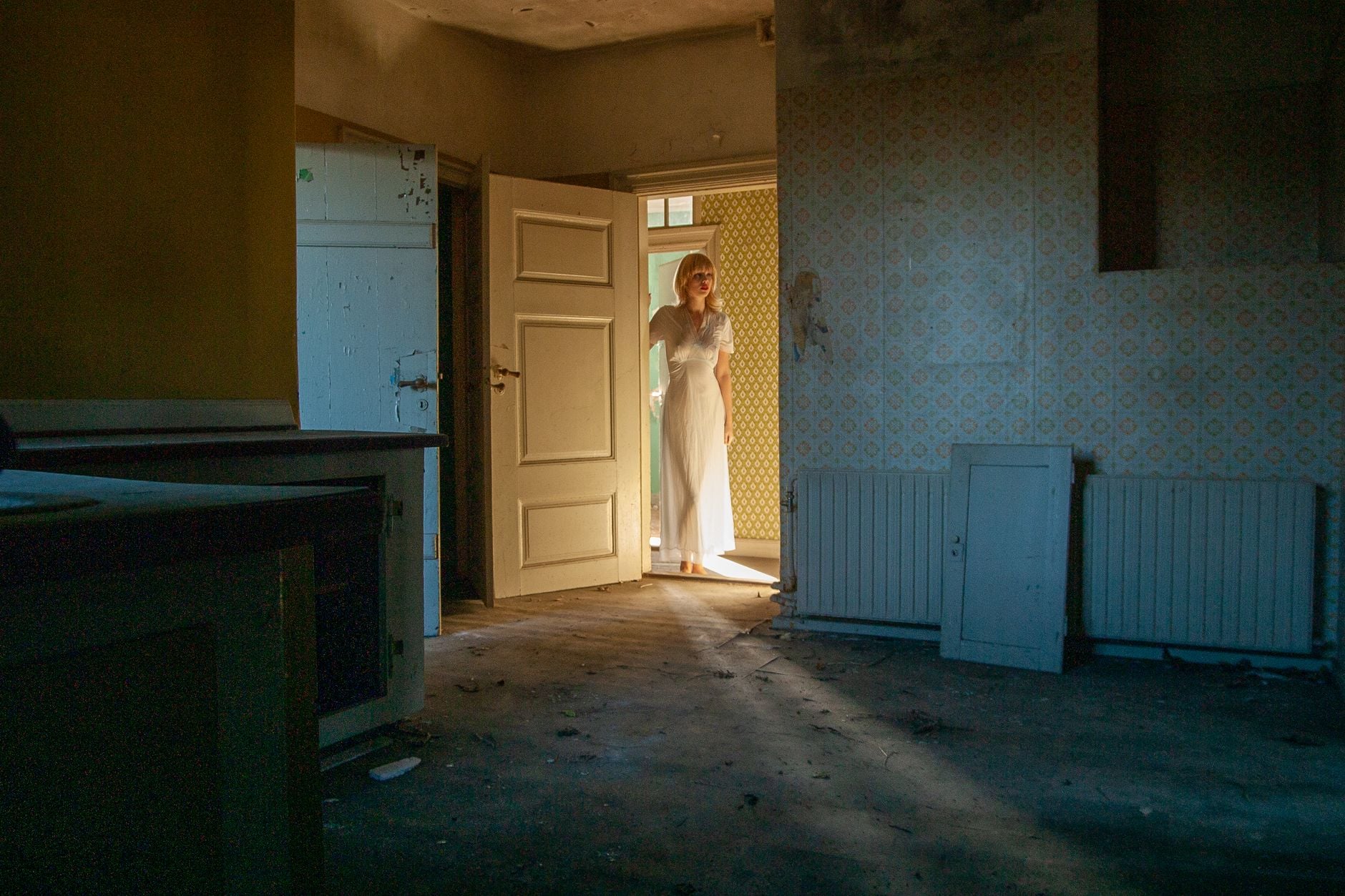
The Name Hidden Under Mama’s China
She had a soft spot for the underdog in any room, animal or person, and a backbone of something closer to rebar than steel, and she had loved that china cabinet the way some women love a piece of jewelry, except it wasn’t vanity, it was memory, every scratch and chip, except there weren’t any chips, that was the whole miracle of it, eighty years and three generations and not one plate broken, because every woman who ate off it had been taught by the woman before her exactly how to carry it.
She also, it turned out, had been dying for longer than any of us knew, and had used some of that time in a way none of us found out about until the day of her funeral.
The service itself I will tell you about quickly, because funerals, when you are the daughter in the front pew, mostly become a single long held breath. Pastor Dale said the things pastors say. The volunteer fire department carried her casket the way they’d carried half the old folks in that town for twenty years, careful, slow, like she was something that could still be dropped and hurt. Terry sat two feet away from me in the family pew in a suit that didn’t fit him across the shoulders anymore, and he did not look at me, and I did not look at him, and between us there was a space exactly the width of a stolen china cabinet.
I noticed Phyllis, Jean, and Ardith come in together, late, the three of them in a row near the back, and I noticed that all three of them were looking at Terry’s suit jacket and not his face, which is a specific way of looking at somebody that I recognized because I had been doing it to him myself since six that morning.
The luncheon was in the fellowship hall at First Christian, same as every funeral luncheon in Bellford since I was a child, same folding tables with the paper covers, same ladies’ circle running the kitchen, this time with Thelma Prowse directing traffic with a ham in one hand and a coffee pot in the other like she’d been doing it her whole life, which she had. People filled their plates and found their folding chairs and talked about Mama in the low, warm way that people talk at a good funeral, the kind where the grief has already found its level and what’s left on top of it is mostly love.
I was carrying a plate of ham and potato salad to a table by the window when Ardith Fenwick stood up at the front of the hall, by the coffee urn, and tapped a spoon against a glass of water, which is a sound I have heard at a hundred wedding receptions and never once at a funeral luncheon, and the room, out of some old reflex, went quiet for her.