The Shed That Earned Its Keep
Saturday
Vince found out the way people find out anything in Hughes County. Somebody at the gas station asked him how he liked sharing a shed with the Schmidt boys.
He came out the second Saturday of November. Kenzie was with me, because Kim works every other weekend at the hospital and Kenzie comes to the farm. She is ten. She has Len’s cowlick and she asks questions the way some children pick at a scab, steadily and with interest.
We were in the shed. Kurt was up on a stepladder changing a light tube over the east combine, Joel was underneath holding the ladder, and Kenzie was on a bucket at Len’s workbench sorting his sockets back into their case by size, because Kurt had shown her how to read the numbers.
I heard the pickup before I saw it. It came up the lane faster than Vince drives, and it did not stop at the house. It went right on past the south door and around the shelterbelt, bumping across the hay ground, and it pulled up at the open north end.
My brother got out. He is sixty six, a big square man with our dad’s hands, and he was wearing his orange cap because West River deer opened that morning and he had meant to be gone by now.
He walked in the north door and he stopped.
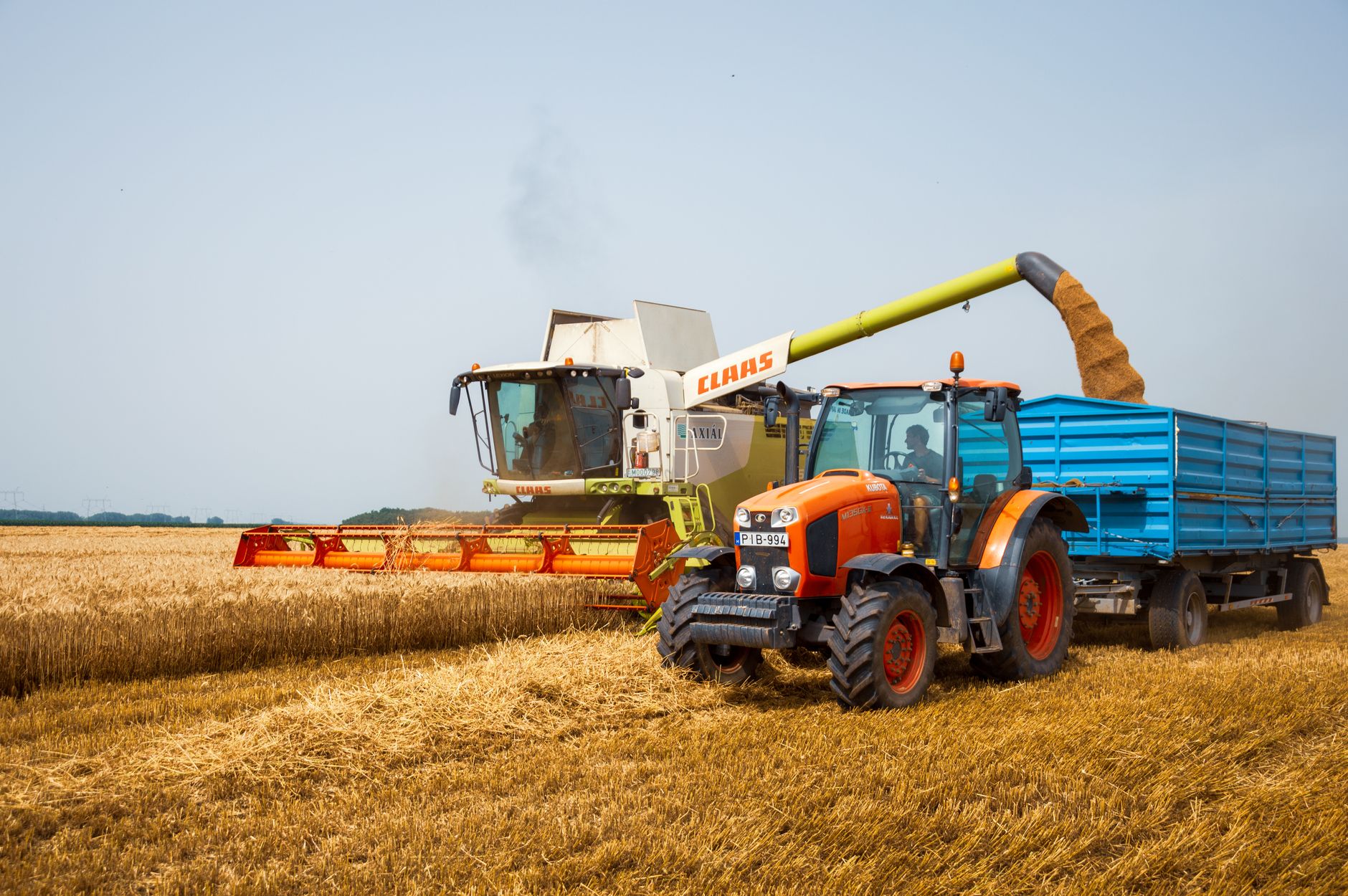
Two green combines. Swept concrete. A blue chalk line with the tongue of his wagon hanging over it.
He looked at all of it for a long moment. Then he looked at me.
“Donna, who let these people into Len’s shed?”
He did not shout it. Vince does not shout. It came out flat and puzzled, the voice of a man who has come home and found the furniture moved.
Kurt came down off the stepladder, wiping his hands on a rag.
“Morning, sir,” he said. “Kurt Schmidt. That’s my brother, Joel. We have a lease with the owner.”
“The owner,” Vince said, “has been dead nine years.”
Nobody answered him. The wind sang a little in the door track.
Then Kenzie looked up from the workbench with a half inch socket in her hand.
“Uncle Vince,” she said, “can I ask you something?”
He turned. His whole face changed, the way it does for that child.
“Sure, kiddo.”
“Kurt and Joel pay Grandma seven hundred dollars a month for their half.” She said it carefully, like a spelling word. “How much do you pay for yours?”
Vince opened his mouth.
He shut it.
I watched my brother stand there and look for the answer, and I watched him find it, and it was not an easy thing to watch.
“I don’t, honey,” he said. “I never have.”
“Oh,” Kenzie said. She thought about it. “Is that why Grandma’s car has to sleep outside?”
“Kenzie,” I said. “That’s enough, sweetheart.”
“No,” Vince said. “Let her.”
He walked over to the chalk line and stood with his boots on either side of it. He looked at the wagon. He looked at the old boat on its four flat tires, and the leaves in it, and the tarp tied over the corner of his camper with a bucket hanging underneath.
“Who put the tarp on?” he asked.
“I did, sir,” Kurt said. “I hope that’s all right. I didn’t go inside it and I didn’t move it. It was running water on the bench.”
“What bench?”
Nobody had to tell him. He was already walking.
He stood in front of Len’s workbench for a long time. He put his thumb on the split in the plank. He looked at the drawer drying against the wall, and at the tools on the towel, and at the ten year old on the bucket who was putting them away.
Then he reached past her and picked up Len’s level.
It was a four foot mahogany level with brass ends, and it had been leaning in the corner behind the vise, where the drip ran down the wall. The wood had gone gray along one edge. The glass in the middle vial was fogged from the inside.
Young lady,too easily on her bother. Good story..I enjoyed it 🙃🙃