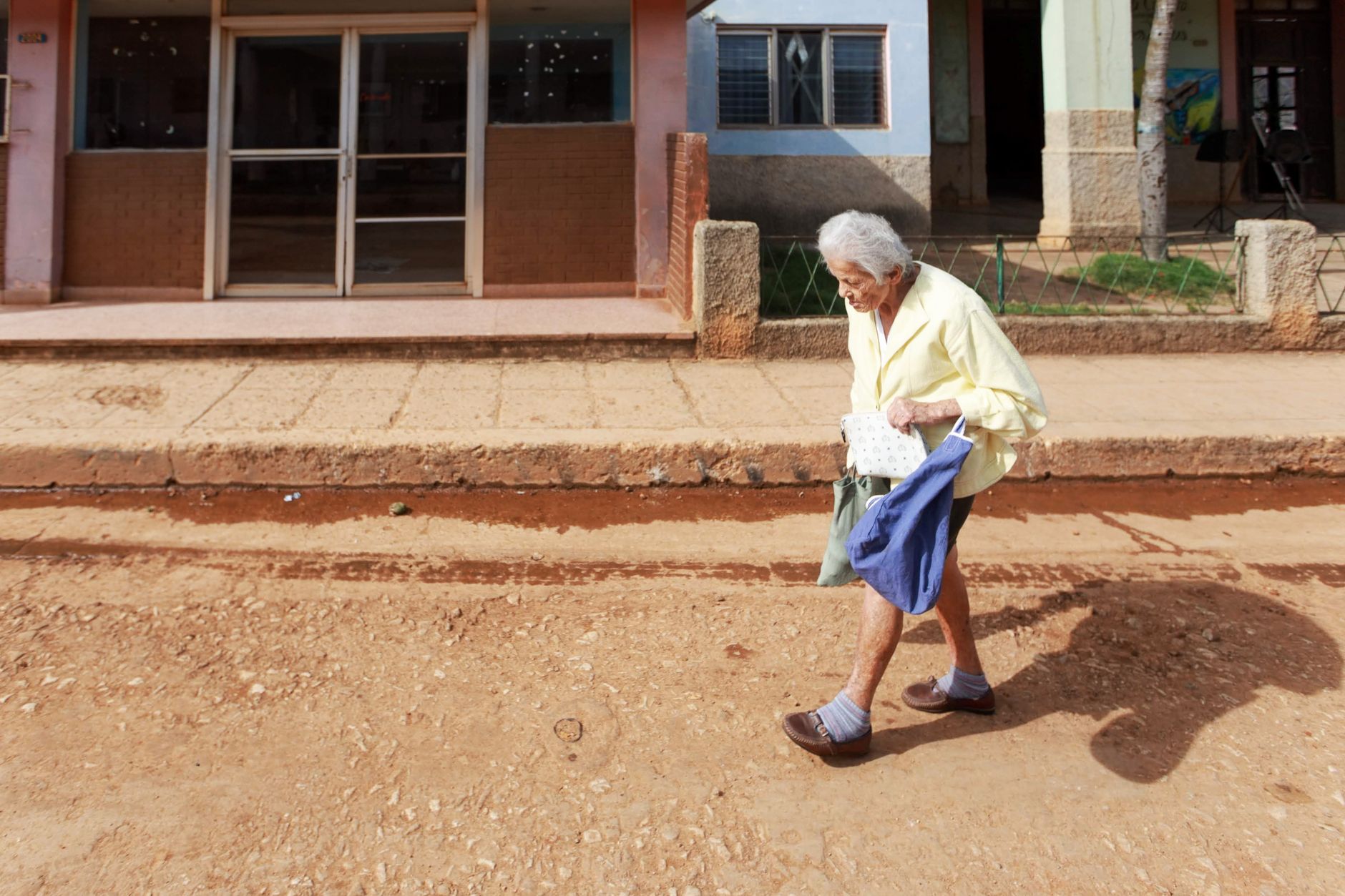
A Grandmother With Her Own Door
That’s how I came to be sitting in my car in front of my daughter’s split-level with a piece of notebook paper in my purse that said my keep cost eight hundred dollars.
I started the car. I was going to drive home. I had every intention of it.
Instead I drove four blocks and parked in front of the feed store.
Brandt’s has been on that corner since before I could drive. It still has the old wood floor that’s worn into a shallow trough from the door to the counter, and it smells like molasses and leather and that sweet dusty smell of calf starter. Dale bought mineral blocks and fence staples there for three decades. Mr. Brandt is seventy-four and still carries fifty-pound sacks out to people’s pickups, though he sets them down a little more carefully than he used to.
There had been an index card taped to the side of his register for three weeks. I had read it every time I went in for bird seed, and every time I had told myself it was none of my business.
House for rent. Two rooms and bath. See Brandt.
He was open until four on Saturdays in harvest. It was twenty past two.
“Judy,” he said. “Black oil sunflower?”
“Not today.” I put my finger on the card. “Is this still for rent?”
He looked at the card, and then at me, and I watched him work out the rest of it without my having to say a word. Everybody in Phelps County knew the Olson boy was coming home.
“It isn’t much,” he said.
“Where is it?”
“Right behind the elevator, on the side street. It was my mother’s the last eleven years of her life. I had a young fellow from the co-op in it till he got married in June.” He was already taking a key ring off a nail. “Come on. I’ll show you. Roy, watch the counter.”
We walked. It was only a block and a half. The trucks were lined up at the scale clear back to the tracks, corn heaped gold over the sideboards, and the drivers had their windows down and their arms hanging out, visiting from cab to cab. The air was thick with that red chaff that gets in your hair and your teeth this time of year. The elevator stood over the whole business, white and tall as a church with no steeple.
And there, tucked in its shadow like a chick under a hen, was the littlest house I had ever seriously looked at.
White siding. A green shingle roof. A front porch just deep enough for a swing, and the swing was there, hung on chains, with a seat somebody had painted not too long ago. One step up from the walk. One.
“Mother couldn’t do stairs,” Mr. Brandt said, seeing me look at it.
He let me in.
The front room was the kitchen too. A sink under a good big window, a gas stove with four burners, a refrigerator that hummed, and room for a table by the wall. A place for a couch. A heating stove. Through a door there was the bedroom, with a closet, and off that a bathroom with a tub that had a grab bar bolted into the studs.
That was the house. That was all of it. You could stand in the middle and see every corner you owned.
The window over the sink looked straight out at the elevator and the scale and the trucks.
Beautiful