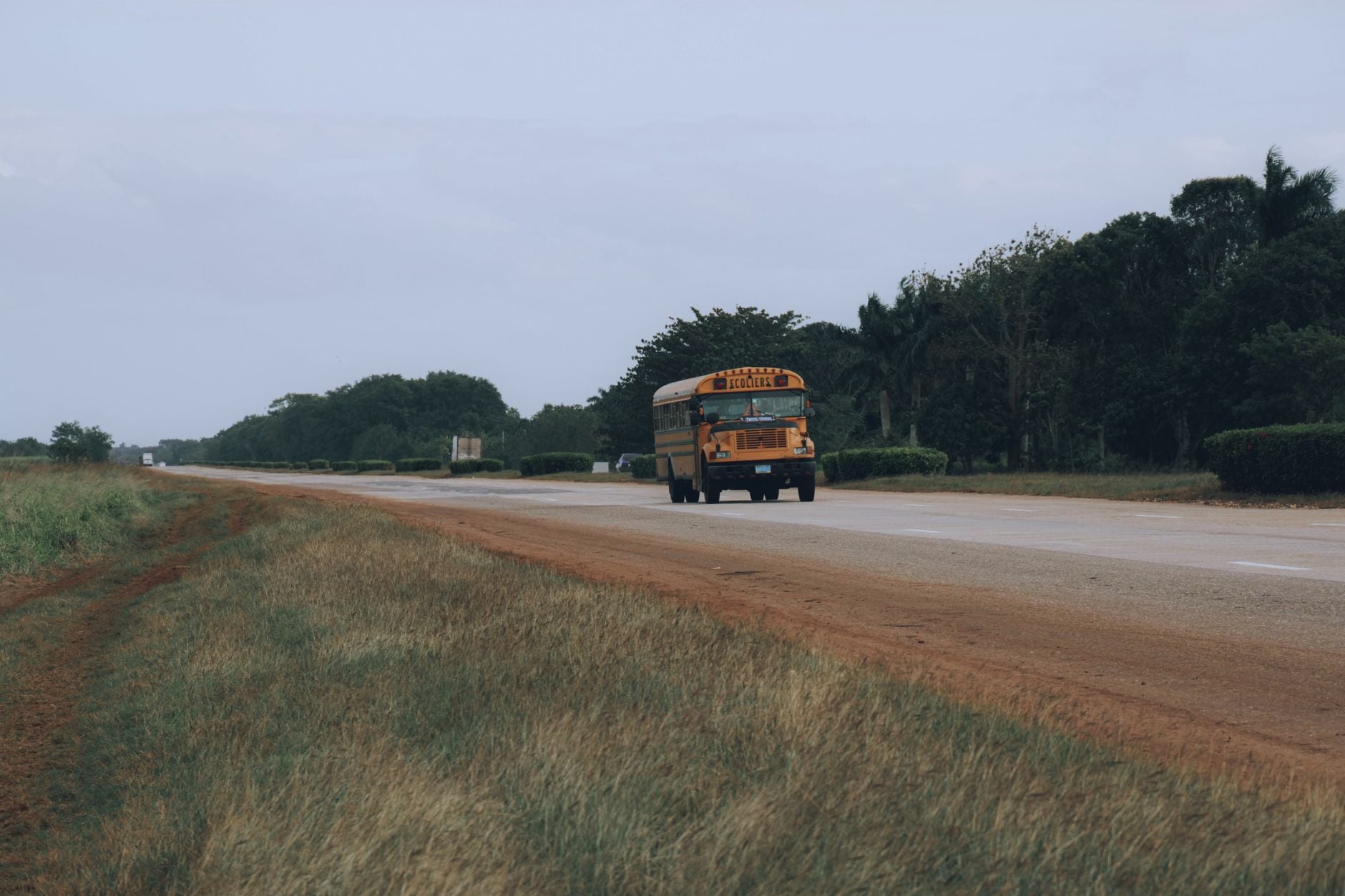
The Grandmother Who Drove Bus 12
Then Bill, in the seat behind me, said, “It’s an automatic, Joanne. You’re going to miss your two-speed.”
And I laughed, and I put my hands on that big wheel at nine and three, and something in my shoulders remembered.
The air brakes were the new part. There is a breath between your foot and the stop, and you have to learn to trust it. I learned it in the high school parking lot with orange cones.
Backing came easiest. Straight line, then offset, then into an alley made of cones.
I learned the walk-around until I could do it in my sleep. You say it all out loud for the examiner, and if you skip the air brake check you fail before you ever turn a wheel.
Lisa came by that first Saturday at nine, just as the list said.
“What did you do this week?” she asked me, backing out.
“I signed up for the school bus driver class.”
She put her foot on the brake right there in the street.
“Mom.”
“It starts Monday.”
“That isn’t funny.”
“It wasn’t meant to be.”
Somewhere around the canned goods she said, “They will never put you in a bus. It’s a liability. They’ll take one look at your birth date.”
“Then they’ll tell me so,” I said, “and I’ll have lost nothing but a few mornings.”
“Why are you doing this to me?”
I picked up a can of green beans and put it in the cart.
“I’m not doing anything to you, honey,” I said. “I’m just not finished.”
She called Bill that Monday. I did not know it then. He told me later, because he did not believe in keeping things from his drivers.
The Road Test
The state examiner was a woman about forty-five with a clipboard and no small talk whatsoever. It was the last week of September.
I did my walk-around out loud. It took me thirty-one minutes. I did the air brake test and called every number.
I backed through her cones. I did not touch one.
Then we went out on the road. Through town, out past the fairgrounds, over the tracks, where I stopped and set my flashers and opened the door and the window and looked and listened.
Back in the garage lot I set the brake and sat with my hands in my lap. She wrote for a while.
“Mrs. Keller,” she said, “how long have you been driving a bus?”
“Thirty-four days.”
She looked at me over the clipboard.
“I took two points off,” she said. “One for a wide turn onto Harvey, and one because you didn’t check your left mirror when you pulled out of the lot. That’s the best score I’ve given this year.”
I thanked her. Then I went into the little restroom off the garage and held on to the sink and cried. I had not cried since the funeral. I was sixty-eight years old and someone with a clipboard had just told me I was good at something.
When I came out, Bill was standing by the coffee pot pretending he had not been waiting.
“Well?” he said.
“Two points.”
He nodded slowly. “I lost six,” he said. “Twenty-two years ago.”
Two weeks later he called me into the office.
“I’m giving you 12,” he said.
“That’s your route.”
“That’s why I’m giving it to you. I know every stop on it and I’ll ride the first week.” He folded his hands. “Your grandson’s on 12, Joanne. The Rasmussen place out on the blacktop, 7:12. You want a different bus, say so now and nobody will think less of you.”
“I’ll take 12,” I said.