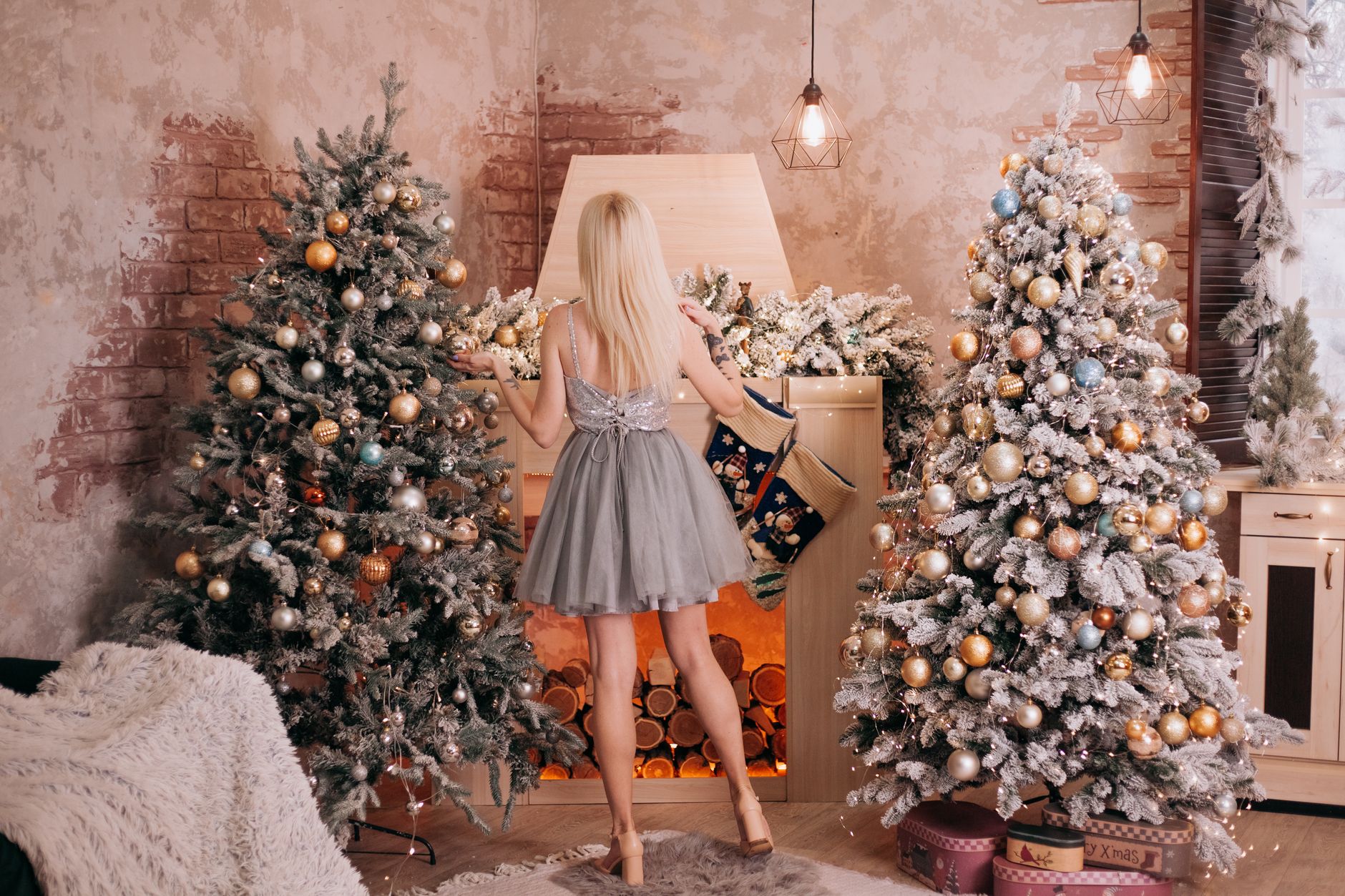
The Envelope He Took Back Off the Mantel
And I saw Tyler, eleven years old, look down at the envelope in his own hand like it had turned into something he did not want to be caught holding.
I set the plates down on the buffet.
I did not say one word to her. People have asked me since why I didn’t, and the honest answer is that it took everything I had. But she was not my mother. If I had opened my mouth, it would have become the story of the daughter-in-law who made a scene at Christmas, and my two children would have sat on that carpet and watched the whole family fight over whether they counted. I was not going to let them be the thing people argued about.
I wanted them to remember being picked up, not fought over.
So I walked to the front closet and I got their coats.
“Emma. Ben. Come here to me, please.”
They came. Emma brought her present. I knelt down on the mat by the front door and started on Ben’s buttons, the red wool coat with the big toggles that he could not work himself yet. My hands were steady. I am still a little proud of that.
“Are we leaving?” Ben whispered.
“We are, buddy.”
“Did we have pie?”
“We’ll have pie at home.”
“Sarah.” It was Barb, behind me, with a small laugh in it. “Oh, for heaven’s sake. Sit down. Nobody meant anything.”
I did up the top toggle and turned up his collar.
That was when I heard my husband’s boots on the floor.
Paul is forty. He is six foot two and he fixes furnaces for a living, and he is the quietest man in any room he walks into. In the five years I had been married to him, I had never once heard him raise his voice to his mother. I had watched him let a great many small things go by in that house, because that was how he was raised: you let Mom run the day and you kept the peace.
He did not come to the door.
He walked to the fireplace.
There was a plain white envelope propped against the clock on the mantel, right in the middle, between the stockings. He had set it there himself when we came in at noon, the way he did every Christmas. It had “Mom and Dad” on the front in his square handwriting.
He picked it up.
Barb’s laugh stopped.
“Paul. What are you doing with that?”
He put it in the pocket of his flannel shirt and buttoned the pocket.
“Paul, that is for the taxes.”
“Yes, ma’am,” he said. “It was.”
He crossed the room. He took Emma’s green coat out of my hand and held it open for her, and she put her arms in, one and then the other, still holding the present. Then he turned around and looked at his mother.
He did not shout. I think shouting would have been easier on her.
“We have two kids, Mom.”
That was all. Five words. He stood there and gave her time. He stood with his hand on Emma’s shoulder and waited for his mother to say the one thing that would have let us all take our coats back off.
Barb looked at the mantel where the envelope had been.
“It’s a hundred dollars,” she said. “You’re going to walk out on Christmas over a hundred dollars?”
“It isn’t a hundred dollars,” Paul said. “You know what it is.”