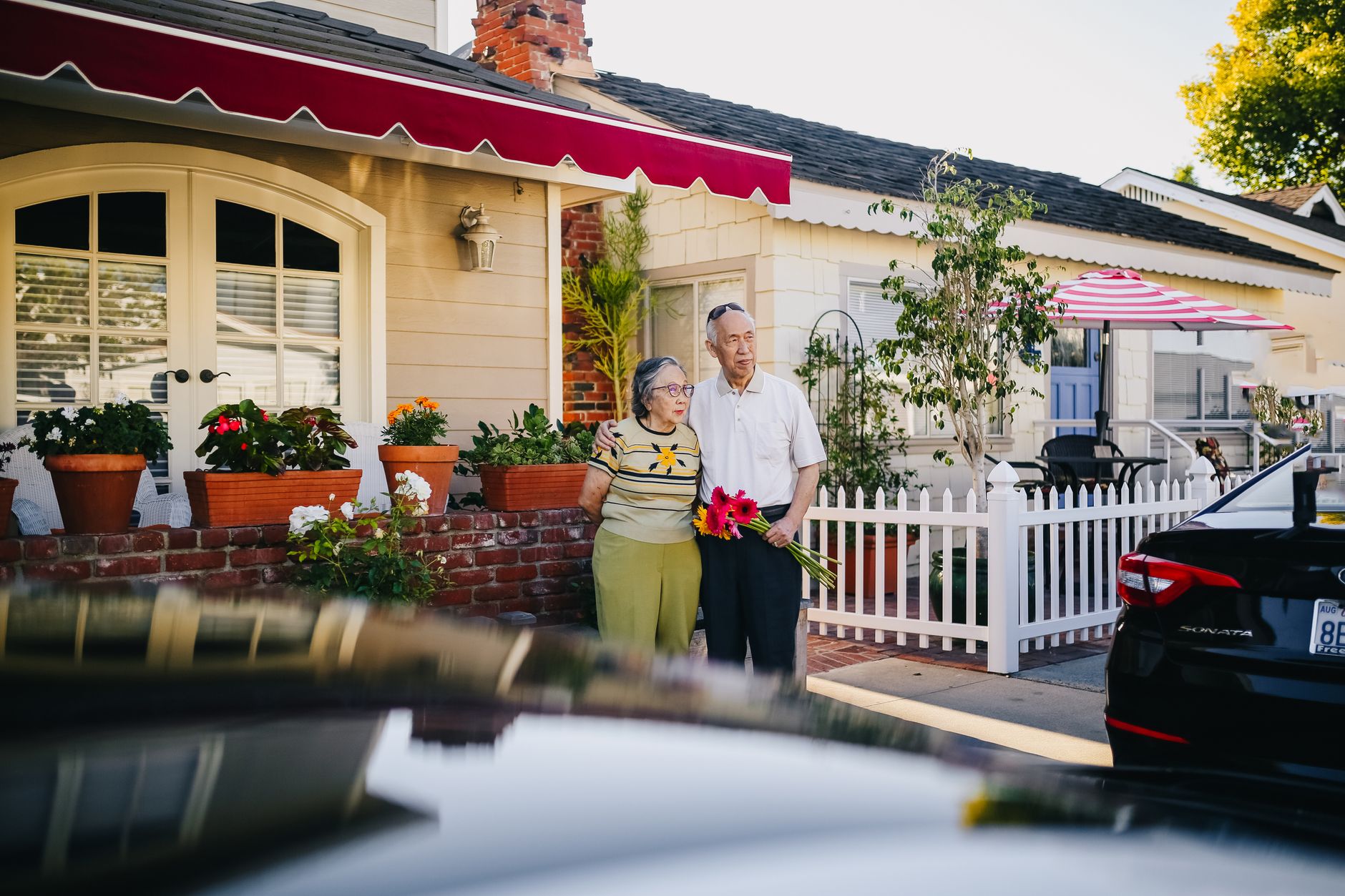
The House My Son Wanted Signed Over
Then it was the car. Brad took my keys in March of that first year, after I scraped the mailbox backing out. One scrape, in forty-six years of that driveway. “We just worry, Mom,” he said, and after that he drove my Buick everywhere.
Then it was my friends.
Linda from church came by on a Tuesday with a coffee cake, the way she had for twenty years, and Stephanie met her on the porch and said I was resting. I was sitting at the kitchen table doing the crossword. I heard the whole thing through the screen.
“She gets confused in the afternoons,” Stephanie told her. “It’s better if people call first.”
I was not confused. I have never been confused a day in my life, except about my own son.
The only one they could not stop was Jo.
Jo and I met fifty years ago this fall, when I was the new secretary at Corbin Elementary and she drove bus number six. She drove that bus for twenty-nine years, and nobody has told her where she could and could not go since. When her husband Gene retired, they moved up to Lake Wawasee, forty minutes north, into a cottage about the size of a bread box. When Gene passed, she stayed.
Jo did not call first. Jo pulled into my driveway, honked twice, and walked in the back door.
“She’s resting,” Stephanie told her, the first time.
“Then I’ll rest with her,” Jo said, and walked right past.
Stephanie never did work out what to do about Jo.Stephanie never did figure out what to do about Jo.
The Top Of The Stairs
It was a Tuesday night in February when I found out what the plan was.
I could not sleep. The hip ached when the weather turned, and it had turned. Around eleven I got up for a glass of water, and I did not switch on the light, because I have known that kitchen in the dark since Jimmy Carter.
They were at the top of the stairs. Their door was open. My door.
“I’m not doing another winter like this, Brad.” That was Stephanie. “I mean it. I can’t have people over. I can’t do anything with the living room with that piano sitting there. It’s like living in a museum with the curator still in it.”
“I know.”
“So when?”
“It’s not that simple. She’s not sick.”
“She’s seventy-two with a fake hip.”
“Meadowbrook has a waiting list,” Stephanie said. “It comes up in six, eight months. But listen to me. You get the house in your name first. Before she goes in. Otherwise the state takes it for the bills, and we’ve done all this for nothing.”
All this. I stood there in my nightgown with an empty glass in my hand.
“She’d have to sign it over,” Brad said.
“So she signs it.”
And then my son, my only child, the boy I walked into kindergarten on the first day because he would not let go of my skirt, laughed a little. Not a mean laugh. A tired one. That was almost worse.
“She’ll sign,” he said. “She signs whatever I put in front of her. She doesn’t even read it anymore.”
“Then what’s the holdup?”
“There isn’t one. Put us on the list.”
I did not drop the glass. I set it down in the sink without a sound, and I went back to the den, and I shut the door, and I sat on the edge of that twin bed with Walt’s picture in my lap.
I did not cry. I thought I would, and I waited for it, and it did not come.
What came instead was a memory of my husband at the kitchen table in 1979, signing the papers on this house with a ballpoint pen from the feed store. He was twenty-eight. He looked up at me and said, “Well, Mare, it’s ours. Nobody can tell us to get out of it but us.”
Nobody but us.
There was only one of us left. So I supposed it was up to me.