The 174 Payments I Canceled
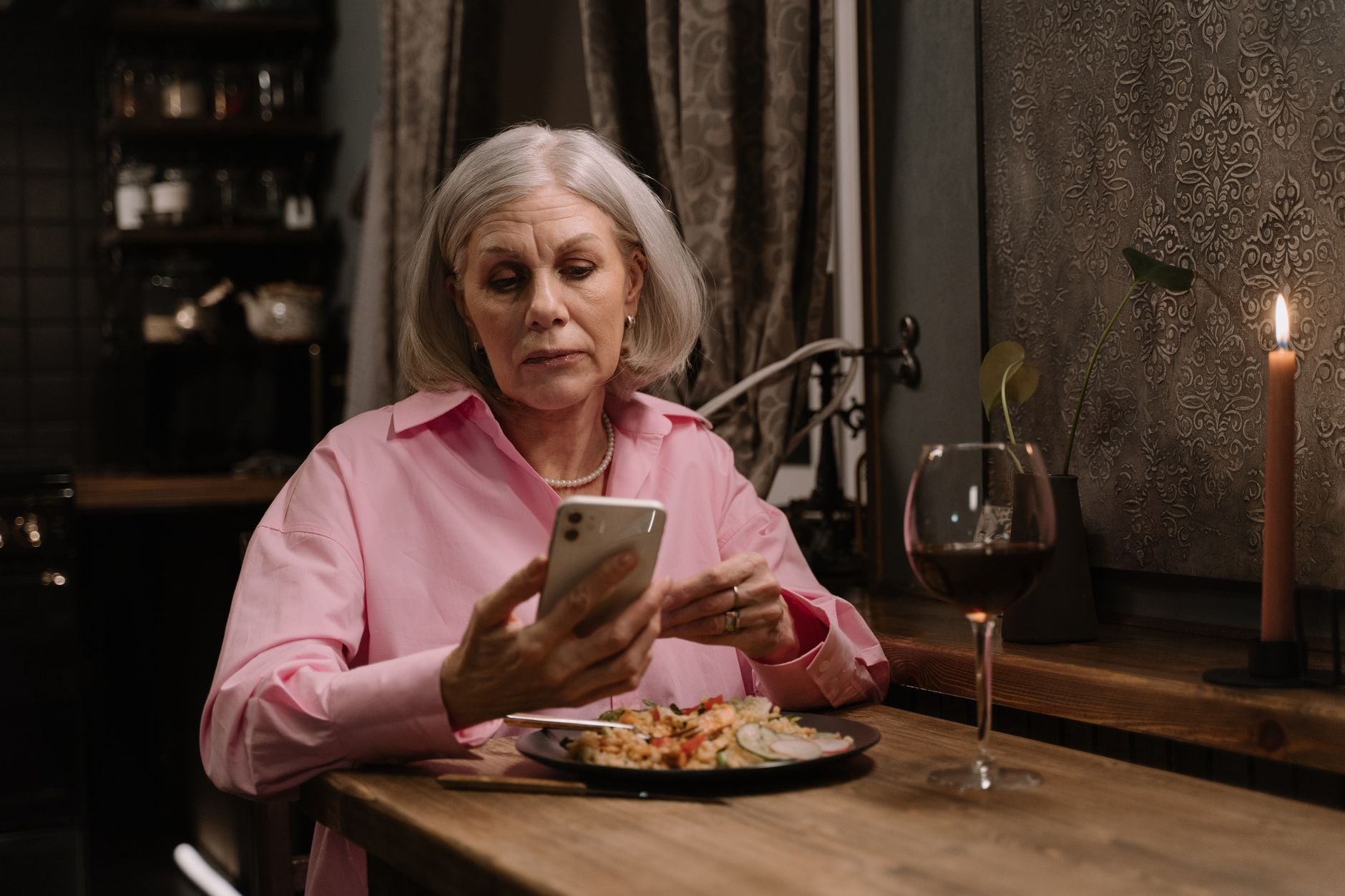
The message came through at 6:12 on a Friday evening, and I remember the time because the grandfather clock in the hall was still finishing its sixth chime when my phone buzzed against the dining table.
I had been dressed since four. Navy dress, the pearl earrings Norm gave me the year we bought the farm, flat shoes because the Farrows of Pine Ridge, Tennessee, do not wear heels to a family supper. On the counter sat a pecan pie, still warm, boxed in the white bakery carton I save and reuse. My son Brent was turning fifty that night. He had called on Wednesday and said, in the voice he uses when he wants something, “Mom, you’ll bring the pecan pie, right? Nobody makes it like you.”
So I made the pie. I always make the pie.
The first message read: “Plans changed, Mom. Becky invited some people from work. We’ll do family another time.”
I knew it was a lie before I finished reading it. A mother knows the sound of her own child’s lie, the way you know the sound of your own screen door. It is a small sound, a little too careful.
Before I could type anything back, a second message arrived.
“You’re not invited. Becky doesn’t want you here.”
No apology. No explanation. Not even a heart to soften it, and Brent has always been a boy who sends a heart.
I sat down in the chair at the end of the table. Outside the dining room window the rain had started, a thin October rain that tapped on the glass without any hurry. I took my reading glasses off and folded them and set them down, and for a while I did nothing at all.
It was a kind of quiet arithmetic, the sort that happens in a mind that has been adding the same column for thirty years and has finally looked at the total.
The Folder in the Bottom Drawer
Norm started the folder in 2009. He wrote BRENT across the tab in block capitals with a carpenter’s pencil, the same pencil he used to mark studs, and he said, “If we’re going to keep helping that boy, we’re going to know exactly what we’re helping with.”
Norm died four years later, in the spring, of a heart that had been telling him no for a long time. I kept the folder because it was his handwriting. I kept filling it because it was my son.
I got up from the table and walked to the secretary desk near the hall, the one with the sticky bottom drawer, and I pulled the folder out. It was thick as a Bible. I laid it down on the blotter under the lamp and opened it, and I made myself read it the way a bank examiner would.
There was the $20,000 I wrote Brent in 2011 for the heating and air business that closed in eleven months. He called it a loan. I called it a loan too, for about a week.
There were Becky’s real estate license fees, three renewals, because she always forgot the deadline and Brent always called me in a panic, and I was always home.
There was the country club. Four hundred and twelve dollars a month, drafted from my checking account on the fifth, for a membership Becky told half of Pine Ridge her husband’s “year-end bonus” covered. She said it on the church steps once. I was standing six feet away holding a casserole.
There was the insurance on both of their SUVs, the homeowner’s policy, the water bill, the phone plan, and a gym membership Becky had used four times.
There was my granddaughter Alice’s tuition at the state university, which I paid and was glad to pay, because Alice is nineteen and good, and the good ones should not have to carry anything they did not choose.
And on the first page, stapled to the front, there was the mortgage on the brick house on Larkspur Road. Eighteen hundred and sixty dollars a month. The house with the guest suite.
I remembered the day Brent showed it to me. He stood in the doorway of that carpeted room with a hand on my shoulder, smelling of the aftershave Norm used to wear, and he said, “This part’s for you too, Mom. Whenever you want it.”
I never slept in that suite. Not once. I never wanted it. I only wanted to be asked.
I turned the pages and I did not cry. I felt something settle, the way a house settles when the foundation finally decides where the weight goes.