The Locksmith Who Would Not Lie
“I changed it,” he said. “You’ve been acting like this house is yours.”
“It is mine,” I said, and my voice did not shake, which surprised me. “I put twelve thousand dollars of my grandmother’s insurance money into that kitchen. I picked the tile with this baby kicking under my ribs while you were at work.”
“Don’t start,” he said. “We’re up at the lake till Sunday. Mama needed a rest after everything you put us all through.”
Everything I put them through. I had pushed a nine-pound baby into the world fourteen hours after my water broke in the cereal aisle of the grocery store on Route 9. I had not slept more than ninety consecutive minutes since. I did not know, standing there, what exactly I was supposed to have put anyone through, other than existing.
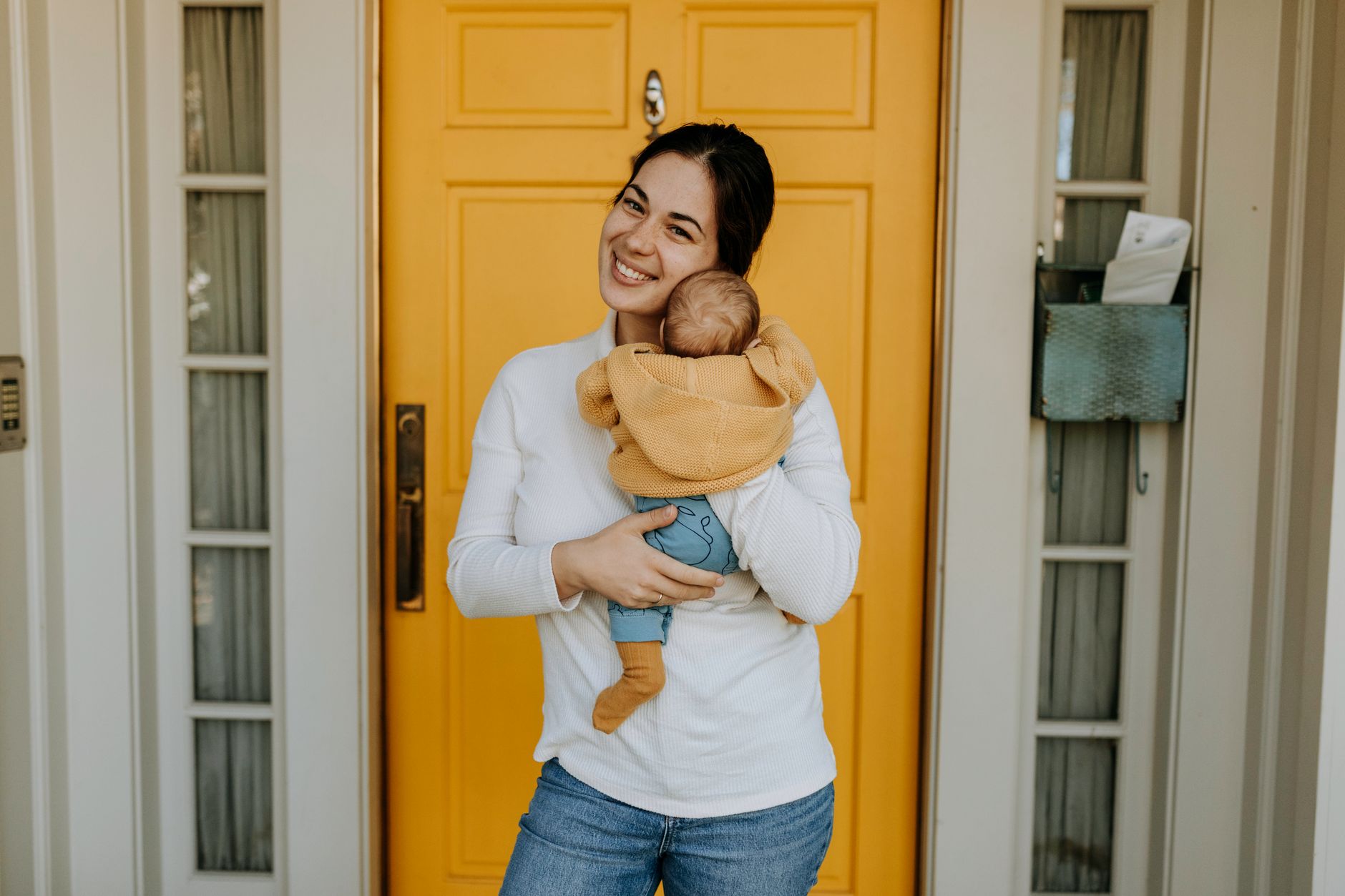
“Our daughter is three days old,” I said.
“Then figure out the porch,” he said, “because we’re not driving back for this.”
The call ended. I stood there another few seconds with the phone against my ear, listening to nothing, rain running off my elbow, and I thought about every version of myself who might have collapsed right there on the concrete. I did not have time to be that woman. I had a baby against my chest and stitches that pulled every time I shifted my weight, and self-pity, whatever comfort it might have offered, was a luxury with no immediate use to either of us.
So I did not collapse. I looked up, and across the street, a woman I had waved to maybe a dozen times in three years of living in that subdivision, whose name I am ashamed to say I did not even know yet, was standing on her own porch with a phone already at her ear.
She did not call out to ask if I was all right. She did not come over to hover and ask questions I did not have the strength to answer. She just watched me for one long moment, made her decision, and dialed.
Twenty minutes later, a white pickup with a small brass bell painted on the driver’s door pulled into our driveway, and a man climbed out with a case of tools slung over one shoulder like he had been called to a fire instead of a locked door. I had seen that truck before, parked outside the hardware store on the square, but I had never had a reason to speak to the man driving it. I would learn his name inside the hour. Ivan.
He did not ask me what happened. He did not ask why a woman three days out of the hospital was standing in the rain with a newborn instead of inside her own house. He looked at me exactly once, took in the whole situation in about a second and a half, the hospital bracelet still on my wrist, the wet hair, the sleeping baby, and he said, “Let’s get you both inside first. Everything else can wait.”
That is the part of this story that matters least, and I want to be honest about that up front, because it would be easy to let it swallow the rest. A newborn does not know or care about anyone’s pride, and neither, as it turned out, did the man with the little bell on his truck door. He had the door open inside ten minutes, working fast and quiet in the rain, glancing up now and then to check that I was still upright. He rekeyed the whole front entry rather than just resetting the code, because, he told me later, once somebody changes a lock on you once, you do not hand them a way to do it twice.
I offered to pay him. He waved me off, told me to go feed my daughter, and said he would send an invoice to the house once I had slept. Then he did something I did not think much of at the time. He took a small spiral notebook out of his shirt pocket, the kind you can buy three for a dollar at the drugstore, and he wrote down the date, the address, and a short line about the job. I assumed it was just how he kept his books. I did not know yet that that notebook, and the ones like it going back years in a drawer at his shop, would end up being the thing that mattered more than anything either of us said that morning.