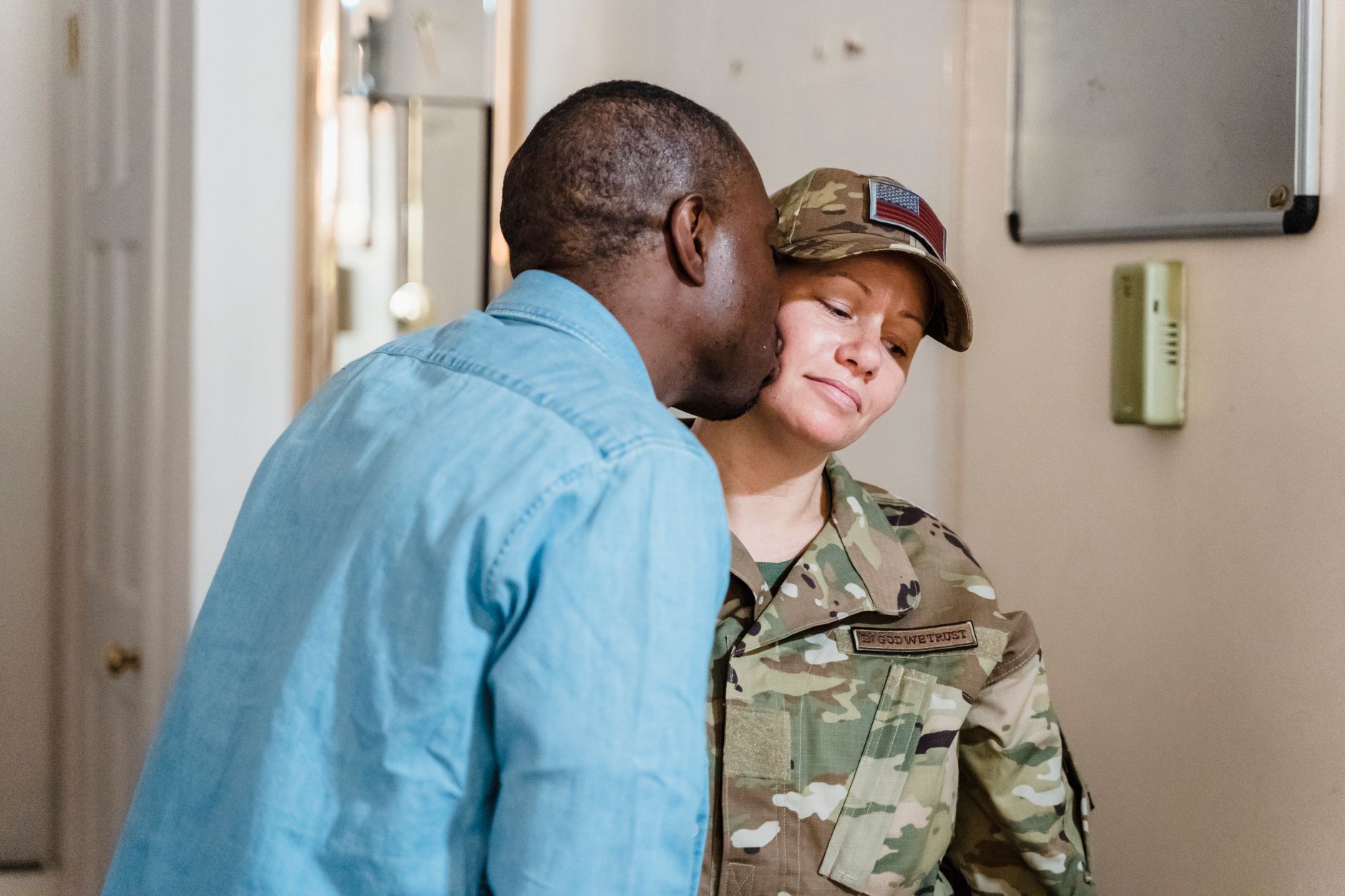
The Colonel Her Family Wrote Off
The Kitchen
The linoleum in my parents’ kitchen has a burn mark near the stove that has been there since I was twelve, a scorch shaped like a comma from a pan my mother set down too fast. I noticed it before I noticed anything else that afternoon, because it was easier to look at the floor than to look at my father’s face.
I had flown into Omaha that morning, rented a car, and driven two and a half hours west on Interstate 80 with my dress uniform still zipped in its garment bag on the back seat, past the exits for Kearney and the turnoff for Alda, until the highway narrowed down to the county road that runs past our mailbox. I had changed into the uniform in a gas station bathroom outside Grand Island because some old, foolish part of me wanted my father to see me standing in it for once, instead of hearing about it secondhand from a neighbor.
Twenty years. Fort Benning to Fort Leonard Wood, two tours as a young lieutenant with a military police platoon, a staff job I hated at Fort Hood, a battalion command in Kansas that I loved more than I have loved almost anything, and a colonel’s eagle I had pinned on eighteen months ago in a ceremony my parents did not attend because, in my mother’s words, “the drive was a lot for one weekend.” Twenty years, and I had come home fewer than a dozen times in all of it, and every single one of those visits had felt like walking into a room where the conversation stopped when I opened the door.
This one stopped before I even reached the porch.
My father, Wes, was standing at the counter with his coffee when I came in through the mudroom, still in my travel clothes, the uniform bag over my shoulder. He didn’t get up. He looked at the bag, then at me, and something in his jaw went tight the way it always did when he had already decided how a conversation was going to end before it started.
“You didn’t need to bring that,” he said, meaning the uniform. “Nobody around here needs a show.”
My mother, Martha, was at the sink with a paring knife and a bowl of potatoes, working through them steady and unhurried, the way she worked through everything that made her uncomfortable. She didn’t turn around.
My brother, Travis, was leaning in the doorway to the mudroom behind me, arms crossed, and when I glanced at him he looked away first, out toward the yard, toward the barn where I used to keep my truck under a tarp.
That was when I asked about the truck. I hadn’t planned to lead with it. I had planned, foolishly, to lead with something softer, to ask about the winter wheat or Travis’s kids or whether the roof on the machine shed had ever gotten fixed. But my eyes went to the barn doors standing open on an empty bay where a truck-shaped shadow used to be, and the question came out before I could soften it.
“Where’s the Bronco?”