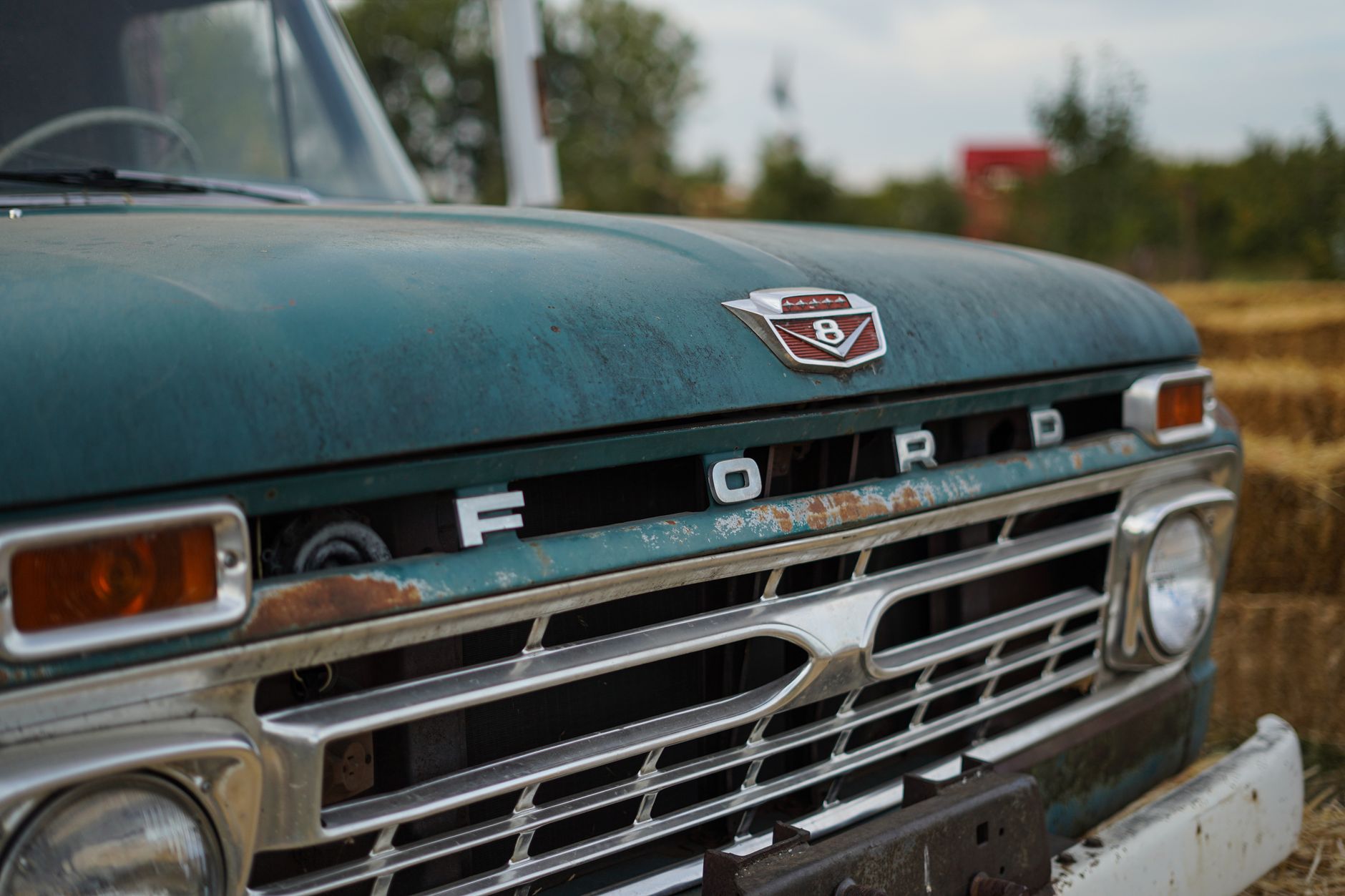
The Truck That Held Their Father’s Truth
Handled
Kendall Voss and I got married the summer I was twenty two, in this same church, in a dress my mother took in twice because I’d lost weight from nerves. He was twenty five, still working for his uncle’s implement dealership over in the county seat, saving every dollar he could toward a shop of his own.
He got that shop three years later. A pole barn behind Kessler’s feed store, one bay, one lift, a hand painted sign that said VOSS FARM REPAIR because he couldn’t yet afford the vinyl kind. By the time our boys were in grade school he had four bays and two men working for him and a waiting list every planting and harvest season, because Kendall Voss could get a thirty year old combine running again when the dealership in the county seat told a farmer to buy new.
I never once asked to see the books. He ran the shop. I ran the house and, once they came, I ran the boys. When bank paper showed up on the kitchen table, the way it does for any small business, I’d ask him if we were all right, and he’d fold that paper in half, set it under the sugar bowl, and say the same four words every time.
“I’ve got it handled.”
I believed him for forty one years, through two recessions, through the year a big farm equipment chain opened a branch twenty minutes away with air conditioning and cut Kendall’s spring business nearly in half. I believed him because he had never once given me a reason not to, and because in a marriage like ours, trust is not naive. It is how the whole thing runs.
Randy went to work with his father from the time he could hold a wrench without dropping it on his foot. By sixteen he could tear down a hay baler blind. He took over forty acres of his grandfather’s ground at twenty five and built it into a hundred and ten, corn and soybeans and a hog operation on the side, married a steady woman from two townships over, and settled into the kind of life his father had always hoped one of the boys would want.
Our younger boy wanted something different, and there is no shame in that, though it took me years to stop treating it like there was. He went off to the county seat after high school, got his insurance license, and spent his days writing crop and equipment policies for half the farmers his brother and father used to fix tractors for. He came home for holidays, and less than that if I am honest, and some of that distance was his doing and some of it was mine and Kendall’s, for the small, constant way we let him know his brother’s life looked more like ours than his did.
For most of their lives, the two of them were close the particular way brothers raised eight years apart can be close, which is to say not loudly, but steadily, until the year everything between them went quiet instead.
The Banker’s Number
Kendall died on a Tuesday, in the shop, in the back bay, with a wrench still loose in his hand and a Case tractor half open on the lift in front of him. One of the men who worked for him found him and called the ambulance, then called me. By the time I got there it was already over. His heart, the doctor said. Fast, and I am told, painless. I have had to make myself believe that part.
I called both my sons that afternoon. Randy came within the hour, white faced, and helped me pick a casket and a plot beside his grandparents. His brother said he’d come the next morning, and something in his voice was already wrong, already braced for something, though I did not understand what until much later.
The night before the funeral, Randy called me again.
“Mom,” he said, and I could hear him standing outside somewhere, wind against the phone. “You need to know something before tomorrow. The shop’s carrying a lot of debt. A banker called me today asking about it, since Dad listed me as a contact on some of the paper. It’s bad, Mom. It’s over two hundred thousand dollars.”