The Night They Dumped My Boxes
The office
I drove up the next morning and I was at his door at nine.
Harlan Voss was older than I had pictured, with reading glasses pushed up on his forehead and a cardigan buttoned wrong at the bottom. His office was one room above the insurance agency, and the old gold letters of the agency’s name were still peeling off the frosted glass of the door downstairs. He shook my hand with both of his and looked at me for a long moment like he was checking my face against a memory.
“You have her eyes,” he said. “She used to say you would.”
He sat me down across the desk from him. There was a manila folder in front of him, and on top of it, face up, was a printed real estate listing. He turned it around so I could read it.
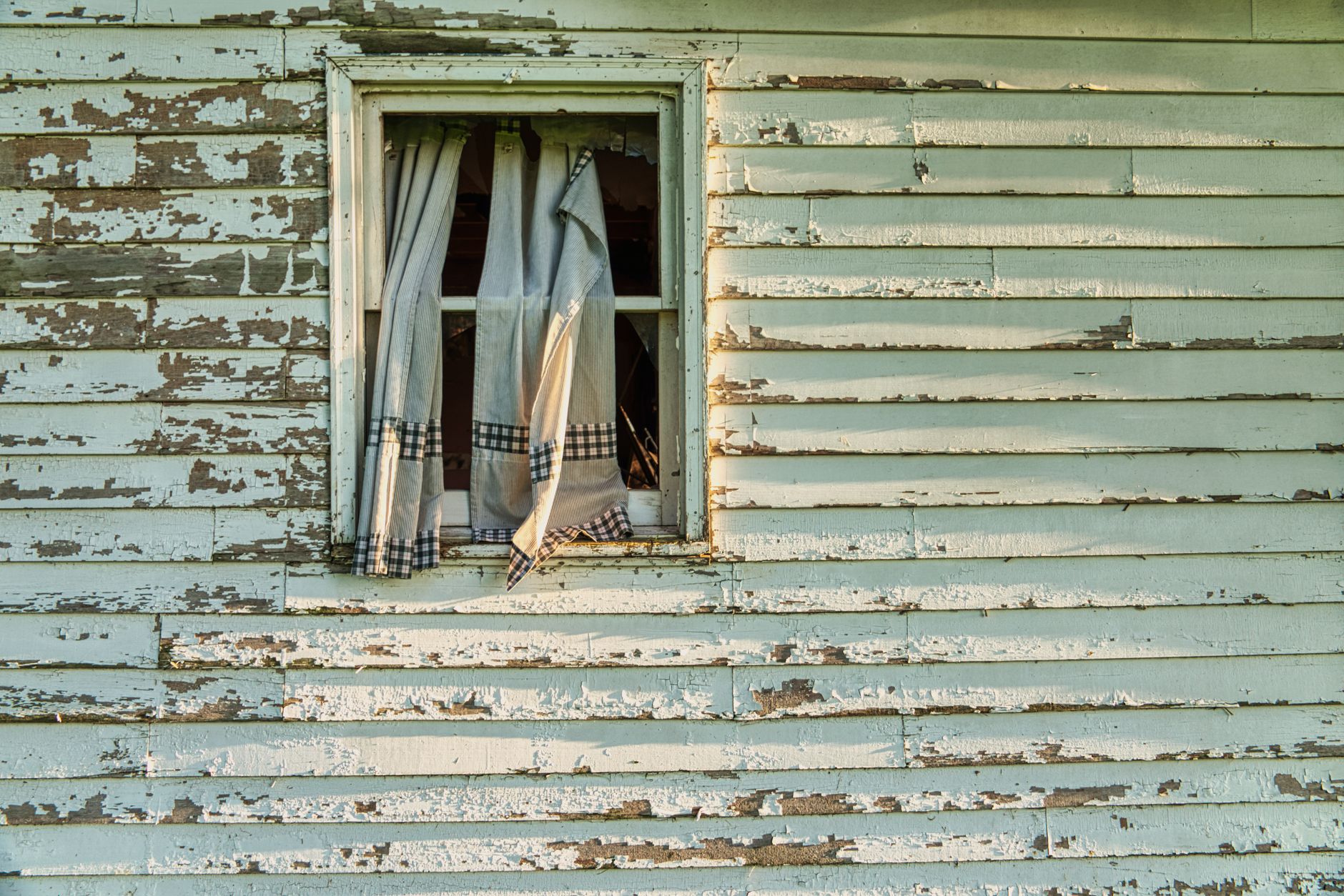
I knew the porch before I read a single word. I knew the birch trees. I knew the white clapboard and the deep front steps and the slope of the yard down toward the road. It was Ada’s farmhouse on the Barrow Road, the one I had been told was mortgaged and leased and tangled up beyond saving.
It was listed for sale. Asking four hundred and ten thousand dollars. The listing agent was a firm out of the county seat, near me. The sellers were listed as the estate of Ada Colvin, care of Donna and Roy Colvin.
My parents were selling my grandmother’s farm.
“They put it on the market eleven days ago,” Harlan said, watching my face. “I have an alert set for that property. I have had it for eight years. That is how I finally knew where to find you, Miss Colvin, because I have no address for you your family ever gave me. When that listing went live, I knew it was time, whether they were ready or not.”
“They told us it was gone,” I said. My voice did not sound like my own. “They told us it was mortgaged out. That there was nothing.”
“There is no mortgage,” Harlan said quietly. “There never was. Your grandmother owned that house and the eighty acres around it free and clear, and she paid to keep it that way until the day she died. She was very clear about what she wanted done with it. And it was not this.”
Then he opened the drawer of his desk, and he took out an envelope.
The envelope
It was a thick, cream-colored envelope, heavy, sealed on the back with a circle of dark red wax that had gone brittle and cracked with age. On the front, in my grandmother’s own handwriting, in the careful looping cursive she had learned in a one-room schoolhouse eighty years before, were five words.
For Meg when she’s ready.
I could not touch it for a minute. I just looked at it. Eight years that envelope had sat in that drawer. Eight years while my mother divided up the pearls and the china and the sewing table and told me to my face that there had been nothing for me, that Grandma had not left me anything, that I should not take it personally because there had simply been nothing to leave. Eight years while I believed that the only thing Ada had left me in this world was a photograph nobody else wanted, which I had rescued out of the mud in my parents’ yard two nights before.
“She left this with me the spring before she passed,” Harlan said. “She told me you were the one she trusted the farm to. She said the others would fight over the small things, and that was fine, let them have the small things. But the house and the land she wanted held for you, and given to you only when you were standing on your own two feet and did not need a soul’s permission to keep it. She said, and I wrote it down so I would say it right, she said, ‘Meg will spend her whole life being told she is nothing. I want the last word.'”
I put my fingers on the cracked wax seal. My hands were steady again, that same dead calm, and I broke it, and I opened my grandmother’s envelope.
There were two things inside.
The first was a legal document. It was a deed of trust, drawn up by Harlan Voss and signed by Ada Colvin, placing the farmhouse and the eighty acres on the Barrow Road into a trust for the sole benefit of Margaret Ann Colvin, with Harlan named as the trustee to hold it until such time as he judged me ready to receive it. The tenant my mother had spoken of was real, a family who had rented the house and worked the land for years, and every dollar of that rent, minus the taxes and Harlan’s small fee, had been going into an account in the trust’s name the whole time. Eight years of it.
The farm had never been my parents’ to sell. It was mine. It had been mine the whole time.
The second thing in the envelope was a letter.